Wine Tasting Technique: How to Taste Wine Like a Pro
When you hear wine tasting technique, the systematic process of evaluating wine using sight, smell, and taste to identify its characteristics and quality. Also known as sensory evaluation, it’s not about sounding fancy—it’s about noticing what’s actually in your glass. Most people think it’s just about swishing wine around and saying "notes of blackberry" or "oaky finish." But real wine tasting technique is simpler: it’s training your brain to pay attention. You don’t need a degree. You just need to slow down, smell before you sip, and ask yourself: What do I actually taste here?
This isn’t about memorizing flavor charts. It’s about connecting what you smell to what you feel. The wine aroma, the volatile compounds released from wine that your nose detects before you swallow tells you more than any label ever could. Is it fruity? Earthy? Like wet stones or burnt toast? That’s your first clue. Then there’s the mouthfeel, the physical sensation of wine in your mouth—its weight, texture, and how it coats your tongue. Is it light like water or thick like cream? Does it make your mouth dry? That’s tannin. That’s acidity. That’s structure. These aren’t buzzwords—they’re physical reactions you can learn to recognize.
And here’s the thing most guides skip: your environment matters. A smoky room, a strong perfume, or even a cold glass can mess with your senses. Good wine tasting technique means controlling what you can—room temperature, clean glass, no perfume. Then you focus on the wine, not the noise. You don’t need expensive gear. Just a clean glass, a quiet moment, and the willingness to be wrong. Maybe that "cherry" you thought you tasted is just ripe fruit from the kitchen counter. That’s fine. The point isn’t to sound smart. It’s to understand what you’re drinking.
What you’ll find in these posts isn’t a textbook. It’s real talk from people who’ve spent years tasting, testing, and sometimes spitting out bad wine just to figure out what works. You’ll see how to pair wine with cheese without overthinking it. How to pick the right glass without buying a whole set. How to taste whiskey or vodka the same way you taste wine—because the principles are the same. You’ll learn what actually makes a wine feel smooth, why some wines make your tongue pucker, and how to tell if that bottle you bought is just old or actually bad.
There’s no magic trick. No secret code. Just a few simple steps repeated over time. And if you stick with it, you’ll start noticing things you never did before—how a Sauvignon Blanc smells like grass after rain, or how a Cabernet feels like velvet on your tongue. That’s not luck. That’s wine tasting technique.
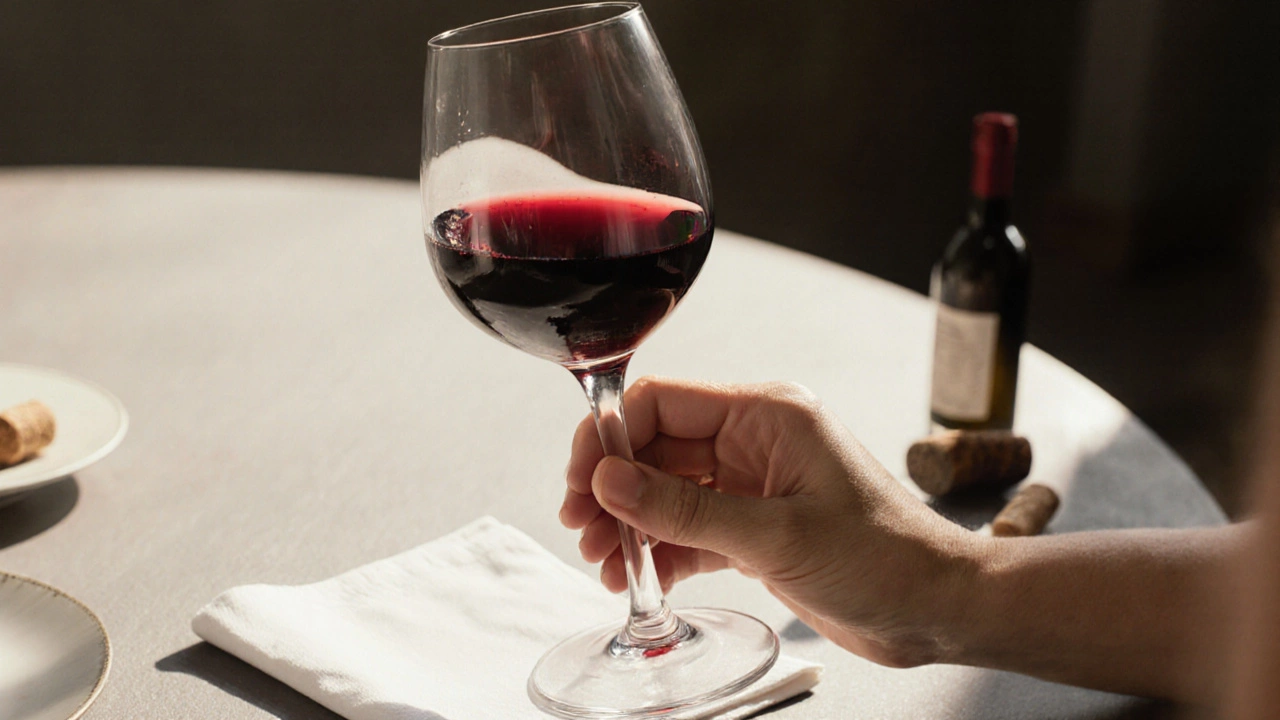
Learn the step-by-step process of wine tasting-from looking and swirling to smelling, tasting, and evaluating the finish. A practical guide for beginners and enthusiasts to taste wine like a pro without needing expensive gear.
View Details