Best Drinks for Cardiovascular Health: What Actually Works
When it comes to best drinks for cardiovascular health, beverages that support heart function through antioxidants, low sugar, and moderate alcohol content. Also known as heart-healthy drinks, these aren’t magic potions—they’re everyday choices backed by real studies and real results. You don’t need to give up drinking to protect your heart. In fact, some drinks might help—if you pick the right ones and keep it reasonable.
The science is clear: red wine, a fermented grape beverage containing resveratrol and polyphenols linked to improved blood vessel function has been studied for decades. Not because it’s fancy, but because people who drink one glass a day, especially with meals, show better circulation and lower LDL cholesterol in long-term research. It’s not about the alcohol—it’s about the plant compounds. But skip the sweet dessert wines. Stick to dry reds like Pinot Noir or Cabernet Sauvignon. Too much? It cancels out the benefit. One glass. That’s the sweet spot.
Then there’s vodka soda, a simple mix of distilled grain spirit and sparkling water with a squeeze of lime. Also known as clean spirit drink, it’s one of the lowest-calorie, zero-sugar options you can order at a bar. No hidden syrups. No artificial flavors. Just alcohol, water, and a hint of citrus. That means less strain on your liver, less blood sugar spike, and less inflammation—all good for your heart. It’s not a miracle, but it’s a smart swap if you’re replacing sugary cocktails or beer.
Don’t forget beer, especially light, unfiltered varieties with natural yeast and barley compounds. Studies show moderate beer drinkers have a lower risk of kidney stones and slightly improved HDL levels—thanks to silicon and soluble fiber from hops and grains. But here’s the catch: you need to avoid the big, sweet, high-carb lagers. Stick to craft pilsners or session ales under 5% ABV. A pint a few times a week? Fine. A six-pack every night? Not even close.
And if you’re cutting out alcohol entirely, non-alcoholic drinks, including sparkling water with fruit, herbal teas, and low-sugar mocktails can still support heart health. No alcohol means no added calories, no blood pressure spikes, and no liver stress. Many non-alcoholic wines now mimic the polyphenols of real wine without the ethanol. They’re not perfect substitutes, but they’re a solid alternative for anyone managing cholesterol or hypertension.
What you won’t find here are claims about tequila curing heart disease or whiskey being a daily pill. This isn’t about trends. It’s about what the data says—and what people who’ve been drinking for decades actually notice. The best drinks for cardiovascular health don’t come in fancy bottles. They come in simple, honest choices. You don’t need to be a scientist to make them. Just pay attention to what’s in the glass.
Below, you’ll find real reviews, tasting notes, and comparisons from people who’ve tested these drinks—not just read about them. Whether you’re sipping red wine with dinner, ordering a vodka soda at a bar, or trying a new non-alcoholic option, you’ll see what actually makes a difference.
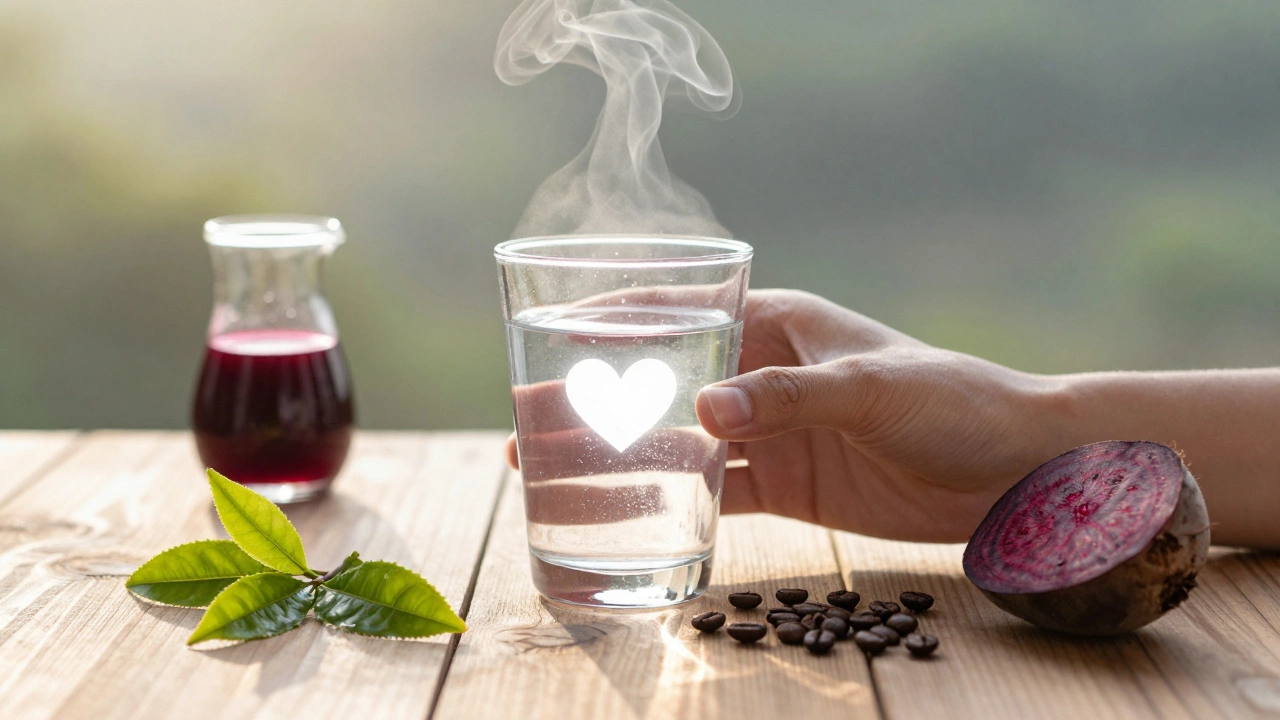
No drink cleans your heart-but some non-alcoholic beverages like water, green tea, and morning coffee can truly support heart health. Learn what works, what doesn’t, and why red wine is a myth.
View Details