Quick Home Brewing: Simple Ways to Make Great Beer at Home
When you hear quick home brewing, a simplified approach to making beer at home with minimal time and equipment. Also known as extract brewing, it’s how thousands of people start their journey into craft beer—without needing a lab or a degree in chemistry. You don’t need to mash grains for hours, control fermentation temperatures with precision, or wait six months for a batch to be ready. The truth? You can brew solid, drinkable beer in under a week using just a pot, a bucket, and a store-bought kit.
Home brewing kits, pre-packaged sets with malt extract, hops, yeast, and instructions. Also known as extract kits, they’re the backbone of quick home brewing. These kits remove the guesswork. No need to measure gravity, boil for hours, or worry about sanitation beyond washing your hands and rinsing gear. The science is already done for you. You just add water, boil the extract, cool it down, pitch the yeast, and wait. Most kits turn out beer in 7–10 days, and many taste better than mass-produced lagers you’ll find in the supermarket.
What makes this work isn’t magic—it’s focus. Homebrewing for beginners, a low-barrier entry point into brewing that prioritizes results over complexity means skipping the fancy gear. You don’t need a mash tun, a wort chiller, or a carbonation stone. You need a clean space, patience, and the willingness to follow simple steps. The biggest mistake beginners make? Overcomplicating it. They buy ten gadgets before they’ve even made their first batch. The best brewers start small. They make one batch, taste it, learn from it, and improve. That’s how you build real skill.
And the results? They’re real. People have won national competitions with beer made from a $40 kit and a kitchen stove. The key isn’t the equipment—it’s sanitation and timing. If you keep your gear clean and don’t rush the fermentation, your beer will taste better than most commercial options. You’ll also learn what flavors you like—hops, malt, yeast character—and that’s where the fun begins. Once you’ve nailed the basics, you can experiment with dry hopping, different yeasts, or even moving to all-grain brewing. But you don’t need to start there.
Quick home brewing isn’t about being a perfectionist. It’s about tasting the difference between something you made and something a factory pumped out. It’s about the pride of pouring a beer you brewed yourself—on a Tuesday night, after work, with no special occasion needed. It’s the smell of boiling malt filling your kitchen, the bubbles in the airlock, the quiet satisfaction of knowing you made something good with your own hands.
Below, you’ll find real guides from people who’ve done it—how to avoid common mistakes, which kits actually deliver, how to fix off-flavors, and why your first batch might taste better than you think. No fluff. No theory overload. Just what works.
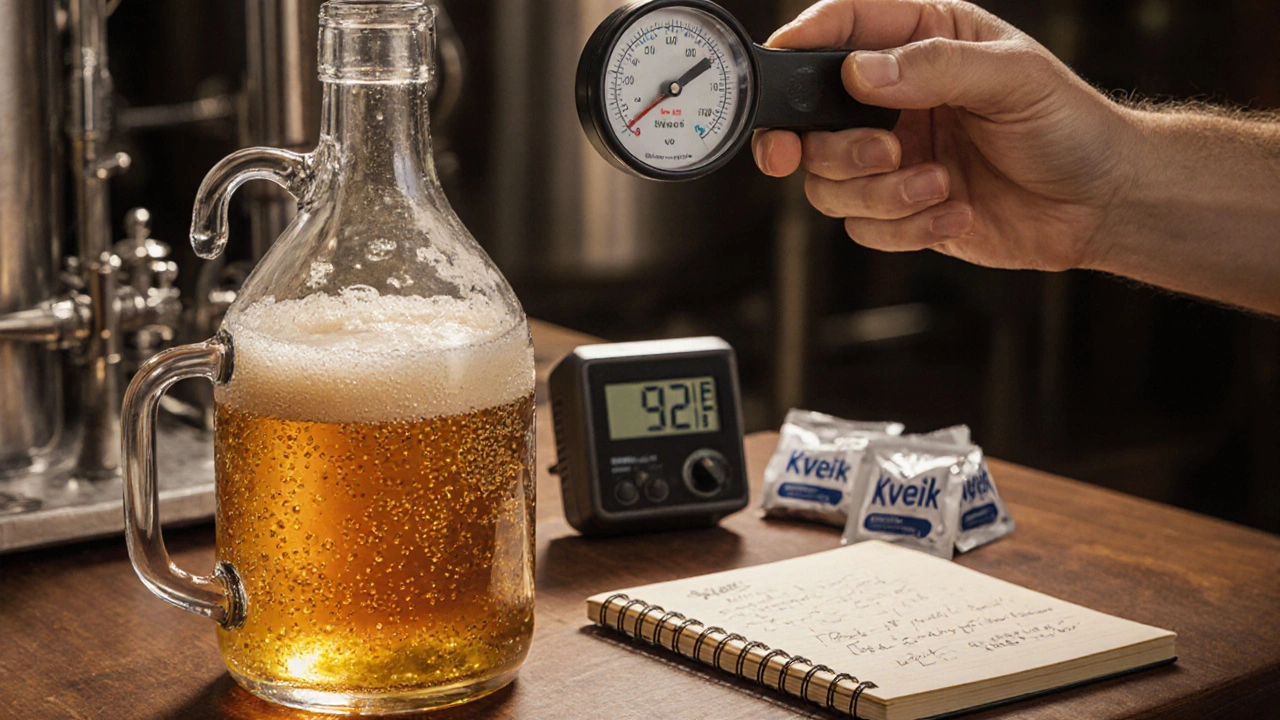
The fastest beer to ferment uses Kveik yeast and can complete primary fermentation in just 2-4 days. Learn which strains work best, how to avoid off-flavors, and why timing matters more than speed.
View Details