Liver Health Risk Calculator
Based on WHO guidelines:
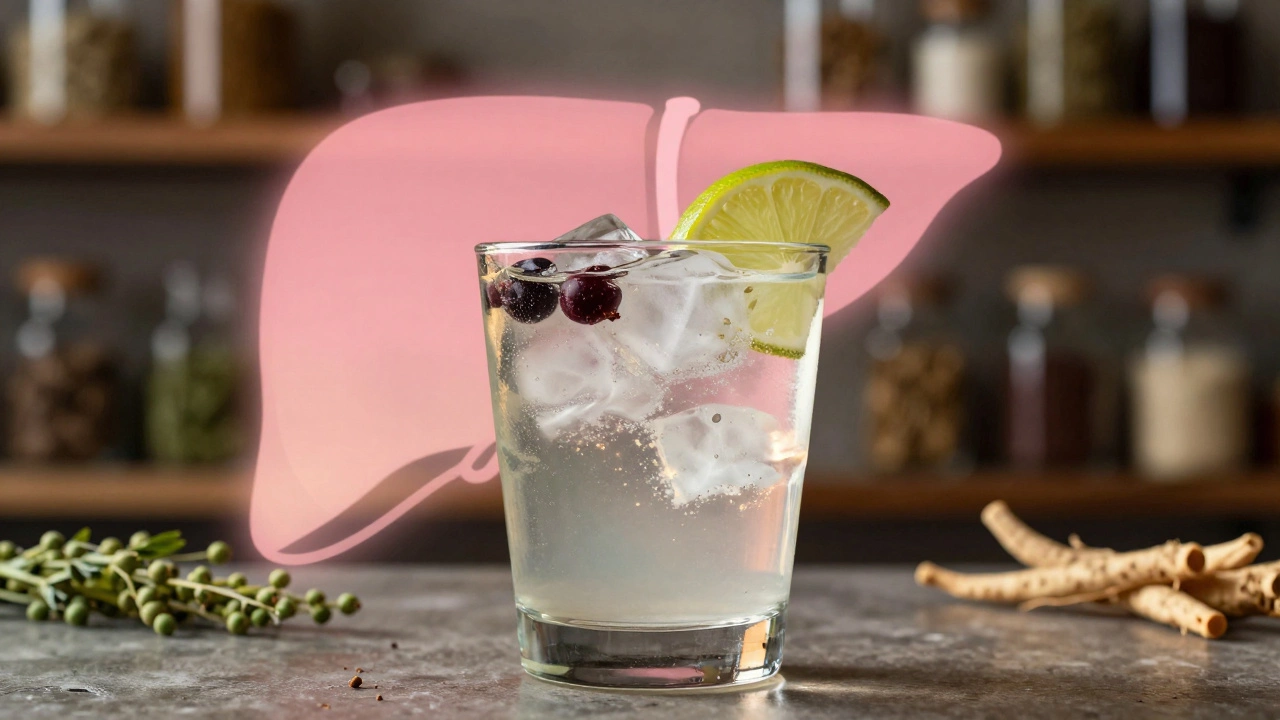
When you take a sip of gin, you’re tasting botanicals, citrus, juniper berries, and craftsmanship. But behind that crisp flavor is a simple truth: gin is alcohol. And alcohol, no matter how fancy the bottle or how artisanal the distillery, still has to be processed by your liver. The question isn’t whether gin is hard on the liver-it’s how much, how often, and for whom.
It’s Not the Gin, It’s the Ethanol
Gin doesn’t have a special ingredient that makes it worse for your liver than vodka, whiskey, or rum. What matters is ethanol-the pure alcohol in every drink. A standard shot of gin (25ml at 40% ABV) contains about 1 unit of alcohol. That’s the same as a small glass of wine or half a pint of beer. The liver breaks down ethanol at roughly one unit per hour. If you drink faster than that, the rest piles up, forcing your liver into overdrive.That’s why a gin and tonic on a Friday night isn’t a problem. But if you’re having three gins every night after work, or bingeing on weekends, you’re asking your liver to work overtime. And overtime turns into burnout.
Three Stages of Liver Damage from Alcohol
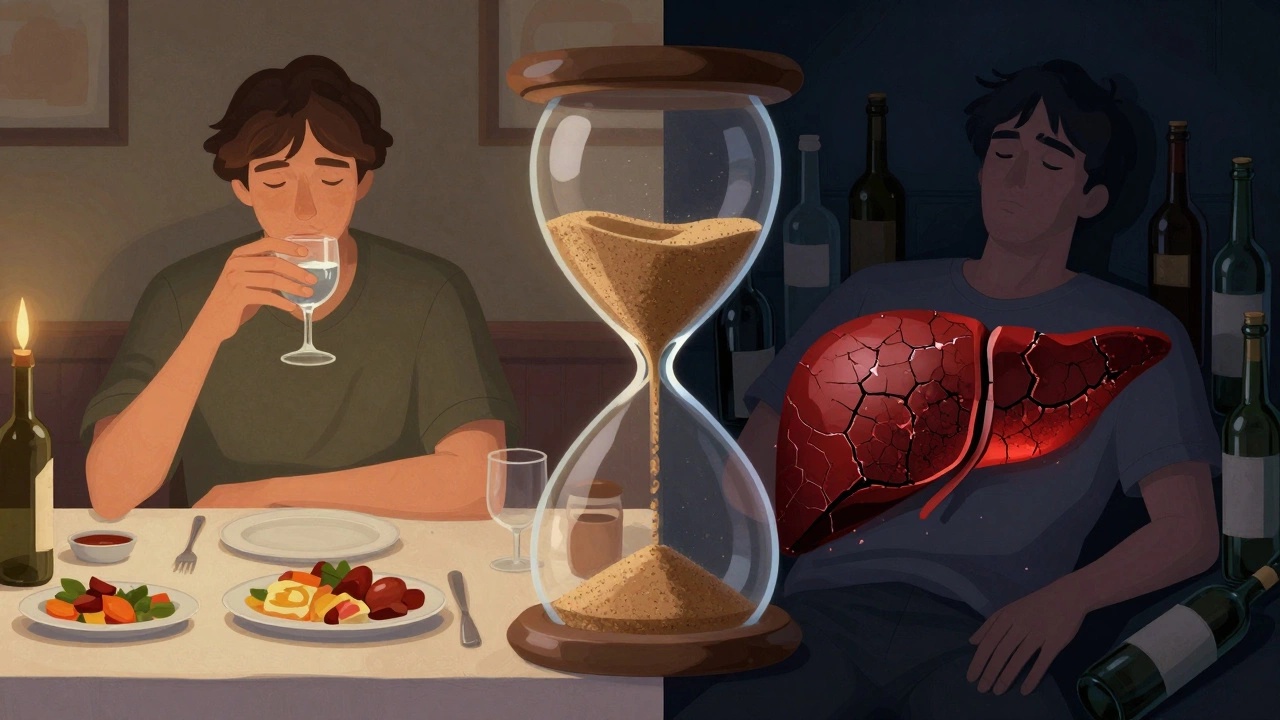
Your liver can handle a lot, but it has limits. When you drink too much over time, it goes through three clear stages:- Fatty liver - This is the first sign. Fat builds up in liver cells. It’s silent, painless, and happens in nearly everyone who drinks heavily. The good news? If you stop drinking, it can reverse completely in weeks.
- Alcoholic hepatitis - Now the liver gets inflamed. You might feel nauseous, get yellow skin (jaundice), or have pain under your ribs. One in three heavy drinkers gets this. Mild cases can linger for years. Severe cases can kill you within days.
- Cirrhosis - Scar tissue replaces healthy liver tissue. The organ can’t filter toxins, make proteins, or store energy anymore. Symptoms include swelling in the legs and belly, confusion, bleeding gums, and extreme fatigue. Once cirrhosis sets in, the damage is permanent. The only way to slow it? Quit drinking completely.
These aren’t hypotheticals. A 2023 study tracking over 50,000 adults found that people who drank more than 14 units a week-about six gin and tonics-had a 50% higher chance of developing liver disease than those who drank less than 7 units. And for women, the risk shot up even at lower levels.
It’s Not Just How Much, But How You Drink
Drinking one gin a day is different from drinking six on Saturday night. The World Health Organization says the safest pattern is:- Women: No more than 2 units per day
- Men: No more than 3 units per day
- At least two alcohol-free days every week
- Avoid drinking more than 4 units in one sitting
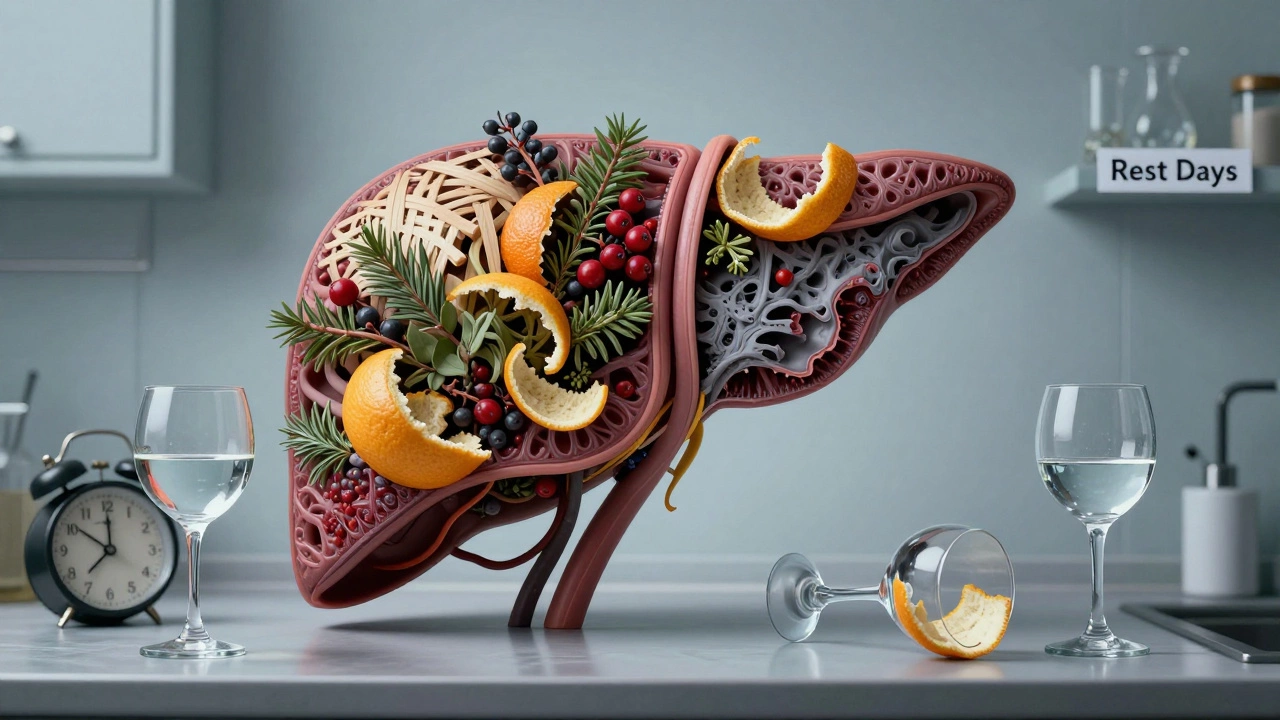
Why? Because your liver needs time to repair. Think of it like a muscle-you don’t lift weights every day without rest. Your liver needs recovery days. Skipping those days, even if you’re under the daily limit, raises your risk.
Also, drinking with meals slows alcohol absorption. Drinking on an empty stomach, especially during late-night sessions, spikes blood alcohol levels faster and stresses the liver more. A gin and tonic with dinner? Better than three gins before bed.
Some People Are Just More at Risk
Not everyone who drinks heavily gets liver damage. Why? Genetics. Some people have enzymes that break down alcohol faster. Others have genes that make their livers more vulnerable to inflammation. If your parent or grandparent had liver disease, you might be at higher risk-even if you drink less than others.Weight matters too. People with a BMI over 30 (considered obese) are far more likely to develop fatty liver disease from alcohol. Combine excess body fat with daily gin, and your liver gets hit from two sides: fat buildup and alcohol toxicity.
And here’s something many don’t realize: Former drinkers still carry risk. A major study found people who quit drinking still had a 2.5 times higher chance of liver cirrhosis than those who never drank. That means past damage doesn’t always vanish-even if you stop now.
What About Gin Distillery Tours?
You might be reading this because you’re planning a gin distillery tour. And that’s great-learning how gin is made, tasting small batches, understanding botanicals, and sipping slowly with food? That’s the opposite of binge drinking.Responsible gin culture isn’t about quantity. It’s about appreciation. Brands like York Gin and Sipsmith push the message: "Don’t drink more-drink better." That means choosing quality over quantity, savoring each sip, and giving your liver space to breathe.
On a tour, you’re not chugging shots. You’re tasting 3-4 small samples over an hour. That’s less than one standard drink. It’s not a problem. It’s education.
When to Get Checked
If you’ve been drinking more than recommended for over a year, or if you’ve had a binge (5+ drinks in one sitting) more than once a month, it’s time to talk to a doctor. Liver damage doesn’t hurt until it’s serious. A simple blood test can check liver enzymes. An ultrasound can spot fat or scarring.And if you’ve been diagnosed with fatty liver, hepatitis, or any liver issue? The advice is clear: Stop drinking. No exceptions. No "just one glass." Your liver can’t afford it.
What’s the Bottom Line?
Gin isn’t uniquely hard on the liver. But it’s still alcohol. And alcohol, in excess, is one of the leading causes of preventable liver disease.Enjoy gin? Go ahead. Sip it slowly. Pair it with food. Choose quality. Give your liver two days off each week. Don’t turn a tasting into a drinking contest.
One gin, once in a while? Fine. Three gins, every night? That’s a problem. Your liver doesn’t care if it’s Hendrick’s or a supermarket brand. It only cares how much you ask it to do.
Is gin worse for the liver than beer or wine?
No, gin isn’t worse than beer or wine. What matters is the amount of pure alcohol. A 25ml shot of gin (40% ABV) has the same alcohol as a 175ml glass of wine (12% ABV) or a pint of beer (4% ABV). It’s not the drink-it’s the total units consumed.
Can you reverse liver damage from gin?
Yes, if it’s caught early. Fatty liver can reverse completely within weeks of stopping alcohol. Mild alcoholic hepatitis can improve if you quit drinking. But once scarring (cirrhosis) develops, it’s permanent. The liver can still function better if you stop, but the damage won’t go away.
Do I need to quit gin completely if I’m healthy?
Not if you drink within limits. The WHO recommends no more than 2 units per day for women and 3 for men, with at least two alcohol-free days each week. If you stick to that, your risk of liver damage is very low. But if you drink more, even occasionally, cutting back helps.
Does drinking gin on weekends only still hurt my liver?
Yes, if you binge. Drinking 6 gins on Saturday night is just as damaging as drinking one gin every day. The liver doesn’t distinguish between daily sipping and weekend binges-it only sees the total toxin load. Binge drinking spikes inflammation and increases risk of acute liver injury.
Are there any health benefits to drinking gin?
No. While gin contains botanicals like juniper, there’s no scientific evidence that they offer liver protection. Any supposed benefits from herbs are wiped out by the damage caused by ethanol. The only health benefit? Not drinking at all.
How do I know if my liver is damaged from gin?
Early liver damage has no symptoms. By the time you feel tired, bloated, or yellow, it’s already advanced. The only reliable way to know is a blood test (liver enzymes ALT, AST) and possibly an ultrasound. If you drink regularly, get checked once a year-even if you feel fine.