Cocktail Ratio Calculator
Enter your measurements to see which foundational cocktail template they match and how close your ratios are to the classic recipes.
There’s a reason you see the same six drinks on every classic cocktail menu-from a speakeasy in Brooklyn to a rooftop bar in Sydney. These aren’t just popular drinks. They’re the building blocks of modern mixology. Back in 1948, David A. Embury, a New York patent attorney with a passion for drinks, wrote The Fine Art of Mixing Drinks. He didn’t claim to be a bartender. But he knew what mattered: if you want to be taken seriously about cocktails, you need to master six foundational drinks. His list stuck. And even today, 75 years later, it’s still the gold standard.
The Original Six: Embury’s Classics
Embury’s six are not random. They cover the core spirit families and preparation methods that shaped American drinking culture. Each one is a template, a perfect balance of spirit, acid, and sweetness. Here’s what they are-and how they’re made the way Embury intended.
- Daiquiri: 8 parts white Cuban rum, 2 parts fresh lime juice, 1 part simple syrup. Shaken hard, strained, no garnish. This is the cleanest sour template you’ll ever taste. No sugar overload. No fruit purees. Just rum, lime, and a hint of sweetness.
- Jack Rose: 8 parts Applejack (apple brandy), 2 parts lemon juice, 1 part grenadine. Shaken, served with a lemon twist. It’s tart, fruity, and deeply nostalgic. Most bars today don’t even carry Applejack anymore. That’s why this one’s rare-but if you find it, try it. It’s the original fruit-forward cocktail.
- Manhattan: 5 parts American rye whiskey, 1 part sweet Italian vermouth, 1 dash Angostura bitters. Stirred with ice until icy cold, strained, garnished with a maraschino cherry. The bitterness from the bitters cuts through the sweetness of the vermouth. It’s smooth, complex, and deeply satisfying.
- Martini: 7 parts English gin, 1 part French dry vermouth. Stirred slowly for 22-28 seconds, strained, garnished with a lemon twist or olive. Embury insisted on this ratio because he hated overly wet Martinis. The ice does the work. Too much vermouth? You’re not making a Martini-you’re making a gin and vermouth cocktail.
- Old Fashioned: 12 parts American whiskey, 1 part simple syrup, 1-3 dashes Angostura bitters. Here’s the trick: dissolve the syrup and bitters in a splash of whiskey first. Then add cracked ice, pour in the rest of the whiskey, and stir gently. Garnish with an orange twist and a cherry. This isn’t just a drink-it’s a ritual. The way you build it matters more than the ingredients.
- Sidecar: 8 parts Cognac, 2 parts lemon juice, 1 part Cointreau. Shaken hard, served in a sugar-rimmed coupe. It’s the citrusy cousin of the Daiquiri, but with brandy instead of rum. The Cointreau adds a layer of orange depth that makes it feel luxurious.
These aren’t suggestions. They’re recipes with purpose. Embury didn’t just write down drinks-he wrote down how to think about balance. The 8:2:1 ratio? That’s the backbone of most sour cocktails. The stirred Martini? That’s how you chill without over-diluting. The Old Fashioned method? That’s how you make sure the sugar dissolves properly.
The Modern Take: Cocktail Codex
Fast forward to 2018, and a new group of bartenders-Alex Day, Nick Fauchald, David Kaplan, and Devon Tarby-released Cocktail Codex. They didn’t ignore Embury. They built on him. Instead of listing six specific drinks, they identified six templates based on structure, not ingredients.
These are their six root cocktails:
- Old Fashioned - Spirit + sweetener + bitters (the original template)
- Martini - Spirit + dry vermouth (the dry, stirred classic)
- Daiquiri - Spirit + citrus + sweetener (the sour template)
- Sidecar - Spirit + citrus + triple sec (the citrusy, fortified sour)
- Whiskey Highball - Spirit + carbonated water (the simplest, most refreshing)
- Flip - Spirit + egg + sweetener (the rich, emulsified drink)
Notice what’s different? The Jack Rose is gone. The Whiskey Highball and Flip are in. Why? Because they represent structures you can’t get from the other five. The Highball is about dilution and effervescence. The Flip is about texture and richness. These aren’t just drinks-they’re categories.
Think of it like music. Embury gave you six songs. The Codex gave you six scales. Once you know the scales, you can play any song. A Margarita? That’s just a Daiquiri made with tequila. A Whiskey Sour? That’s a Flip without the egg. A Negroni? That’s a Martini with sweet vermouth and Campari instead of gin.
Why Both Lists Still Matter
Some bartenders swear by Embury. Others live by the Codex. The truth? You need both.
Embury’s list is your history lesson. If you walk into a classic bar and ask for a Sidecar, they’ll make it the way he wrote it-Cognac, lemon, Cointreau, sugar rim. No substitutions. No modern twists. That’s the standard. If you don’t know these six, you don’t know the roots of American cocktail culture.
The Codex is your toolkit. It explains why a Margarita works. Why a Negroni doesn’t need ice to be balanced. Why a Gin & Tonic is a Highball, not just a “simple” drink. It’s the framework that lets you improvise, tweak, and create without guessing.
Professional bartenders use both. A 2023 survey by BarBusiness Magazine found that 89% of bartenders considered the Margarita more essential than the Jack Rose for daily service. But 70% still trained new staff using Embury’s six as a baseline. Why? Because the Jack Rose might be rare-but the principles behind it? That’s universal.
What You Should Learn First
If you’re starting out, don’t try to memorize 50 recipes. Start with these six. Here’s how to practice:
- Make the Old Fashioned the Embury way-dissolve the sugar first. Notice how the flavor develops differently than if you just dump everything in.
- Make a Martini. Stir it for 20 seconds. Then 30. Taste the difference. The temperature changes the mouthfeel.
- Make a Daiquiri. Use fresh lime. Don’t cheat with bottled juice. The tartness is everything.
- Make a Sidecar. Try it with and without the sugar rim. See how the texture changes.
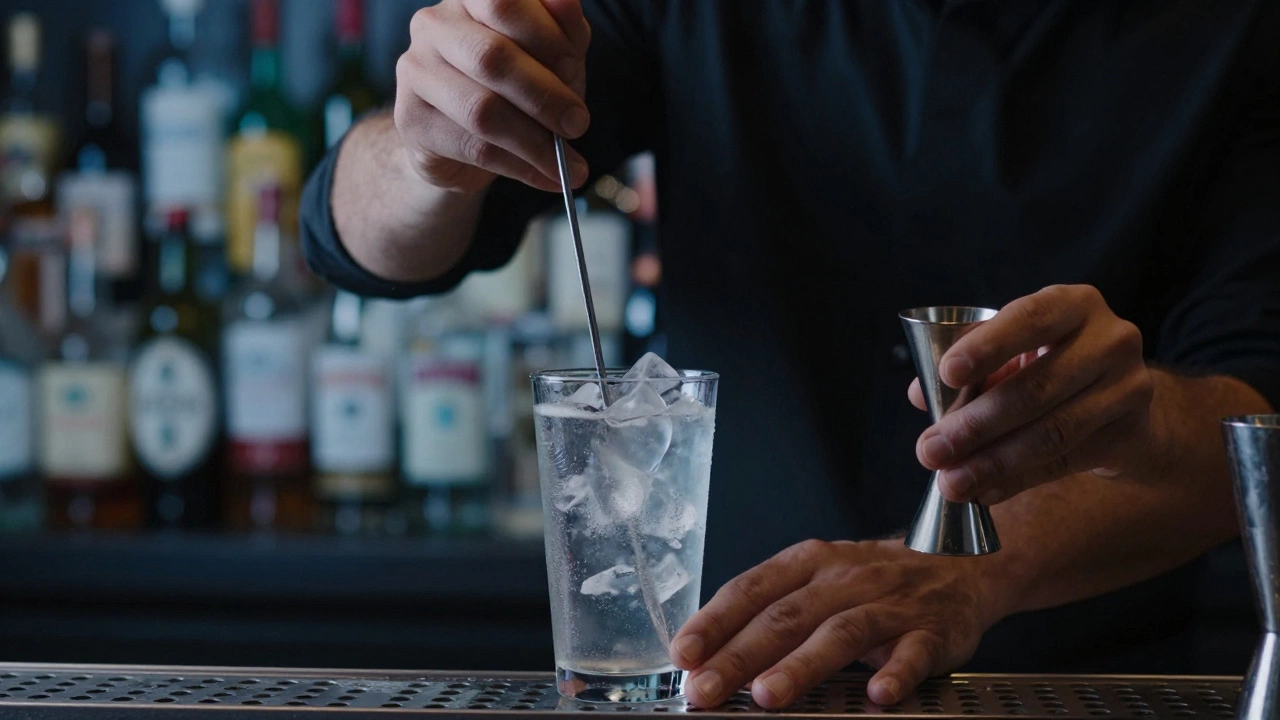
- Make a Whiskey Highball. Use good whiskey. Use cold soda. Don’t pour it over crushed ice. It’s not a Long Island Iced Tea-it’s a quiet, elegant drink.
- Make a Flip. Use a whole egg. Shake it hard for 15 seconds. It should look like a frothy milkshake. That’s the texture you’re after.
Practice each one three times. Don’t change the recipe. Just focus on technique. The ice. The stir. The shake. The garnish. These aren’t just steps-they’re signals that you understand the drink.
Common Mistakes to Avoid
Even experienced home bartenders mess these up.
- Using bottled lime juice in a Daiquiri or Sidecar? You’re not making a cocktail-you’re making a sweet alcoholic drink. Fresh citrus is non-negotiable.
- Shaking a Martini? You’re aerating the gin. It dulls the flavor. Stirring is silent. It’s calm. It’s precise.
- Over-sweetening the Old Fashioned? Embury’s recipe calls for 1 part syrup to 12 parts whiskey. That’s subtle. Most people use 2 parts syrup. You’re masking the whiskey, not enhancing it.
- Using cheap Cointreau or triple sec in a Sidecar? You’ll taste artificial orange. Real Cointreau has depth. It’s not just sweet-it’s floral, spicy, complex.
- Forgetting the garnish? A lemon twist isn’t decoration. It releases oils that change the aroma. That’s half the experience.
These aren’t nitpicks. They’re the difference between a good drink and a great one.
What Comes Next
Once you’ve nailed these six, you’re not done-you’re just getting started. Now you can build anything.
Try this: take the Daiquiri template. Swap rum for tequila? That’s a Margarita. Swap rum for mezcal? That’s a Mezcal Sour. Swap lime for grapefruit? That’s a Paloma. Same structure. Different soul.
Take the Old Fashioned. Swap whiskey for bourbon? That’s still an Old Fashioned. Swap whiskey for brandy? That’s a Brandy Old Fashioned. Swap bitters for absinthe? That’s a Sazerac.
You’re not memorizing recipes anymore. You’re learning a language. And these six drinks? They’re your alphabet.
Are the six basic cocktails still relevant today?
Yes. Even with new trends like low-alcohol cocktails and exotic ingredients, these six remain the foundation. Most modern drinks-like the Negroni, Margarita, or Whiskey Sour-are variations of these templates. Bars still train new bartenders using Embury’s list because it teaches balance, technique, and history. You can’t create something new until you understand what came before.
Why is the Jack Rose so rarely seen today?
Because Applejack, the key ingredient, is hard to find. It’s a distilled apple brandy that fell out of favor after Prohibition. Most modern bars use apple liqueur instead, which isn’t the same. But if you want to taste the original, seek out real Applejack-it’s tart, earthy, and deeply American. It’s not popular, but it’s essential to understanding cocktail history.
Is the Martini supposed to be dry?
Embury’s version is dry: 7 parts gin to 1 part vermouth. That’s the classic American standard. But “dry” means different things to different people. Some like it wet (more vermouth), some like it dirty (with olive brine). The key is consistency. If you say you’re making a Martini, know what version you’re serving. And never, ever shake it.
Can I substitute ingredients in these cocktails?
You can, but only after you’ve mastered the original. Substituting cheap rum for Cuban rum in a Daiquiri? That’s cheating. Using orange juice instead of lemon in a Sidecar? That’s not a Sidecar anymore-it’s a different drink. Learn the rules first. Then break them with purpose.
Which of the six is the hardest to make well?
The Martini. It’s simple, but that’s the problem. Too much ice? Too little stirring? Wrong glass? The temperature, dilution, and aroma have to be perfect. A bad Martini tastes flat or watery. A perfect one is crisp, cold, and clean. It takes practice. Most bartenders spend months perfecting it.
Do I need special equipment to make these?
Not much. A shaker, a jigger, a bar spoon, a strainer, and a citrus squeezer are all you need. A coupe or rocks glass for serving helps, but even a wine glass works. The real tool isn’t the gear-it’s your patience. These drinks reward attention, not gadgets.
Final Thought
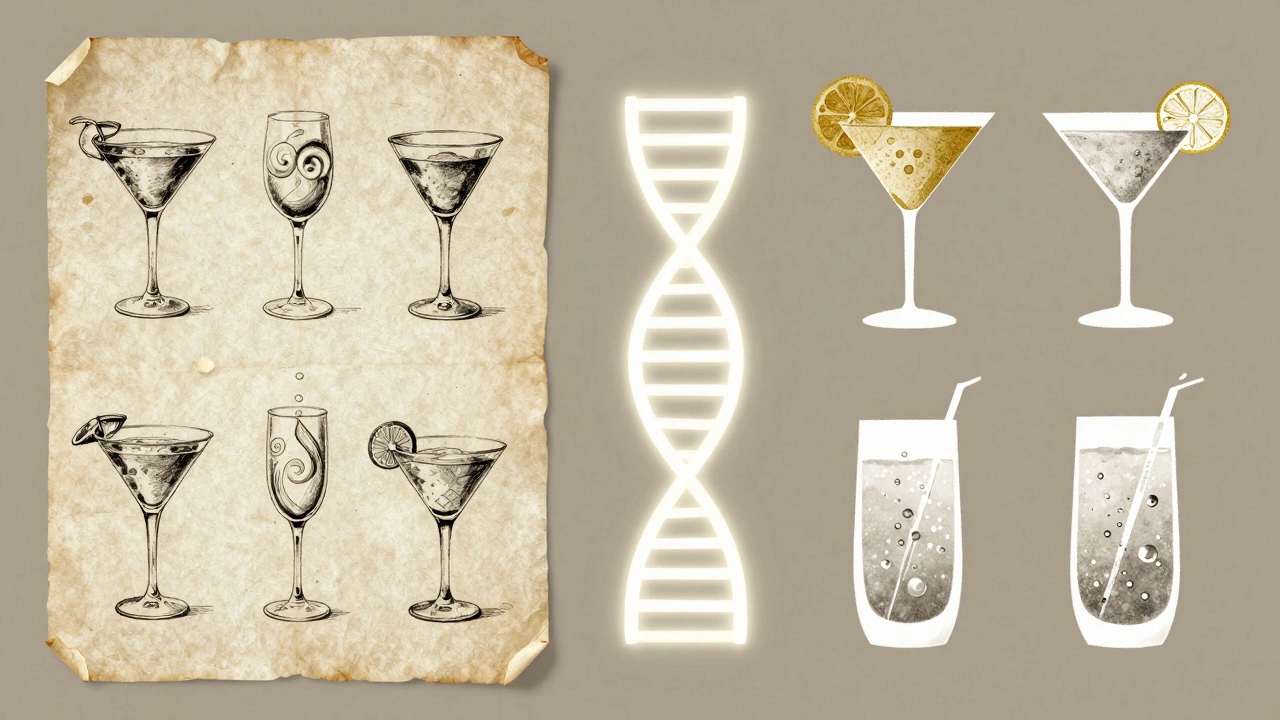
You don’t need to know every cocktail ever made. You just need to know these six. Master them, and you can make any drink that’s ever been created-past, present, or future. That’s not hype. That’s how the system works. These aren’t just recipes. They’re the DNA of cocktails. Learn them. Taste them. Make them again. And next time someone asks what the six basic cocktails are-you’ll know exactly why they matter.