Most beginners think wine pairing is about following rules: red with meat, white with fish. But that’s where things go wrong. The truth? The biggest mistakes aren’t about what color the wine is-they’re about ignoring how the food and wine actually interact on your palate. You can have a $200 bottle of Cabernet and still ruin your meal if you pair it with the wrong dish. And you can have a $15 bottle of Riesling that makes your Thai curry taste like magic. Here are the seven most common mistakes beginners make-and how to fix them.
Mistake 1: Matching Wine Intensity with Food Intensity
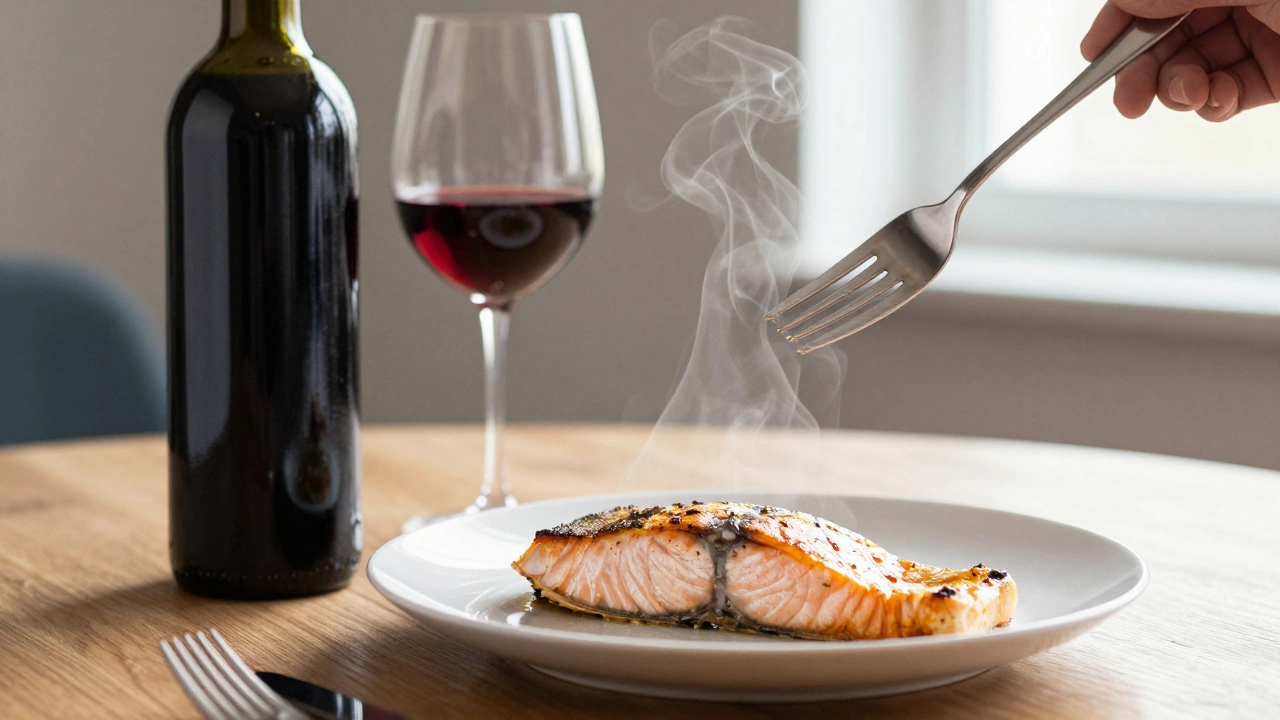
Think of wine and food like two people in a conversation. If one talks too loudly, the other can’t be heard. That’s what happens when you serve a heavy Cabernet Sauvignon with delicate grilled salmon. The tannins in the wine crush the subtle flavors of the fish. Same goes for Chianti with tuna salad-the vinegar in the salad makes the wine taste metallic and bitter. Or Viognier with lemon tart? The wine’s floral notes vanish under the citrus. It’s not about the color. It’s about weight. Light foods need light wines. Bold foods need bold wines.
Here’s a simple rule: if the dish has strong seasoning, rich sauce, or charred edges, go for a full-bodied red like Syrah or Malbec. If it’s steamed, poached, or dressed lightly, pick something crisp like Pinot Grigio, Sauvignon Blanc, or a light Pinot Noir. The goal isn’t to overpower-it’s to complement.
Mistake 2: Pairing Spicy Food with High-Alcohol Wines
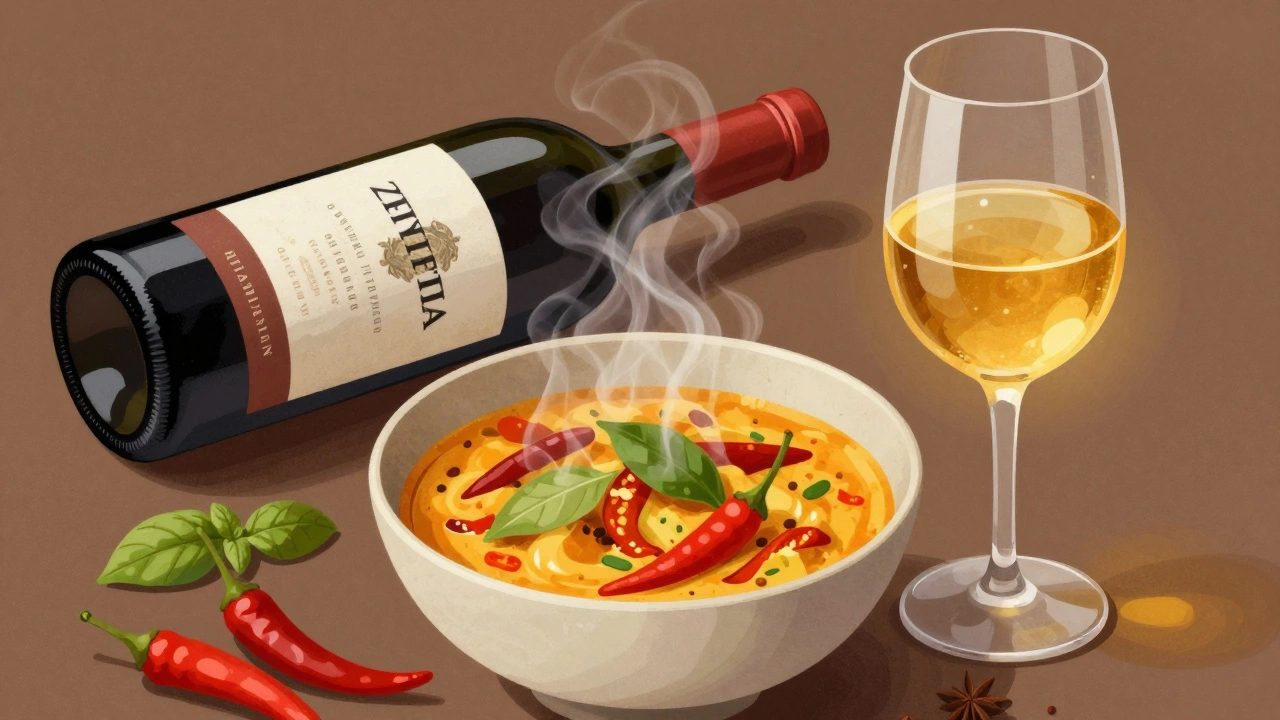
Spicy food and bold reds? That’s a recipe for disaster. When you eat chili-laced dishes and sip a 14.5% ABV Zinfandel, the alcohol feels hotter. The tannins amplify the burn. Your mouth dries out. You start drinking more to cool down-and the cycle gets worse. It’s not that red wine can’t work with spice. It’s that most beginners pick the wrong kind.
Instead, reach for low-alcohol whites with a touch of sweetness. German Riesling Kabinett (around 8.5% ABV and 12g/L residual sugar) is a classic for a reason. The sugar balances the heat. The acidity cuts through the oil. Even a slightly off-dry Gewürztraminer works better than any Cabernet. Avoid bone-dry wines like Sauvignon Blanc or Pinot Grigio-they make spicy food feel parched and harsh. Sweetness isn’t the enemy. Lack of balance is.
Mistake 3: Sticking to Outdated Rules Like “White with Fish, Red with Meat”
“Red wine goes with meat.” Sounds simple. But what if the meat is grilled salmon? Or duck confit? Or pork belly with a spicy glaze? These aren’t your grandfather’s dinner plates. Modern cooking blends flavors, textures, and techniques that break old rules. A rich, oily fish like black cod, glazed with miso or soy, pairs beautifully with a chilled Pinot Noir. The fruitiness of the wine matches the umami. The acidity cleanses the fat. No white wine needed.
Same with pork. Many still think it must be white wine only. But a slow-roasted pork shoulder with rosemary and black pepper? A light, earthy Grenache or a cool-climate Pinot Noir sings with it. The key isn’t the animal-it’s the sauce, the spice, the cooking method. If the dish is fatty, smoky, or caramelized, a red wine with moderate tannins often works better than a white. Don’t let tradition blind you to what your taste buds are telling you.
Mistake 4: Choosing the Wine Before the Food
This is the silent killer of good pairings. You walk into a restaurant, order your wine first, then glance at the menu. Now you’re stuck. That bottle of Shiraz you picked? It’s terrible with the vegetable curry. But you already paid for it. You’re not going to send it back.
Wine should serve the food-not the other way around. The best pairings happen when you know what you’re eating, then find the wine that lifts it. At home, look at the menu first. Ask: What’s the dominant flavor? Is it creamy? Spicy? Smoky? Then pick a wine that matches or contrasts it intentionally. In restaurants, tell your server what you’re ordering. Ask: “What would you drink with this?” Most sommeliers will give you a better answer than the wine list.
And don’t fall for the chocolate cake trap. Pairing a dry red with dark chocolate? The wine tastes flat, bitter, and thin. The chocolate swallows it whole. Instead, go for Port, Banyuls, or even a sweet late-harvest Zinfandel. The wine needs to be sweeter than the dessert. Otherwise, it loses.
Mistake 5: Ignoring Tannins, Acidity, and Temperature
Wine isn’t just flavor. It’s structure. Tannins (the dry, grippy feeling in reds), acidity (the bright, mouth-watering zing), and temperature all change how wine behaves with food.
Tannins hate salt and vinegar. That’s why Merlot with artichokes tastes bitter. Tannins also clash with spicy food. A full-bodied red with tacos al pastor? The pineapple and achiote make the wine taste harsh. Instead, try a chilled, slightly fizzy Pét-Nat or a dry Chenin Blanc from Mexico. The bubbles lift the spice. The acidity cuts the fat.
Acidity is your secret weapon. A high-acid wine like Sauvignon Blanc or Chablis can refresh your palate after a fatty bite of cheese or fried food. But if you serve it too cold, the acidity disappears. If you serve it too warm, it tastes flat. Most whites should be chilled to 45-50°F. Reds should be served slightly cooler than room temperature-around 60-65°F. That’s not a luxury. That’s science.

Mistake 6: Using Regular Table Wine with Dessert
Dessert wine isn’t just “sweet wine.” It’s a different category. Most beginners pick a regular red or white because “it’s sweet enough.” But dessert wines like Sauternes, Tokaji, or Ice Wine have concentrated sugar, balanced acidity, and complex flavors that can stand up to cake, custard, or fruit tarts. A standard Chardonnay at 12g/L residual sugar? It’ll taste sour next to a chocolate mousse.
Rule of thumb: The wine must be sweeter than the dessert. If your dessert has caramel, honey, or dried fruit, go for a dessert wine with similar notes. If it’s a tart or citrus-based dessert, pick something with high acidity and moderate sweetness-like a Moscato d’Asti or a late-harvest Riesling. And don’t pour a big glass. Dessert wines are meant to be sipped slowly, in small amounts. A 3-ounce pour is plenty.
Mistake 7: Rushing the Tasting Process
You pour the wine. You swirl. You gulp. You move on. But you didn’t smell it. You didn’t let it breathe. You didn’t notice the hint of peach in the nose or the minerality on the finish. That’s like judging a book by its cover.
Proper tasting starts with smell. Don’t swirl right away. Put your nose in the glass. Breathe in slowly. You’ll catch the floral notes, the stone fruit, the wet stone, the spice. Then swirl gently. Smell again. Now take a small sip. Let it roll over your tongue. Notice the texture. Is it oily? Crisp? Chewy? That’s how you know if it’ll work with your food.
And don’t chug. Tasting six wines in an hour? You’ll be numb by the fourth. Your palate won’t detect anything but alcohol. Slow down. Sip. Pause. Think. You’ll make better choices-and enjoy more.
The Future of Pairing: It’s Not About Rules, It’s About Feel
Top restaurants are moving away from rigid pairings. They’re using “flavor bridges”-connecting a note in the wine to a note in the food. Maybe it’s the smokiness in a grilled mushroom matching the oak in the wine. Or the citrus zest in a salad echoing the citrus in the Sauvignon Blanc. It’s not about color. It’s about connection.
AI pairing apps are now analyzing food chemistry and wine composition to suggest matches. But you don’t need an app. You just need to pay attention. Taste. Notice what works. What doesn’t. Write it down. Your palate will get smarter with every bite and sip.
Wine pairing isn’t about perfection. It’s about curiosity. It’s about asking: What does this taste like? How does it change when I eat this? The best pairings aren’t found in books. They’re found on your tongue.
Can you pair red wine with fish?
Yes-when the fish is rich, oily, or cooked with bold flavors. Grilled salmon with a soy glaze, black cod with miso, or seared tuna with a spice crust all pair beautifully with light, low-tannin reds like Pinot Noir. The key is matching the weight and seasoning, not the color. Avoid delicate white fish like cod or sole with reds-they’ll be overwhelmed.
What’s the best wine for spicy food?
Low-alcohol, slightly sweet whites like German Riesling Kabinett, Gewürztraminer, or off-dry Chenin Blanc work best. The sugar cools the heat, and the acidity refreshes your palate. Avoid high-alcohol wines (over 13.5% ABV) and bone-dry whites-they make spice feel harsher. Even a sparkling Moscato can work if it’s not too sweet.
Should I chill red wine?
Yes-especially lighter reds like Pinot Noir, Gamay, or Grenache. Serve them at 55-60°F. That’s cooler than room temperature. It brings out their fruit and acidity. Heavy reds like Cabernet or Syrah can stay closer to 65°F, but never serve them warm. Warm reds taste alcoholic and flat. Cold reds taste balanced.
Is it okay to pair wine with chocolate?
Only if the wine is sweeter than the chocolate. A dry red wine with dark chocolate tastes bitter and thin. Instead, choose Port, Banyuls, or a late-harvest Zinfandel. These wines have enough sugar to match the sweetness of the chocolate without being overpowered. A small glass (3 oz) is enough. Don’t try to pair milk chocolate with reds-it’s too sweet and cloying.
How do I know if a wine is too tannic for a dish?
If the wine tastes dry, astringent, or bitter when you eat the food, it’s likely too tannic. Tannins amplify salt, vinegar, and spice. So avoid big reds with dishes like tuna salad, artichokes, or tacos with lime and chili. Look for wines labeled “soft tannins” or “early drinking.” Pinot Noir, Barbera, and Gamay are safer bets for delicate or acidic foods.