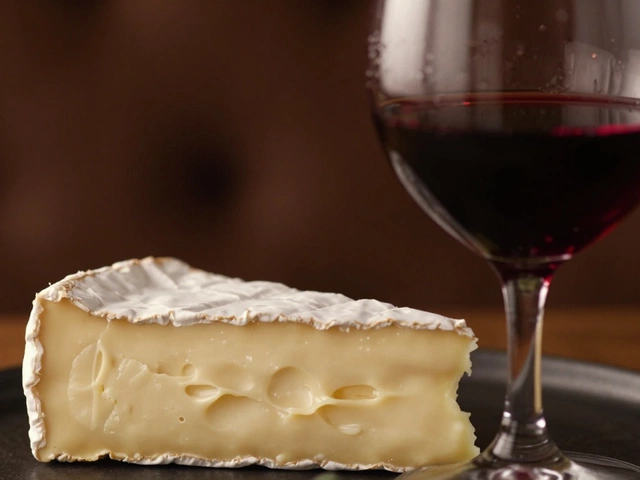
Ever bitten into a creamy slice of Brie, then took a sip of red wine - only to feel your mouth go dry and weirdly metallic? You’re not alone. That’s not your fault. It’s just the wrong wine. The truth is, wine and cheese pairing isn’t about fancy rules or expensive bottles. It’s about balance. When done right, cheese and wine don’t just sit next to each other - they elevate each other. The salt cuts the acidity. The fat softens the tannins. The bubbles scrub your palate clean. It’s simple chemistry, done deliciously.
Start with the Cheese: Know Your Categories
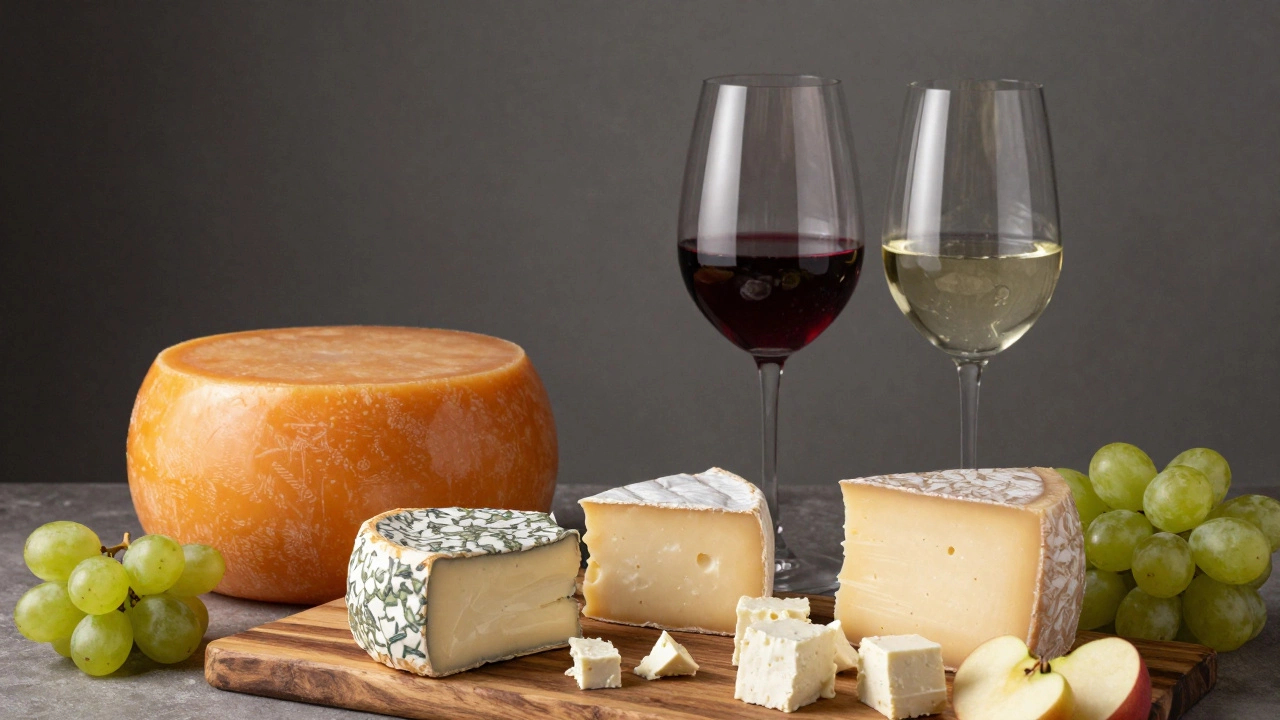
Not all cheeses are created equal. They fall into clear groups, and each group has its own wine soulmate. Think of cheese like a personality - soft and buttery, sharp and crumbly, bold and funky. Match the wine to that vibe.- Fresh cheeses - think goat cheese, ricotta, mozzarella. These are light, tangy, and moist. They need something bright and crisp. Sauvignon Blanc is the go-to. Its citrus and grassy notes mirror the cheese’s acidity. Sparkling wine works too - the bubbles lift the creaminess without weighing it down.
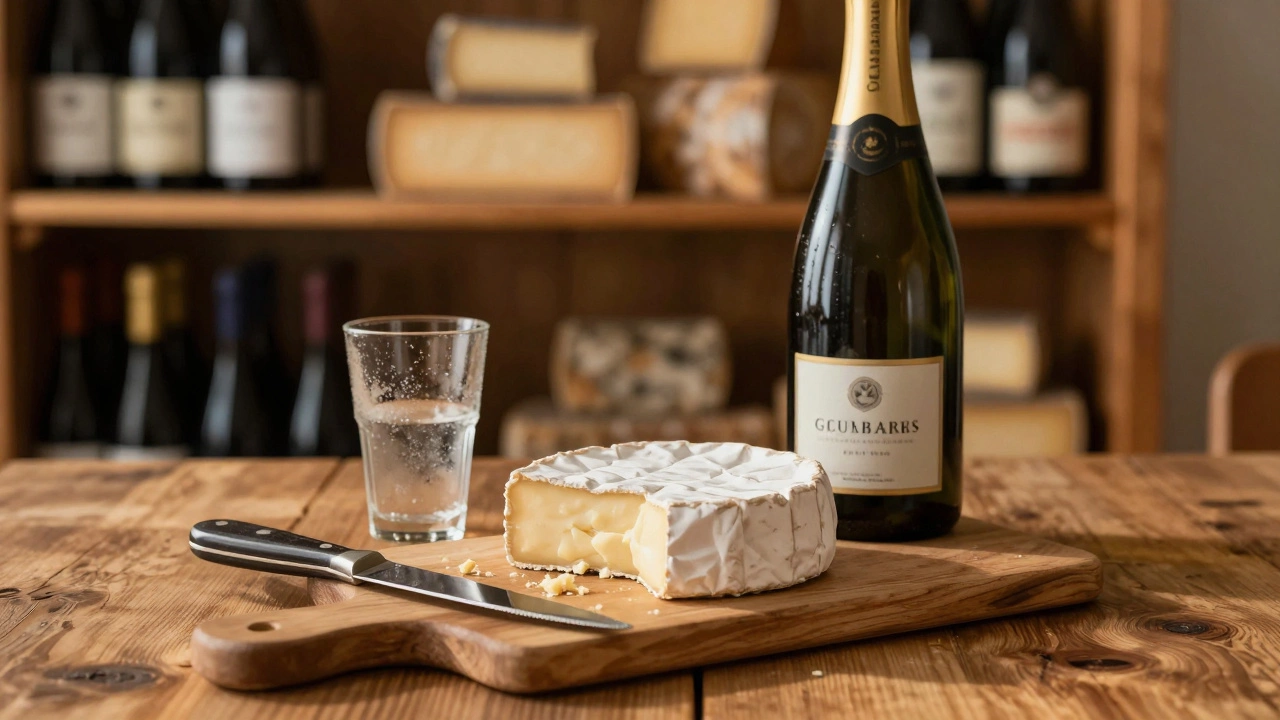
- Soft cheeses - Brie, Camembert, triple-cream. These are rich, buttery, and melt on your tongue. They need acidity to cut through the fat. Champagne or a buttery Chardonnay does this perfectly. The high acid and bubbles in Champagne dissolve the cheese’s coating on your palate. That’s why it’s a classic.
- Aged hard cheeses - cheddar, Gouda, Parmesan, Pecorino. These are nutty, salty, and dense. They stand up to bold flavors. A medium-bodied red like Pinot Noir or a structured Cabernet Sauvignon works. But here’s the catch: Cabernet can clash if the cheese is too soft. Stick to aged cheddar or aged Gouda. The caramel notes in the cheese hug the red fruit in the wine.
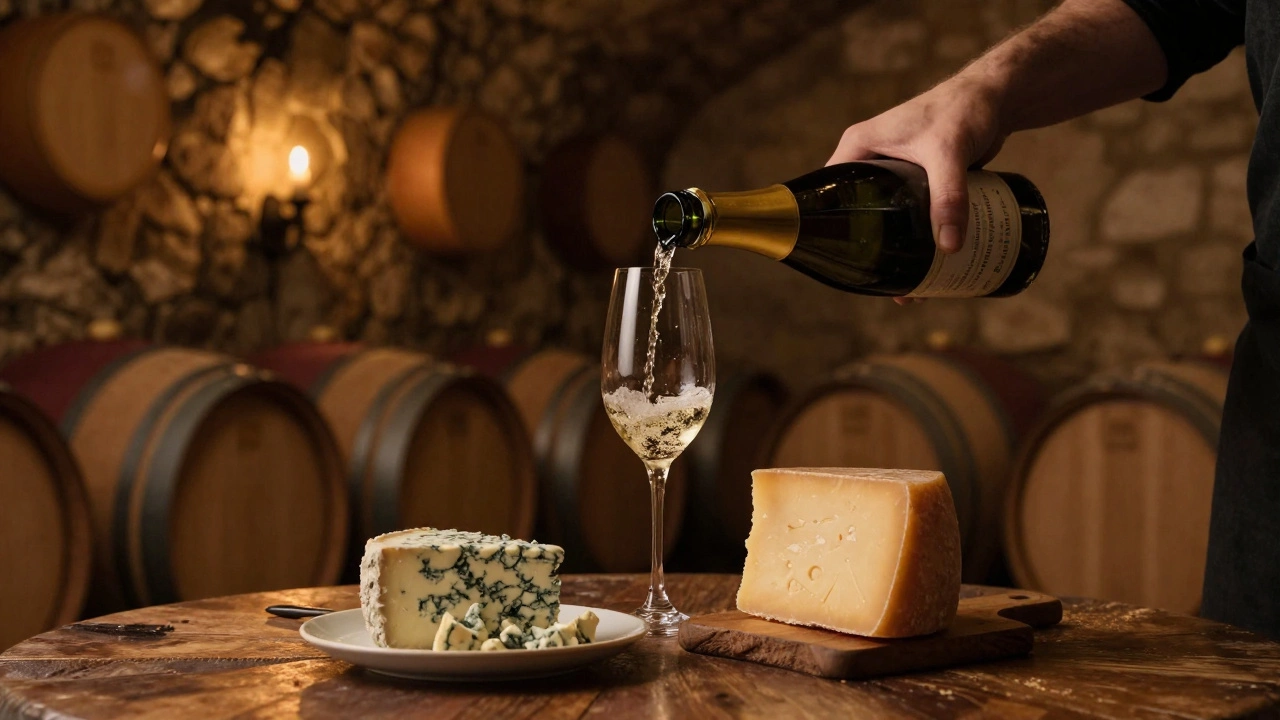
- Blue cheeses - Stilton, Gorgonzola, Roquefort. These are salty, earthy, and punchy. They need sweetness to balance the salt. Port, Sauternes, or even a late-harvest Riesling are ideal. The sugar in the wine tames the funk. Surprisingly, sparkling wine also works - the carbonation cleanses the palate after each bite.
- Salty crumbly cheeses - feta, cotija, halloumi. These are briny and sharp. Light whites like Pinot Grigio or rosé are your friends. A dry sparkling wine? Even better. The salt makes the wine taste fruitier.
Wine Rules That Actually Work
Forget the myths. You don’t need to memorize a hundred pairings. Just remember two simple principles:- Match acidity - High-acid wines (Sauvignon Blanc, Champagne, Riesling) cut through fatty cheeses (Brie, goat cheese). Low-acid wines (oaked Chardonnay, Pinot Noir) match mellow cheeses (aged Gouda, Comté).
- Match power - Don’t bring a heavyweight red to a delicate fresh cheese. It’ll crush it. And don’t serve a light Pinot Grigio with a strong blue cheese. It’ll disappear. Let the cheese and wine be equals.
Here’s the kicker: sparkling wine is the most forgiving. It works with almost everything. Why? The bubbles scrub your mouth clean after each bite. That’s why sommeliers call it the “Swiss Army knife” of cheese pairings. Champagne with Brie? Perfect. Prosecco with feta? Yes. Cava with aged cheddar? Surprisingly good.
Classic Pairings That Never Fail
Some combinations have stood the test of time - and blind tastings. These aren’t just opinions. They’re backed by data from wine competitions and consumer surveys.- Goat cheese + Sauvignon Blanc - The wine’s citrus and minerality amplify the cheese’s tang. 78% of tasters rated this “excellent” in a Cheese.com survey.
- Brie + Champagne - The fat meets the fizz. The acidity cuts through, leaving your palate refreshed. This pairing scored 4.5 out of 5 in a Wine Enthusiast blind test.
- Aged Gouda + Pinot Noir - The caramel and nutty notes in the cheese mirror the red fruit and earth in the wine. Reddit users call it a “revelation.”
- Manchego + Amontillado Sherry - The nutty, dried fruit character of the sherry matches the cheese’s umami depth. It’s a Spanish classic that surprises first-timers.
- Stilton + Port - The salt and funk of the cheese are soothed by the wine’s sweetness and richness. It’s the ultimate dessert pairing.
- Parmesan + Riesling - Yes, Riesling. The slight sweetness and high acid balance the cheese’s salty, umami punch. It’s the highest-rated cheese pairing in Wine Folly’s database - 4.8 out of 5.
Pairings to Avoid
Some combinations just don’t work. And they’re more common than you think.- Cabernet Sauvignon + soft cheeses - The tannins in Cabernet grab onto the proteins in Brie or Camembert. The result? A metallic, bitter taste. Users on Wine Folly forums call this “disastrous.” Stick to aged cheeses if you’re drinking Cabernet.
- Pinot Grigio + blue cheese - Too light. The wine vanishes. The cheese dominates. You’ll taste salt and nothing else.
- Chardonnay + very salty cheeses - If the cheese is too salty (like feta or cotija), the oak and butter in the Chardonnay can taste cloying. Go for a crisp, unoaked white instead.
How to Taste Like a Pro
It’s not just about what you drink. It’s how you taste.- Start light, end bold. Begin with fresh cheeses and crisp whites. Move to soft, then hard, then blue. Dessert wines last.
- Let cheese come to room temperature. Cold cheese dulls flavor. Take it out of the fridge 30-60 minutes before serving.
- Serve wine chilled. Sparkling and whites at 45-50°F. Reds at 55-60°F. Too warm? The alcohol burns. Too cold? The flavors hide.
- Use plain bread or apple slices between bites. It resets your palate. 87% of people who do this say they taste more.
- Don’t go overboard. Stick to 3-5 cheeses and 1-2 wines. Too many and your tongue gets tired.
What’s New in Pairing?
The rules are evolving. More people are experimenting.- Orange wines - Skin-contact whites with tannin structure are now being paired with aged cheeses like Comté. The texture matches.
- Local pairings - Oregon Pinot Noir with Willamette Valley goat cheese? Yes. Terroir matters. What grows together, often goes together.
- Plant-based cheeses - Nut-based cheeses (cashew, almond) pair best with aromatic whites like Gewürztraminer. The floral notes complement the nuttiness.
- Sustainability - More sommeliers now consider how the wine and cheese were made. Organic, low-intervention, small-batch - these are becoming part of the pairing decision.
The market is growing fast. Premium cheese sales jumped 7.2% a year from 2018 to 2023. Sparkling wine sales? Up 9.3%. People aren’t just drinking wine anymore. They’re creating experiences.
Frequently Asked Questions
What wine goes with cheddar cheese?
For mild cheddar, try a light Pinot Noir or a crisp Sauvignon Blanc. For aged cheddar, go bold: Cabernet Sauvignon, Syrah, or even a full-bodied Zinfandel. The caramel and nutty notes in aged cheddar match the dark fruit and spice in these wines. Avoid light whites - they’ll get lost.
Can you pair red wine with goat cheese?
Yes, but be careful. Light, low-tannin reds like Beaujolais or Pinot Noir work. Avoid heavy Cabernets - they’ll clash. The key is acidity. A red with bright cherry notes and low tannin will complement the tanginess without overwhelming it.
What’s the best wine for blue cheese?
Sweet wines win here. Port, Sauternes, or late-harvest Riesling are top choices. The sugar balances the salt and funk. Sparkling wine is a great alternative - it cleanses the palate and lifts the richness. Don’t pair blue cheese with dry reds or whites. They’ll taste bitter.
Does the cheese need to be room temperature?
Absolutely. Cold cheese hides its flavor. Take it out of the fridge at least 30 minutes before serving. Soft cheeses like Brie should be soft to the touch, not runny. Hard cheeses should be supple, not chalky. Flavor develops with warmth.
Is there a wine that goes with everything?
Yes - sparkling wine. Champagne, Prosecco, Cava - they all work. The bubbles cut through fat, lift salt, and refresh your palate. It’s the safest, most versatile choice. If you’re unsure, go sparkling.
Next Steps
Start small. Pick one cheese you love. Find one wine you’ve never tried with it. Taste it. Write down what you notice. Did the wine taste fruitier? Did the cheese feel less salty? That’s your guide. You don’t need a sommelier. You just need curiosity.Wine and cheese pairing isn’t about perfection. It’s about discovery. The best pairings aren’t written in books - they’re found on your kitchen counter, with friends, and a glass in hand.