Beginner Beer Style Calculator
Choose Your Preferences
Your Recommended Beer Style
American Light Lager
89% success rate for beginners
This is the safest choice for your first brew. With an ABV of 4.0-4.5% and IBUs of 13-16, it's light, crisp, and forgiving of minor mistakes. It uses just three ingredients: pilsner malt, rice, and corn. Even if your fermentation temperature is slightly off, it will still taste like beer.
Starting your first batch of homebrew can feel overwhelming. You’ve seen the gear, read the forums, maybe even watched a dozen YouTube videos - but when it comes time to actually pick your first beer, what do you choose? The answer isn’t about complexity or prestige. It’s about success. The best first beer to brew is the one that gives you the highest chance of drinking something tasty, without needing perfect conditions, fancy equipment, or years of experience.
Why Your First Beer Matters More Than You Think
Your first brew isn’t just about making beer. It’s about building confidence. Research from the American Homebrewers Association shows that 83% of people who make a drinkable beer on their first try keep brewing. Those who struggle? Most quit. It’s not because they lack skill - it’s because they picked something too hard. Think of it like learning to ride a bike. You don’t start on a mountain trail. You start on flat ground with training wheels. The same logic applies here. A good first beer hides small mistakes. It doesn’t punish you for slightly off temperatures, minor sanitation lapses, or imprecise measurements. It rewards you with a beer you’ll actually enjoy - and that’s what keeps you coming back.The Top 3 Beginner-Friendly Beer Styles
Not all beer styles are created equal for newcomers. Some demand perfect fermentation control. Others require precise mashing schedules. For your first batch, avoid those. Stick to styles that are forgiving, simple, and reliable.1. American Light Lager
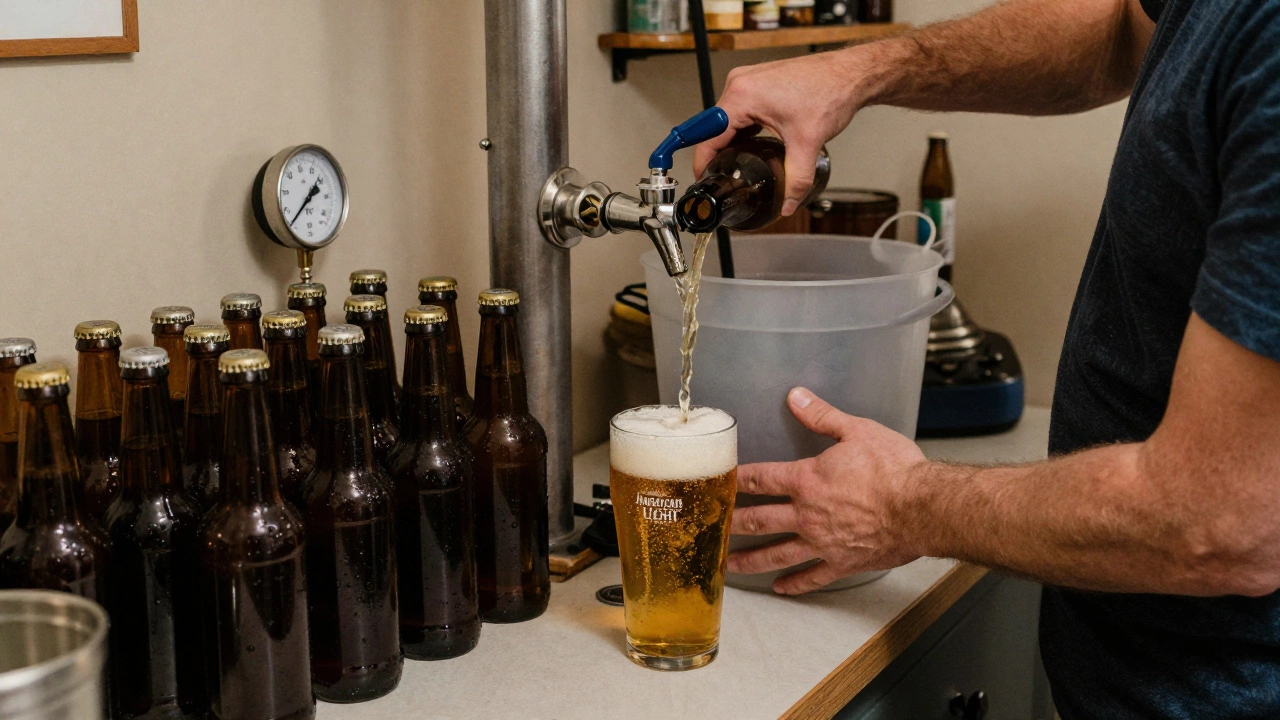
This is the quiet champion of beginner brewing. It has an ABV of 4.0-4.5%, IBUs between 13-16, and uses just three ingredients: pilsner malt, rice, and corn. That’s it. No fancy hops. No complex yeast. No multi-step mashing. Why it works: The light body and crisp finish mask almost any minor flaw. Even if your fermentation ran a little warm or your boil wasn’t quite long enough, it still tastes like beer - not like a science experiment gone wrong. According to homebrew survey data, 89% of beginners rate their first American Light as “drinkable or better.” You’ll find this style in almost every beginner kit. Brewer’s Best, Northern Brewer, and Midwest Supplies all offer it. It’s cheap, easy to find, and comes with pre-measured ingredients. If you’ve never brewed before, this is your safest bet.2. Hefeweizen (Wheat Beer)
If you like banana and clove flavors, this is your go-to. Hefeweizens use a special yeast (like Wyeast 3068 or White Labs WLP380) that naturally produces those signature esters - even with basic brewing techniques. The grain bill is mostly wheat malt, which means no mashing complexity. Just steep grains, boil, ferment, and bottle. It’s forgiving in two ways: First, the fruity, spicy yeast flavors cover up off-flavors from poor sanitation or oxygen exposure. Second, it doesn’t need crystal-clear clarity. A little haze? That’s normal. In fact, it’s expected. Success rate? Around 85%. The main pitfall? Fermentation temperature. Keep it between 64-70°F. If it gets too hot, you’ll get harsh solvent-like notes. Too cold, and the yeast won’t produce those fun banana flavors. A water bath with a frozen water bottle works wonders here.3. American Pale Ale (APA)
If you’re not into light lagers or wheat beers, go for a simple APA. It’s the middle ground: hoppy enough to be interesting, but not so bitter or complex that one mistake ruins it. Marshall Schott’s “Tiny Bottom Pale Ale” is a favorite among beginners. It uses a single-step mash at 152°F for 60 minutes, one yeast strain (San Diego Super Yeast), and hops added only at flameout. No long boil. No hop scheduling. Just boil, cool, pitch yeast, wait. It’s not quite as forgiving as the light lager - hop utilization can be tricky if you don’t understand boil time - but it’s still far easier than an IPA. And if you nail it, you’ll have a beer that tastes like a craft brew from your local taproom.What to Avoid as a Beginner
There’s a reason these styles aren’t recommended for your first brew:- IPAs - They’re hop-forward, so any flaw in bitterness, oxidation, or sanitation shows up loud and clear. Only 42% of beginners make a drinkable IPA on the first try.
- Stouts and Porters - Dark roasted malts can taste burnt or astringent if mashed too hot. They also need precise carbonation levels.
- Belgian Saisons and Tripels - These require precise yeast management, long fermentation times (up to a month), and strict temperature control. Success rates drop to 67% or lower.
Extract Brewing: The Easiest Path for New Brewers
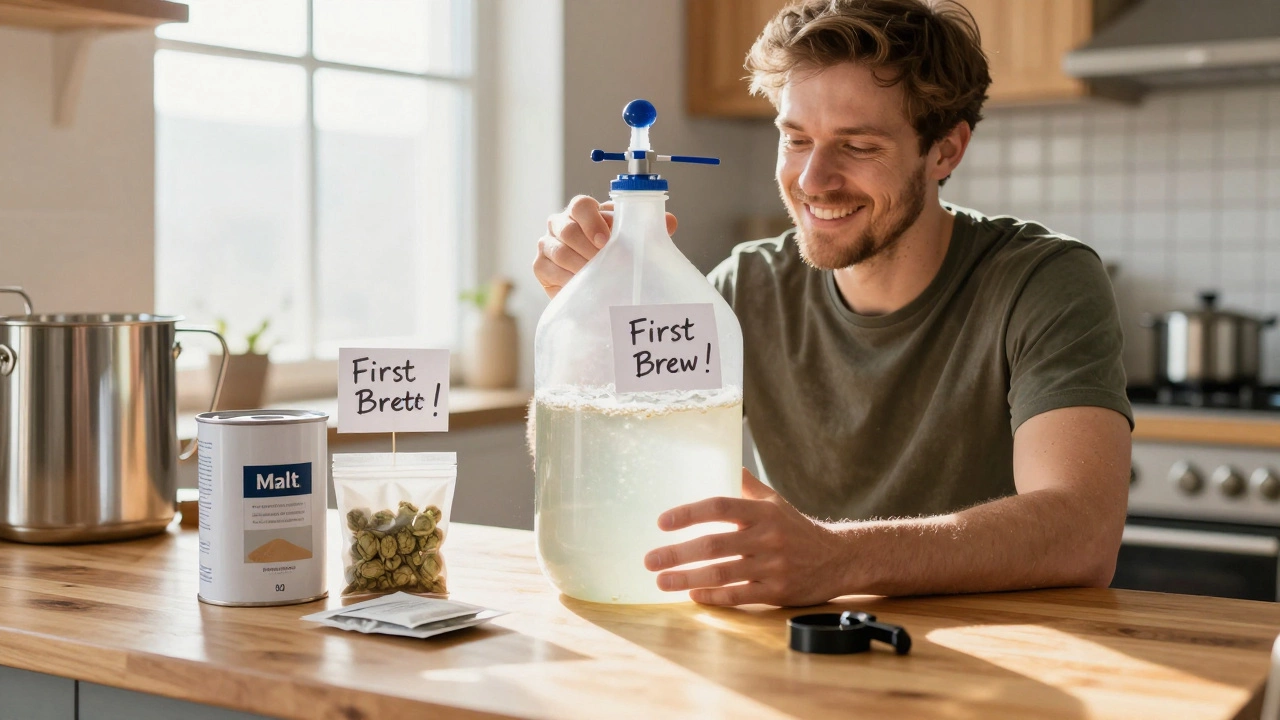
Most beginners skip all-grain brewing entirely. And they should. Why? Because it adds hours of complexity. Extract brewing means you skip mashing. You buy liquid or dry malt extract - pre-made sugary syrup from mashed grains - and just boil it with hops and yeast. That’s it. Here’s what you need for a basic extract batch:- 3 kg of malt extract (liquid or dry)
- 50g of hops
- One packet of yeast
- Water (5 gallons)
Equipment: What You Actually Need
You don’t need a full brewery setup. Here’s the bare minimum for your first batch:- 5-gallon fermenter with lid and airlock
- Long spoon for stirring
- Bottling bucket with spigot
- Bottles (48 standard 12-oz bottles)
- Bottle capper and caps
- Sanitizer (Star San or similar)
- Thermometer (optional but helpful)
Time and Patience: The Real Ingredients
Your first brew will take about 3.2 hours total - 1.5 hours of active work, 1.7 hours of waiting. That’s it. The rest? Waiting. Fermentation takes 7-10 days. Bottling adds another hour. Then you wait another 2 weeks for carbonation. It’s not a weekend project. It’s a month-long process. But here’s the secret: most of that time is passive. You don’t need to babysit it. Just keep it in a dark, cool spot. Around 68-72°F is ideal. If you’re worried about temperature, put your fermenter in a large tub of water. Add a frozen water bottle every 12 hours. That’s how most beginners stabilize their temps without spending $100 on a controller.Real Stories from Real Beginners
One user on Homebrew Talk, ‘BrewNewbie2023,’ said: “My first batch using the Brewer’s Best American Light kit was shockingly good. I thought I messed up the temperature, but it tasted just like a commercial lager.” Another, ‘WheatFan88,’ brewed a hefeweizen and got strange medicinal notes. Turned out, she splashed the wort too hard during transfer, oxygenating it. Next time, she used a siphon and kept the flow gentle. Result? Perfect banana aroma. And ‘HopNovice’ added all his hops at flameout, expecting bitterness - got none. He learned: hops need a 60-minute boil to release bitterness. Now he knows. These aren’t failures. They’re lessons. And they only happen because you started.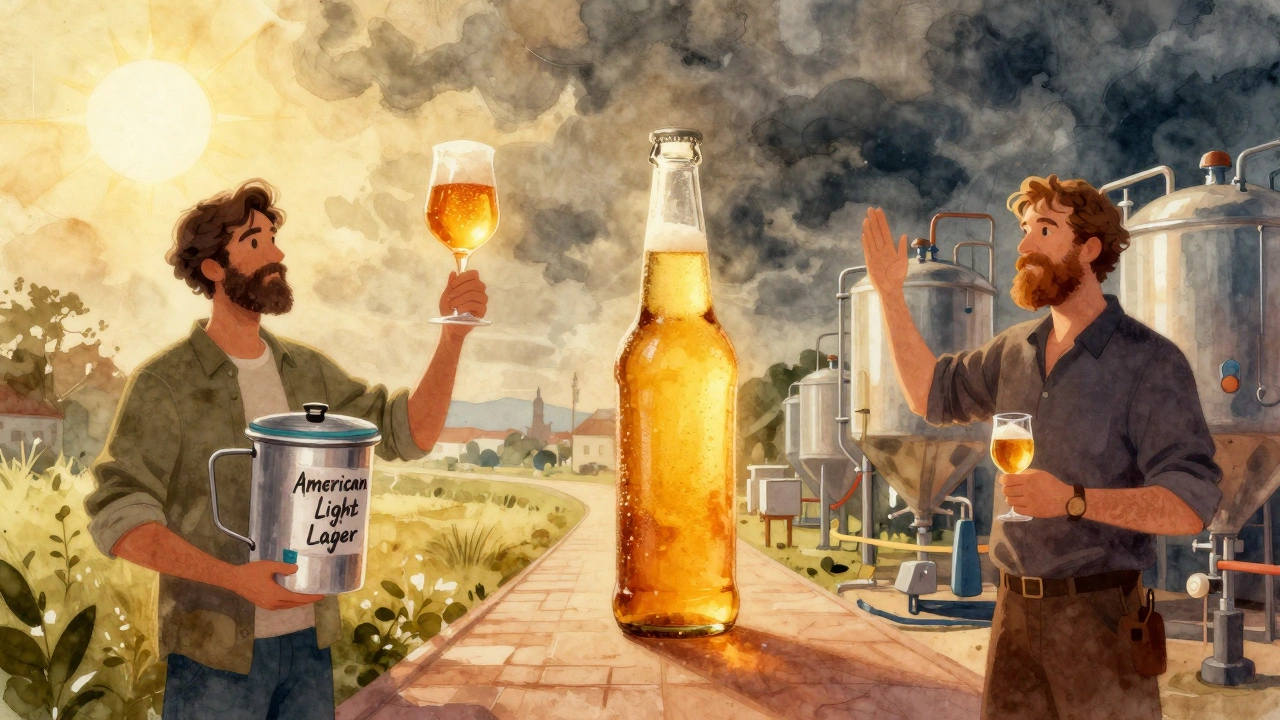
What Comes Next?
After your first successful batch, you’ll want to try something new. Maybe a red ale. Maybe a stout. Maybe even an IPA. But here’s the truth: the skills you learn from your first beer - sanitation, temperature control, yeast handling, patience - are the same skills you’ll use forever. Most brewers who start with a simple style reach “consistent good beer” status in just 1.9 attempts. Those who start with complex recipes? It takes 2.7 attempts - and many never get there. Don’t rush. Don’t chase complexity. Start simple. Brew something you’ll actually drink. And when you do - you’ll realize homebrewing isn’t about perfection. It’s about progress.Quick Summary / Key Takeaways
- Your first beer should be simple, forgiving, and tasty - not impressive.
- American Light Lager is the #1 recommended style for beginners, with an 89% success rate.
- Hefeweizen is great if you like fruity, spicy flavors and don’t mind slight temperature control.
- American Pale Ale is a solid middle ground for hop lovers.
- Use extract kits - they’re easier, cheaper, and have higher success rates than all-grain.
- Don’t brew IPAs, stouts, or Belgian styles as your first beer.
- Equipment doesn’t need to be fancy. A $120 starter kit is enough.
- Patience is more important than precision.
What is the easiest beer to brew for beginners?
The easiest beer to brew is American Light Lager. It uses simple ingredients, has a low alcohol content, and its light flavor masks minor brewing mistakes. It’s the top choice for beginners because 89% of first-time brewers rate it as drinkable or better.
Can I brew beer without a mash tun?
Yes. Most beginners use extract brewing, which skips mashing entirely. You just boil malt extract with hops and yeast. No mash tun, no grain mill, no complex temperature control needed. Extract kits are designed for this exact purpose.
How long does it take to brew your first beer?
The active brewing time is about 1.5 hours. But the full process - including fermentation and carbonation - takes 4 to 6 weeks. You’ll spend most of that time waiting, not working. The reward? A beer you made yourself.
Do I need special yeast for my first brew?
Not necessarily. Most beginner kits come with yeast that’s easy to use. For lagers, use a clean American lager yeast. For ales, use American ale yeast like Safale US-05. If you want extra forgiveness, try Voss Kveik yeast - it works between 68°F and 98°F and ferments in under 72 hours.
Why do some beginner beers taste better than others?
It’s not about the recipe - it’s about how forgiving the style is. Light lagers and wheat beers hide flaws. IPAs and stouts show them. A beer that tastes bad on the first try isn’t necessarily poorly made - it might just be a style that doesn’t tolerate mistakes. Choose a style that’s kind to beginners.
Next Steps
If you’re ready to start:- Buy a beginner extract kit (American Light Lager or Hefeweizen).
- Read the instructions - they’re usually clearer than random online recipes.
- Sanitize everything. Seriously. This is the #1 cause of bad beer.
- Keep your fermenter in a stable temperature spot (68-72°F).
- Wait. Don’t open the lid. Don’t stir. Just wait.
- After two weeks, bottle it. Wait another two weeks. Then drink it.