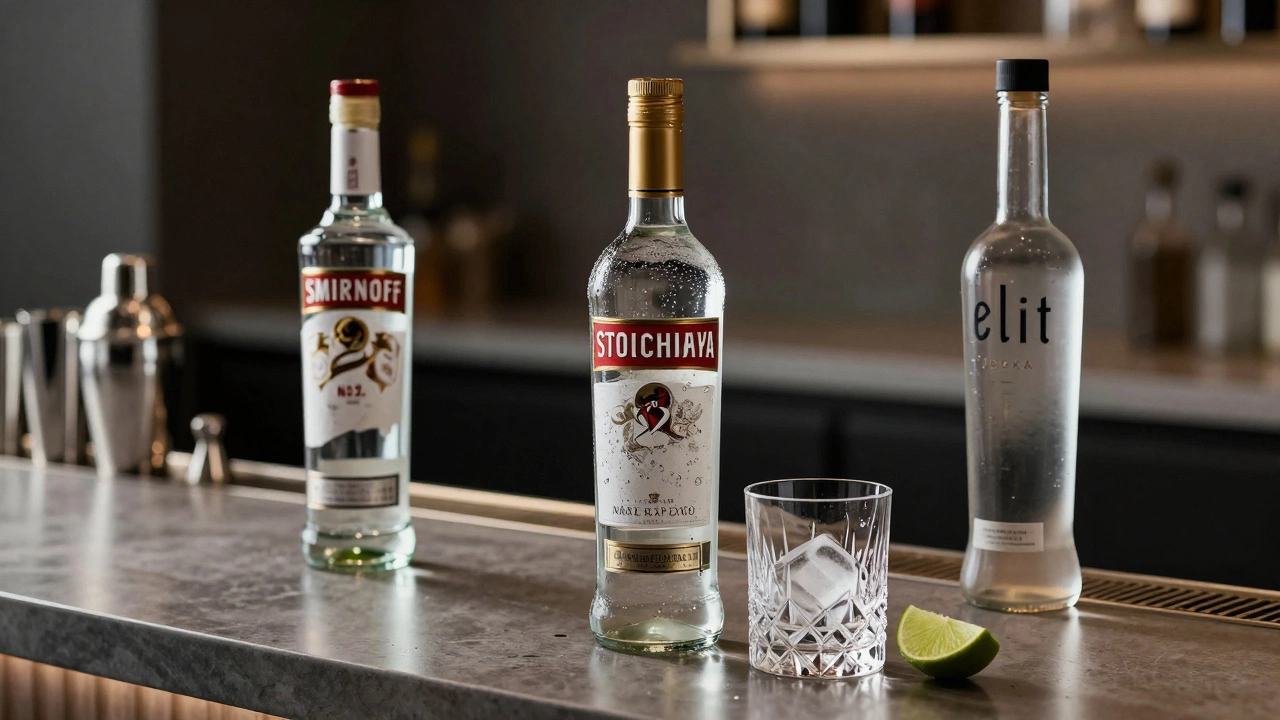
When someone asks what Russia’s number one vodka is, they’re not just asking for a brand name-they’re asking which one truly stands out. But here’s the catch: there’s no single answer. It depends on whether you care about sales, taste, history, or luxury. Russia doesn’t have one vodka that rules them all. Instead, it has several legends, each winning in a different category.
Stolichnaya: The Most Popular by Numbers
If you’re judging by real-world popularity, Stolichnaya is a Russian vodka brand produced from selected grain, distilled and filtered through birch charcoal and quartz sands, then blended with pure water. Also known as Stoli, it has been a global favorite for decades. According to WikiliQ’s 2025 rankings, it holds the top spot among Russian vodkas with a 4.5 out of 5 rating from over 211 user reviews. That’s not a fluke. It’s backed by data.
Stolichnaya isn’t flashy. It doesn’t cost $70 a bottle. At $28.88, it’s priced right for everyday sipping or mixing. It’s won Gold and Double Gold medals at the San Francisco World Spirits Competition. Its flavor? Clean, smooth, with a light grain sweetness and almost no burn. It’s the kind of vodka that works in a martini, a shot, or even a simple soda. For most people around the world who drink Russian vodka, Stolichnaya is the one they recognize, trust, and keep on the shelf.
Smirnoff No. 21: The Original Global Giant
But if you’re talking about history, no brand beats Smirnoff No. 21 a vodka formulated in 1864 by Pyotr Arsenievich Smirnov, approved by both Russian peasants and Czars, and now manufactured from non-GMO corn with triple distillation and ten-stage filtration. Smirnoff didn’t just become popular-it became the standard.
For over 160 years, Smirnoff has been sold in more countries than any other Russian vodka. It’s the one you’ll find in bars from Tokyo to Toronto. It won the International Wine & Spirit Competition’s Vodka Trophy twice, and took home a Double Gold at San Francisco in 2019. Its taste is soft, slightly sweet, with a clean finish. No harshness. No aftertaste. It’s the vodka your grandfather drank-and your bartender still recommends.
At $14.99, it’s the most affordable option on this list. If you want quality without the premium price, Smirnoff No. 21 delivers. It’s not fancy, but it’s reliable. And reliability? That’s a kind of greatness.

elit Vodka: The Pinnacle of Luxury
Now, if you’re looking for the best vodka Russia has ever made-not just the most sold-you need to try elit Vodka an elite-tier vodka crafted with crystal-clear purity, mineral water freshness, creamy mouthfeel, and an extremely clean balanced finish. Produced by the same distillery as Stolichnaya, elit is their ultra-premium line. It’s not meant for cocktails. It’s meant to be sipped slowly, chilled, in a crystal glass.
At $61.99, elit costs more than double Stolichnaya. But here’s why it’s worth it: the aroma is nearly undetectable-no alcohol burn, no graininess. Just a whisper of mineral water and a smooth, almost silky texture on the tongue. It finishes clean, with no lingering heat. Flaviar’s 2026 review called it “rivaling top mezcals in refinement.” That’s high praise for a vodka.
elit isn’t for everyone. It’s for collectors, connoisseurs, and those who treat vodka like fine wine. It’s Russia’s answer to single-malt whisky-crafted in small batches, with obsessive attention to detail. If you want to know what Russian vodka can achieve at its highest level, elit is your answer.
Beluga Noble: The Artisan’s Choice
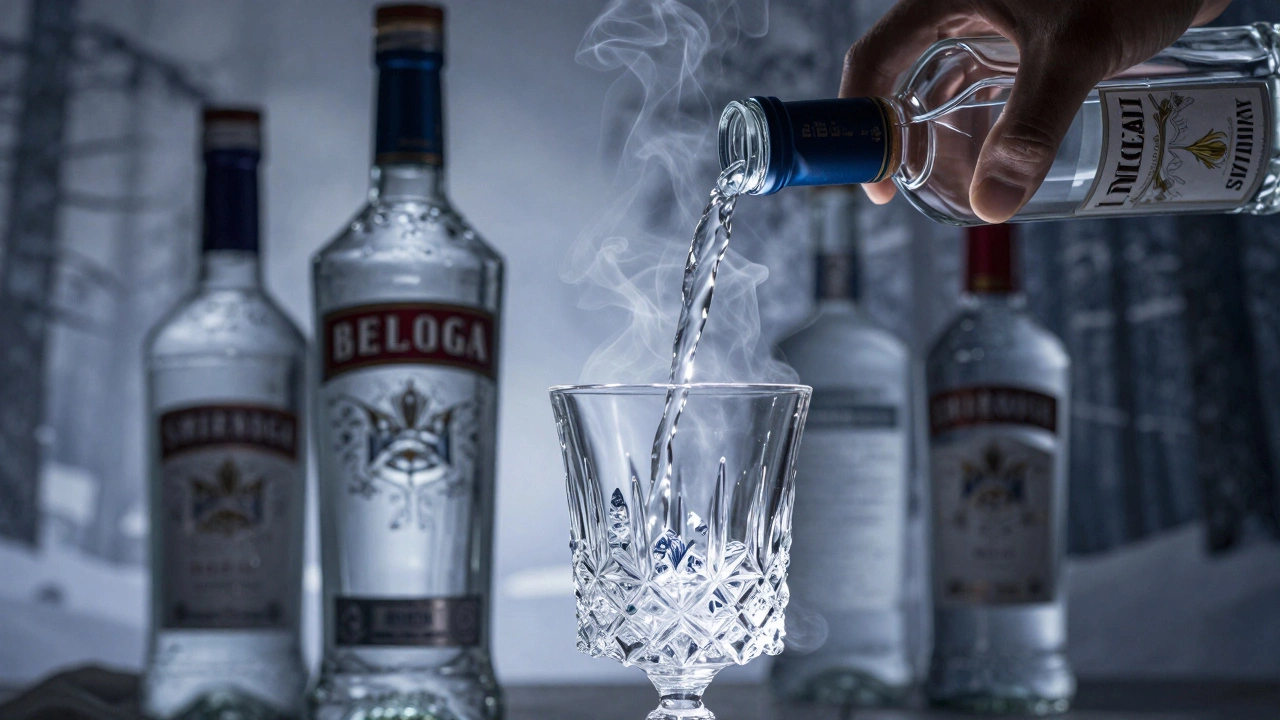
Then there’s Beluga Noble a premium Russian vodka introduced in 2002 by the Mariinsky Distillery in Siberia, made from malted barley spirit, filtered through birch charcoal, silver, and quartz sand, and produced using pure artesian water from a 300-meter-deep well. It’s named after the Beluga whale-a symbol of purity and intelligence. And it shows.
Beluga’s bottle shimmers. Its aroma carries delicate floral notes, a hint of sweet oatmeal, and citrus zest. The taste? Silky, with a light flan-like richness and a touch of honey. It’s one of the few Russian vodkas made from malted barley instead of wheat or rye. That changes everything. The result is a smoother, more complex spirit that feels more like a luxury liqueur than a neutral spirit.
At $72.99 for a 1.75L bottle, Beluga is one of the most expensive Russian vodkas on the market. But it’s not just about price-it’s about craftsmanship. Each batch is small. Each bottle is hand-inspected. It’s the kind of vodka you serve at a wedding, a milestone, or a quiet moment of celebration. If Stolichnaya is the everyday hero, and elit is the refined expert, Beluga is the artist.
Russian Standard: The Quiet Contender
Don’t forget Russian Standard Original a vodka brand offering multiple varieties including Imperia, Platinum, Gold, and Original, with flavored versions infused with natural ingredients like ginger, lemon, and raspberry. According to WikiliQ, it’s the second most popular Russian vodka globally. It’s not as flashy as Beluga or as iconic as Smirnoff, but it’s everywhere.
Russian Standard is the vodka you’ll find in upscale liquor stores in Europe and North America. It’s clean, crisp, and balanced. Its Imperia variant uses winter wheat from the Russian steppes and is filtered through quartz sand. The Platinum version is even smoother, with a slightly sweeter finish. It’s not trying to be the best. It’s just trying to be consistently good. And that’s enough for millions.
So, What’s Really Number One?
Let’s cut through the noise. If you’re asking which vodka Russians drink the most at home? It’s probably Russian Standard or Stolichnaya. If you’re asking which one sells the most worldwide? Stolichnaya wins. If you’re asking which one has the longest legacy? Smirnoff. If you’re asking which one tastes the most luxurious? elit or Beluga.
There’s no single champion. Russia’s vodka scene isn’t about one king-it’s about a royal court. Each brand has its throne.
For value and reliability? Go with Smirnoff No. 21.
For global recognition and balanced quality? Stolichnaya is your pick.
For a truly elite experience? elit Vodka or Beluga Noble will blow you away.
The real question isn’t which one is number one. It’s: which one fits your life?
Is Stolichnaya really made in Russia?
Yes and no. The original Stolichnaya was made in Russia, but after the Soviet Union collapsed, production split. The brand sold outside Russia is now made in Latvia using Russian-style recipes and ingredients. The version sold inside Russia is still made in Samara. Both are authentic, but they’re not the same product. The one you find in Australia, the U.S., or Europe is the Latvian-made version-and it’s still held to the same quality standards.
Why is Smirnoff considered Russian if it’s owned by a British company?
Smirnoff was founded by Pyotr Smirnov in Moscow in 1864. After the Russian Revolution, the family fled, and the brand was lost. In the 1930s, a U.S. company bought the rights to the name and revived the recipe. Today, it’s owned by Diageo, a British conglomerate. But the original formula-triple distilled, ten-filtered, corn-based-is still based on Smirnov’s Russian method. So while it’s not Russian-owned, its soul is.
Can you tell the difference between elit and Beluga?
Absolutely. elit is all about purity and neutrality. It’s almost invisible on the palate-just a clean, cool glide with no flavor distractions. Beluga, on the other hand, is rich and aromatic. You’ll taste honey, citrus, and a hint of oatmeal. elit is like a perfectly clear stream. Beluga is like a quiet forest after rain. One is minimalist perfection. The other is layered elegance.
Is Beluga Noble worth $73?
If you’ve never tried a premium vodka before, maybe not. But if you’ve tasted elit, Grey Goose, or Ketel One, and you’re looking for something deeper, Beluga delivers. It’s not just vodka-it’s a sensory experience. The filtration through silver and quartz sand, the artesian water, the barley base-it all adds up. For special occasions, it’s worth every cent. For everyday? Stick with Stolichnaya.
Which Russian vodka is best for cocktails?
Smirnoff No. 21 and Stolichnaya are your best bets. Both are neutral, clean, and mix well without overpowering other ingredients. elit and Beluga are too delicate-they’re meant to be sipped alone. Save them for moments when you want to taste the spirit itself, not hide it in a martini.