Oktoberfest Beer Consumption Calculator
Festival Parameters
Current Festival Data
When you think of beer festivals, one name towers over all the rest: Oktoberfest. It’s not just a party-it’s a full-blown cultural phenomenon that swallows up a city for weeks and turns a quiet Bavarian meadow into the epicenter of the beer world. If you’ve ever wondered what the biggest beer festival on Earth looks like, the answer isn’t a guess. It’s a number: 7 million people in a single year. That’s more than the population of many countries. And they’re all there for one thing: beer.
How Oktoberfest Became the Giant of Beer Festivals
Oktoberfest didn’t start as a beer drinking contest. It began in 1810 as a royal wedding celebration in Munich, Germany. Prince Ludwig of Bavaria married Princess Therese of Saxony-Hildburghausen, and the locals threw a big party with horse races, food, and beer. The event was so popular, they did it again the next year. And the next. And the next. Fast forward over 200 years, and what was once a local tradition is now the largest gathering of beer lovers on the planet.
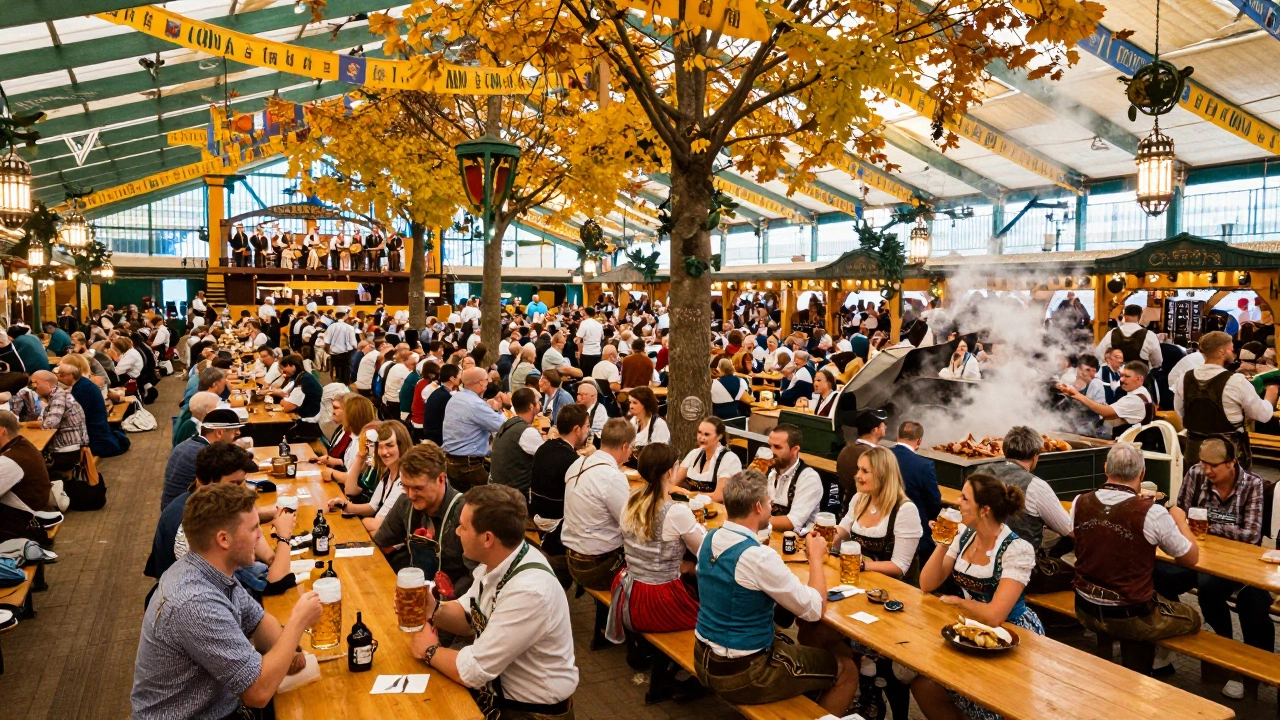
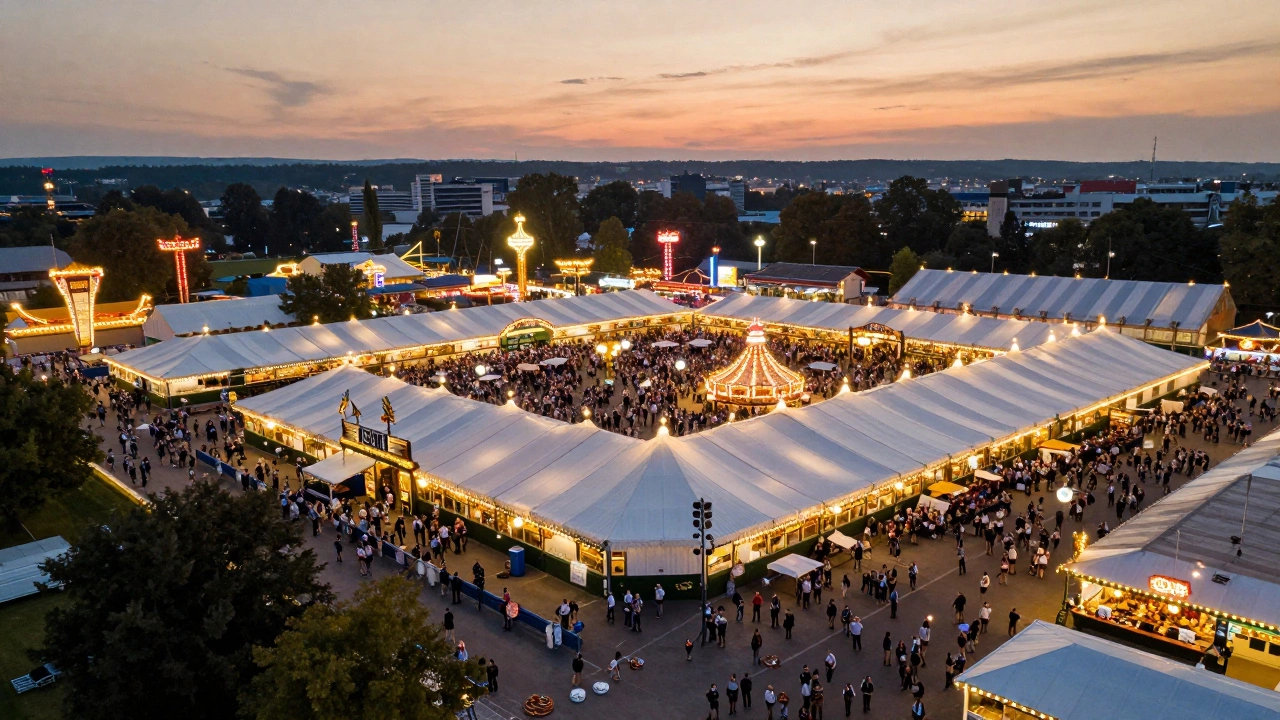
The festival runs for 16 to 18 days every fall, starting in late September and ending on the first Sunday in October. It’s not just a few tents and a band playing. The entire Theresienwiese, or "Wiesn" as locals call it, becomes a 42-hectare (103-acre) playground of beer, food, music, and tradition. About 31 hectares of that space is dedicated to the festival itself, with 35 massive beer tents, each run by a different Munich brewery.
The Numbers Don’t Lie: Attendance and Beer Consumption
Oktoberfest doesn’t just draw crowds-it moves mountains of beer. The record for beer consumption? 7.5 million liters in 2011. That’s enough to fill 3 Olympic-sized swimming pools. In 2015 and 2018, the same amount was consumed. Even in a shorter 16-day run in 2018, they still served half a million liters per day. That’s about 1,500 liters every 10 minutes.
Attendance has hovered around 6 million to 7 million for the last decade. The all-time record was 7.1 million in 1985, but recent years like 2025 are expected to hit close to 7 million again. To put that in perspective, if you lined up every person who attended Oktoberfest in 2018, they’d stretch from Munich to Berlin and back. And these aren’t just Germans. In 2018, visitors from 67 countries showed up. The top 10? The USA, UK, Austria, France, Switzerland, the Netherlands, Italy, Australia, Sweden, and Belgium. Yes, Australia made the top 10. That’s how global this thing is.
What Happens Inside the Tents
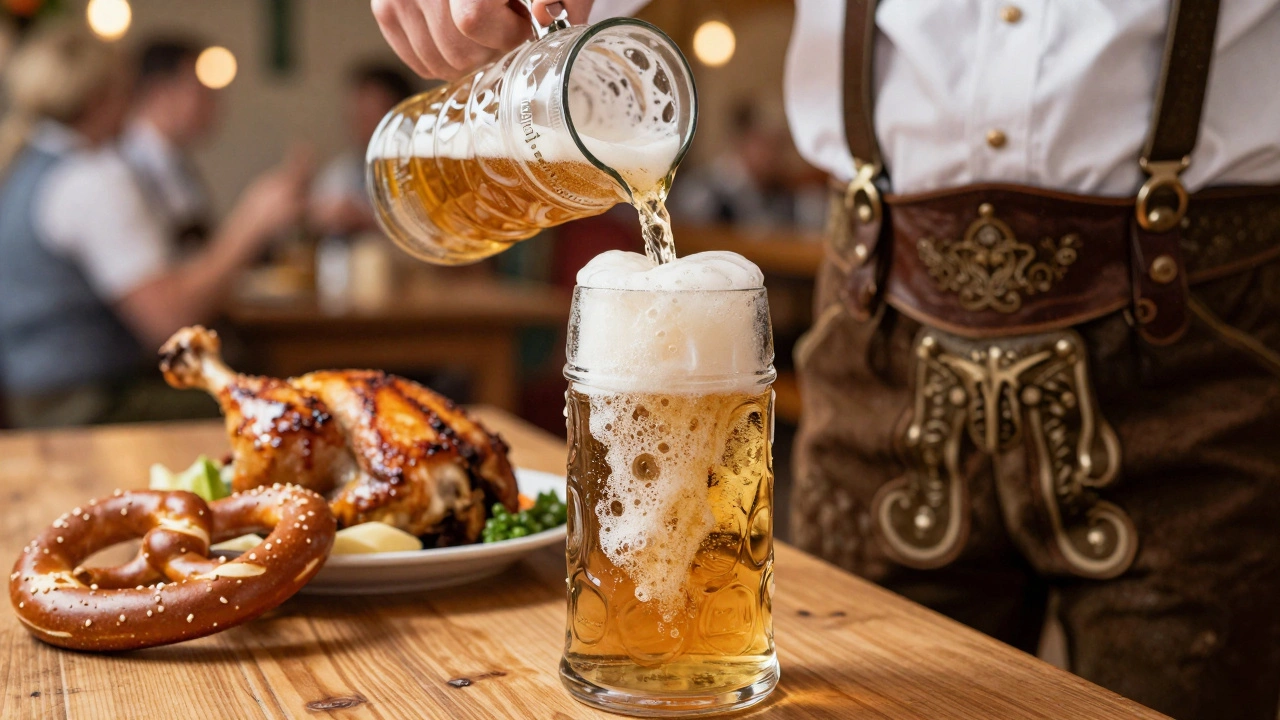
Each of the 35 beer tents has its own personality. Some are loud and rowdy. Others are more family-friendly. But they all serve the same thing: Oktoberfestbier. This isn’t your average lager. It’s a stronger, maltier, golden brew that only six Munich breweries are allowed to make under strict purity laws. The beer is served in 1-liter steins-yes, the big ones. And prices? In 2025, a liter costs over 15 euros. That’s nearly $17 USD. It’s expensive, but you’re not just paying for beer. You’re paying for history, atmosphere, and a seat in one of the most iconic events on Earth.
And it’s not just beer. Hungry crowds go through 124 oxen and 48 calves in a single year. That’s roasted whole, served in giant portions. You’ll find pretzels the size of your head, sausages stacked like logs, and roasted chicken that’s been cooked over open flames for hours. The food is as much a part of the experience as the beer.
Lost, Found, and Medical Emergencies
With 7 million people in one place, things get messy. In 2018 alone, security stopped 101,000 beer mugs from being stolen. That’s not a typo. People were walking out with steins. The Lost and Found office collected 2,685 items: 840 passports, 460 wallets, 350 phones, 350 pieces of clothing, 300 keys, and even 2 wedding rings from the same couple. Neither person claimed them. Maybe they were too drunk.
Medical teams were busy too. Over 5,800 people needed help. That’s more than 1,000 per day. Of those, 717 were due to alcohol intoxication-a 47-case jump from the year before. It’s not just about drinking too much. It’s about the scale. When you’re surrounded by 7 million people, even small problems multiply into major ones.
Other Big Beer Festivals-But None Close
You might have heard of big beer festivals elsewhere. Blumenau in Brazil draws about 1 million people. Cincinnati, Ohio, hits 700,000 to 800,000. Kitchener, Ontario, does too. Qingdao in China has hosted its beer festival since 1991 and has seen 4 million total visitors over 30+ years. But here’s the thing: none of them come close to Munich’s daily footprint. Cincinnati’s festival lasts 10 days. Blumenau runs for 15. Oktoberfest runs longer and packs in more people per day. It’s not just about total attendance-it’s about density, intensity, and tradition.
And let’s not forget: Munich’s beer is legally protected. Only six breweries in the city can serve beer at Oktoberfest. No imports. No exceptions. That’s why it’s not just the biggest-it’s the most authentic.
Why Oktoberfest Still Rules in 2026
There are beer festivals in every corner of the world now. Craft beer events in Portland, IPA festivals in New Zealand, lager parades in Japan. But Oktoberfest is still the original. It’s not just about quantity. It’s about the ritual. The oompah bands. The lederhosen. The way the beer is poured-foam first, then the liquid, slowly, so the head doesn’t spill. The way the steins clink across a hundred thousand tables.
Germany produces more beer than any other country in Europe-nearly 95 million hectoliters a year. That’s more than twice what the UK makes. Oktoberfest is the peak of that culture. It’s not a marketing stunt. It’s not a gimmick. It’s a living tradition that’s been refined for over 200 years.
If you want to know what the biggest beer festival in the world is, the answer isn’t complicated. It’s Munich. It’s Oktoberfest. And it’s still growing.
Is Oktoberfest really the biggest beer festival in the world?
Yes, by every measurable standard-attendance, beer consumption, and global reach-Oktoberfest in Munich is the largest beer festival on Earth. In 2025, it’s expected to draw close to 7 million visitors and serve over 7 million liters of beer. No other festival comes close in scale or tradition.
How much beer is actually consumed at Oktoberfest?
The record was set in 2011 with 7.5 million liters of beer consumed. Recent years like 2015 and 2018 matched that number. That’s about 500,000 liters served every day during the 16-day festival. To put it in perspective, that’s enough to fill over 3 Olympic swimming pools.
Can you go to Oktoberfest if you’re not from Germany?
Absolutely. Oktoberfest is a global event. In 2018, visitors came from 67 countries. The top visitors were from the USA, UK, Austria, France, and Australia. Tickets aren’t required for entry to the grounds, but reservations for seats in the beer tents are highly recommended and often booked months in advance.
Why is beer so expensive at Oktoberfest?
Beer prices have risen sharply due to inflation, labor costs, and high demand. In 2025, a liter of Oktoberfestbier costs over 15 euros. That’s more than $17 USD. The price reflects not just the beer, but the experience-the venue, security, infrastructure, and tradition. You’re paying for a piece of history.
What’s the best way to prepare for Oktoberfest?
Book your tent reservations early-often months ahead. Wear traditional clothing like lederhosen or dirndls to blend in. Bring cash, as many vendors don’t take cards. Pace yourself with water between beers. And don’t try to visit all 35 tents in one day-it’s impossible. Pick 2 or 3, soak in the atmosphere, and enjoy the music.