Home Brewing vs. Distilling: Legal & Tax Calculator
Production Parameters
Enter your production details to see the legal implications and potential tax liabilities.
You can walk into any homebrew supply shop in Sydney or New York today, buy a kit for lager or IPA, and start fermenting that weekend without filing a single form. But if you swap those grains for a still to make whiskey or vodka, the police might show up before your first batch even finishes heating. It sounds unfair on the surface-after all, both processes start with yeast eating sugar-but the law draws a hard line between brewing beer and distilling liquor.
The difference isn't just about taste or tradition. It comes down to three heavy hitters: tax revenue, public safety risks, and how alcohol concentration changes the chemistry of what you are making. As of mid-2026, while federal courts in the U.S. are starting to chip away at old bans, the practical reality remains stark. You can brew gallons of beer for free; distilling spirits is still a felony in most places unless you treat it like a serious business.
The Science: Fermentation vs. Distillation
To understand why regulators treat these two hobbies differently, you have to look at what actually happens in the bucket. When you brew beer, you are relying on fermentation, a biological process where yeast consumes sugars from malted grain (or fruit) and converts them into ethanol and carbon dioxide. Yeast has a natural limit; most strains die off once the alcohol content hits around 15% ABV. This creates a beverage that is relatively mild and chemically stable.
Distillation takes that same fermented liquid and forces it through a physical separation process. By heating the "wash" (the fermented mix), you vaporize the alcohol, which boils at a lower temperature than water, and then condense it back into a liquid. This allows you to concentrate the alcohol significantly, often pushing it past 40% or even 95% ABV.
This concentration does more than just make the drink stronger. It strips away many of the flavors found in beer, leaving behind a potent spirit that requires aging or flavoring to be palatable. More importantly for the government, this high-proof alcohol is highly flammable and carries significant health risks if mishandled.
| Feature | Brewing Beer/Wine | Distilling Liquor |
|---|---|---|
| Process Type | Biological (Fermentation) | Physical/Chemical (Separation) |
| Max Alcohol Potential | ~15% ABV (natural limit) | Up to 95%+ ABV |
| Primary Risk | Contamination/Spoilage | Fire, Explosion, Toxicity |
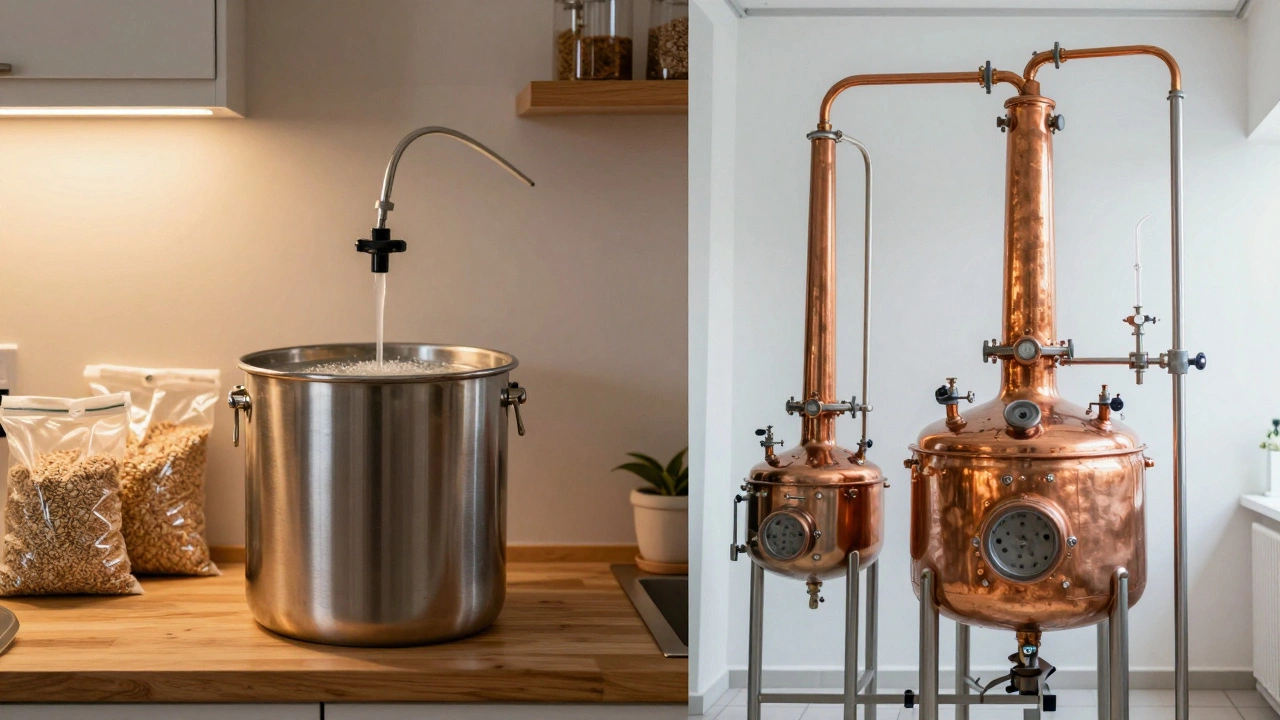
| Equipment Complexity | Low (Pots, Airlocks) | High (Stills, Condensers) |
| Legal Status (US Federal) | Exempt for Personal Use | Prohibited Without Permit |
The Money Trail: Excise Taxes and Revenue
If safety were the only concern, governments might simply require safety inspections for home stills. Instead, they ban the activity entirely for hobbyists. The main reason is money. Spirits generate massive amounts of tax revenue because of their high alcohol concentration and commercial value.
In the United States, the Alcohol and Tobacco Tax and Trade Bureau (TTB) collects excise taxes on distilled spirits. As of 2026, the federal excise tax is approximately $13.50 per proof gallon. A proof gallon is defined as one gallon of liquid containing 50% alcohol by volume. If you distill a small batch of 100-proof whiskey at home, you owe the government hundreds of dollars in taxes immediately.
Beer, by contrast, is taxed at a much lower rate and is exempt from federal excise tax when produced for personal use under specific limits. The logic is simple: tracking every backyard brewery would be a logistical nightmare with little financial return for the state. Tracking unlicensed distilleries, however, represents a direct loss of high-value tax revenue. Because spirits are so concentrated, a small volume of illegal production equals a large amount of taxable alcohol.
Safety Risks: Why Still Accidents Are Dangerous
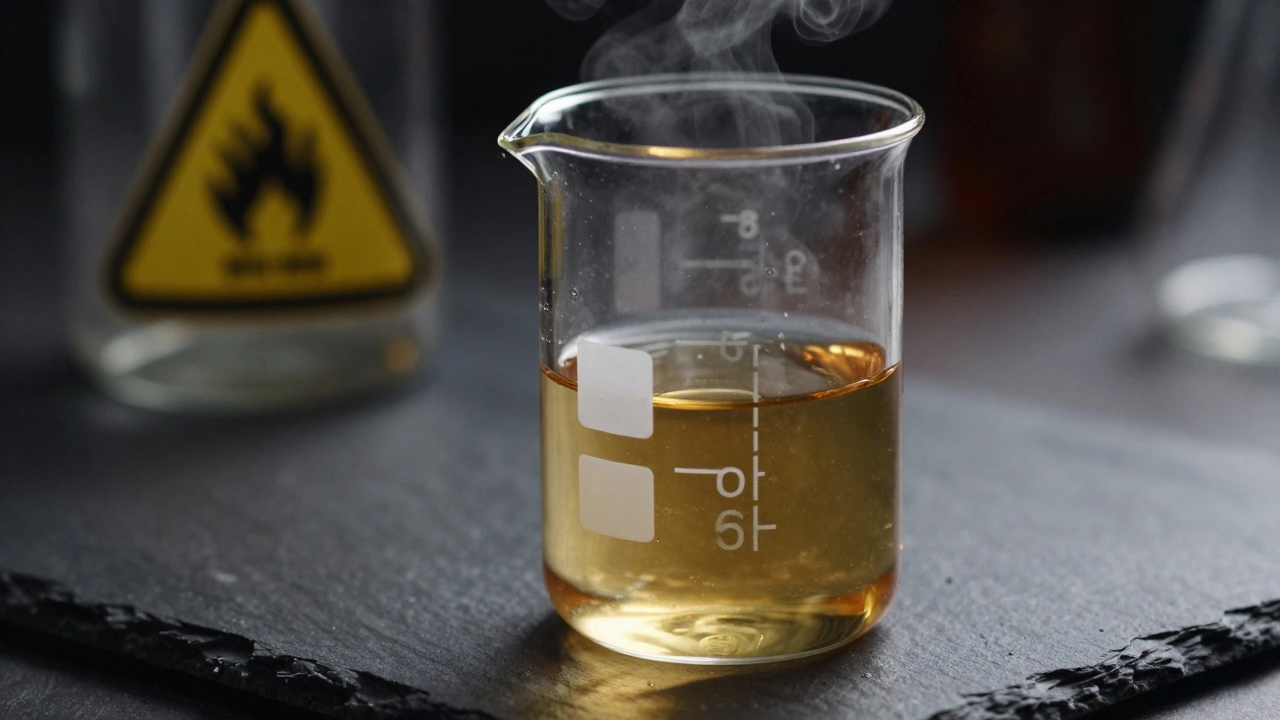
Beyond the tax code, there is a genuine danger in home distilling that doesn't exist in brewing. Ethanol vapor is invisible and highly explosive. When you heat a mash in a sealed container-a common mistake among beginners-the pressure can build until the vessel ruptures or explodes. Even with proper venting, if the vapor ignites, the resulting fire can be catastrophic in a residential setting.
There is also the risk of poisoning. During distillation, harmful compounds called methanol and fusel oils can carry over into the final product. Methanol is toxic and can cause blindness or death if consumed in significant quantities. Professional distillers know exactly how to cut the "heads" (the first part of the distillate containing methanol) and keep only the safe "heart." An amateur without training might not know how to identify these cuts, leading to accidental poisoning of themselves and their guests.
Brewing beer carries none of these acute risks. If your beer gets contaminated, it tastes bad and goes flat. It won't blow up your garage or poison your family.
The Legal Landscape: From Prohibition to Today
The current legal divide traces back to the end of Prohibition in the United States. After the 21st Amendment repealed national prohibition in 1933, alcohol regulation shifted largely to the states, but federal control over production remained. For decades, making beer at home was technically illegal federally.
That changed in 1978 when President Jimmy Carter signed H.R. 1337, an excise reform bill. This legislation created an exemption allowing adults to produce limited amounts of beer and wine for personal use without paying federal taxes. Initially, the limit was 100 gallons per adult per year, and it was raised to 200 gallons in 1979 for households with more than one adult.
Crucially, this exemption did not apply to distilled spirits. Under 26 U.S. Code §§5042(a)(2) and 5053(e), producing distilled spirits at home without a permit remains a federal crime. Penalties can include fines up to $10,000 and five years in prison. Even possessing a still intended for beverage alcohol production can trigger these charges.
As of July 2026, this federal ban is facing challenges. In April 2026, the 5th U.S. Circuit Court of Appeals ruled that the 158-year-old federal ban on home distilling was unconstitutional within its jurisdiction (Texas, Louisiana, and Mississippi). However, this ruling does not automatically legalize home distilling everywhere. Residents in those states are no longer subject to *federal* prosecution for hobby distilling, but they must still comply with *state* laws, many of which still prohibit it. Furthermore, anyone wanting to sell their product or operate commercially must still obtain a TTB permit and pay excise taxes.
International Perspectives: Is It Legal Elsewhere?
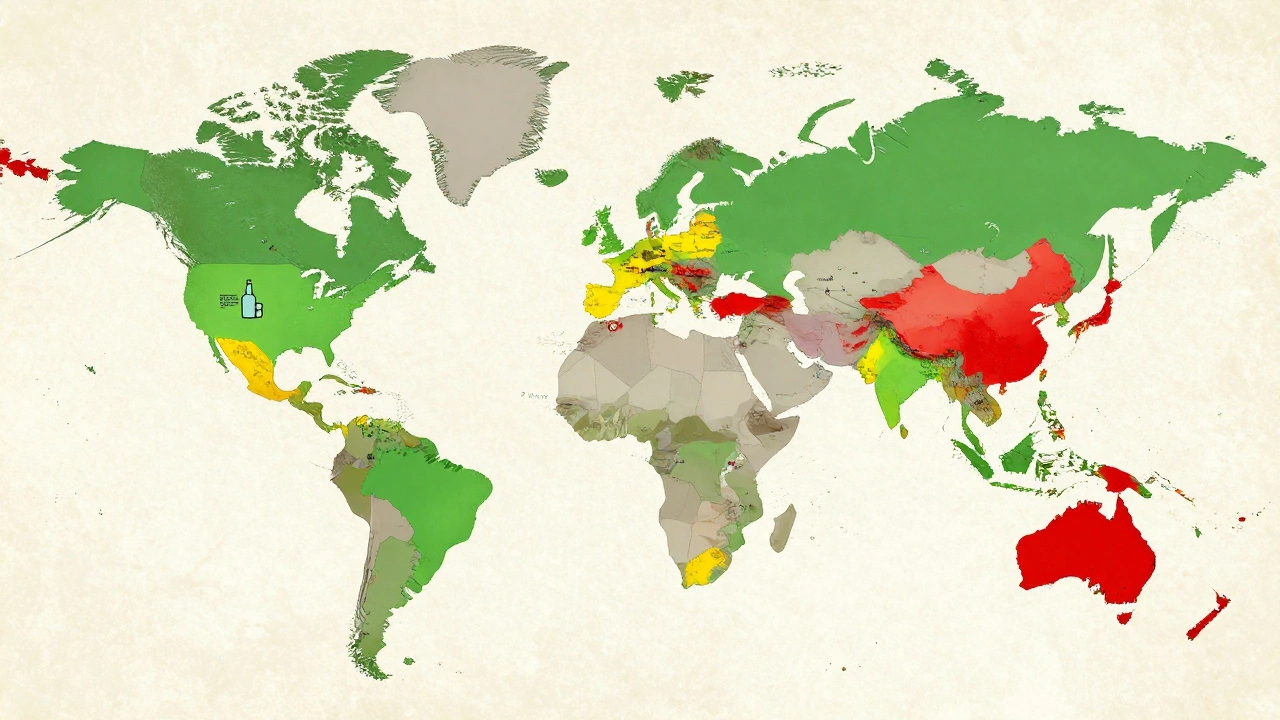
The U.S. approach is somewhat unique in its strictness toward home distilling, though many countries share similar restrictions.
- Australia: Similar to the U.S., Australians can brew beer and make wine for personal use. However, distilling alcohol requires an excise manufacturer license from the Australian Taxation Office. Unlicensed distillation is illegal due to tax evasion concerns.
- South Africa: Homebrewing beer is permitted for personal use without quantity limits, provided it is not sold. Distilling spirits without a license is prohibited.
- United Kingdom: It is legal to distill alcohol at home for personal use, provided you do not sell it. However, you cannot possess a still larger than 5 liters, and you must notify HMRC if you plan to distill. Selling homemade spirits without a license is a criminal offense.
- Canada: Home distilling is generally illegal across all provinces and territories. While some provinces allow limited homebrewing of beer and wine, distillation equipment is strictly controlled.
These international examples show a pattern: fermentation is tolerated as a low-risk hobby, while distillation is treated as a commercial activity requiring oversight.
What Should You Do If You Want to Make Spirits?
If you are passionate about the craft of spirits, you have options, but they involve navigating the regulatory framework rather than bypassing it.
- Start with Brewing: Master the art of fermentation first. Many distillers begin by brewing high-quality "distiller's beer" or washes. This teaches you about yeast health, sanitation, and flavor profiles.
- Join a Community: Organizations like the American Homebrewers Association (AHA) offer resources on legal compliance. Some local clubs may have access to shared facilities where distillation is permitted under a master license.
- Consider Commercial Licensing: If you are serious, you can apply for a TTB permit. This involves forming a business entity, paying fees, and adhering to strict record-keeping and tax payment requirements. It transforms your hobby into a legitimate small business.
- Check Local Laws: With recent court rulings in the U.S., check your specific state statutes. In Texas, Louisiana, and Mississippi, the legal landscape is shifting, but state-level prohibitions may still apply.
Remember, the goal of these regulations is not to stifle creativity but to ensure safety and fair taxation. By respecting the boundaries between brewing and distilling, you protect yourself and support the integrity of the industry.
Is it illegal to own a still if I don't use it for alcohol?
In the United States, owning a still is not inherently illegal if it is used for non-alcoholic purposes, such as making essential oils, perfumes, or fuel. However, you must be able to prove its intended use if questioned by authorities. Possession of a still with the intent to produce beverage alcohol without a permit is a federal crime.
How much beer can I legally brew at home in the US?
Under federal law, an adult household can produce up to 200 gallons of beer per year if there are two or more adults living in the home. If there is only one adult, the limit is 100 gallons per year. These limits apply to beer and wine; mead is also included. Always check your state laws, as some states have stricter limits or additional registration requirements.
Did the 2026 court ruling make home distilling legal everywhere?
No. The April 2026 ruling by the 5th U.S. Circuit Court of Appeals only applies to Texas, Louisiana, and Mississippi. It struck down the federal ban in those jurisdictions, but state laws may still prohibit home distilling. In other states, the federal ban remains in effect, and home distilling without a permit is still a felony.
Can I sell my homebrewed beer?
No. The federal exemption for homebrewing explicitly covers personal and family use only. Selling homebrewed beer, even to friends or neighbors, violates federal law and likely state laws as well. To sell alcohol, you must obtain the appropriate licenses from the TTB and your state agency.
Why is methanol a concern in home distilling?
Methanol is a toxic alcohol produced during fermentation, especially from pectin-rich fruits. It boils at a lower temperature than ethanol, so it concentrates in the early stages of distillation (the "heads"). If not properly discarded, consuming methanol can cause severe health issues, including blindness and death. Professional distillers carefully monitor and discard these fractions to ensure safety.