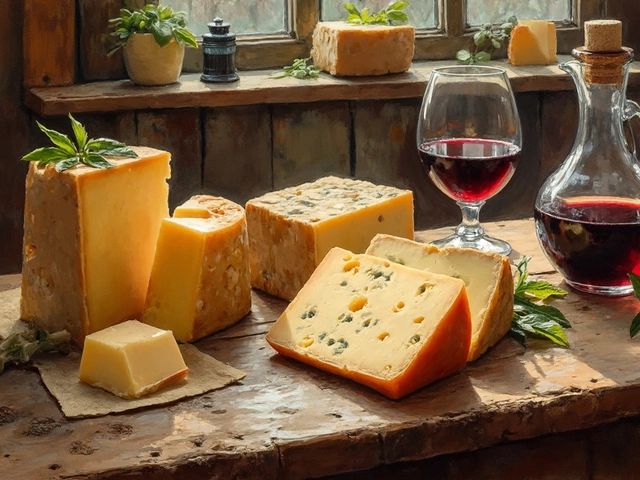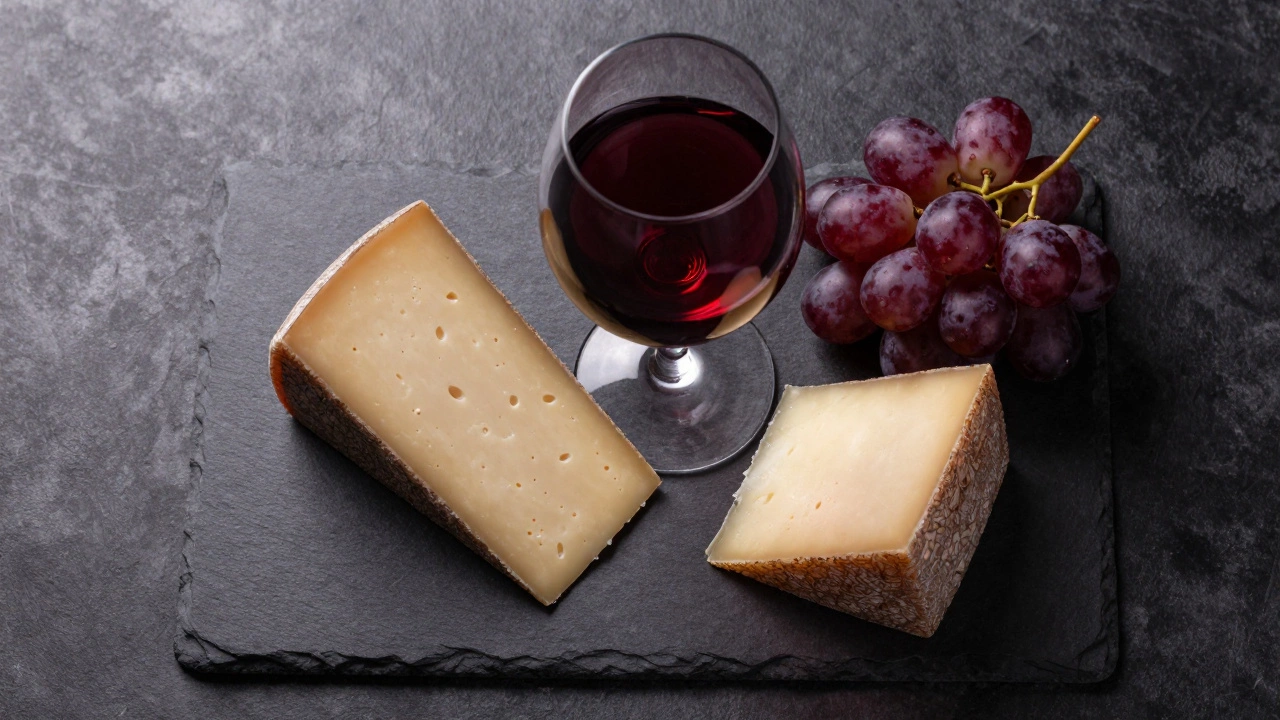
Forget the outdated idea that you just pour a glass of red and call it a day. If you've ever had a sip of a bold Cabernet and followed it with a creamy Brie, only to find the wine tasted metallic or the cheese felt bland, you've experienced a pairing clash. The secret to a perfect board isn't about following rigid rules; it's about understanding how the chemistry of wine and cheese pairing is a culinary practice rooted in the balance and complementary interaction between flavors and textures. When done right, the wine's acidity cuts through the fat, and the cheese's protein softens the wine's edge.
Match Intensity to Avoid Flavor Overload
The biggest mistake people make is pairing a "loud" wine with a "quiet" cheese. If one element is too powerful, it doesn't just overshadow the other-it completely erases it. A good rule of thumb is to look at the alcohol by volume (ABV). Wines with an alcohol content over 14.5% are usually more intense and can stand up to pungent, aged cheeses. On the other hand, wines under 12% ABV are more delicate and pair best with fresh, mild cheeses.
Think of it as a volume knob. You wouldn't pair a heavy metal song with a solo flute; they just don't occupy the same space. For example, the delicate, nutty profile of Gruyère would be totally crushed by a heavy Cabernet Sauvignon. However, if you pair that same Gruyère with a Pinot Noir, you get a harmony where both can be tasted clearly.
The Science of Tannins and Fat
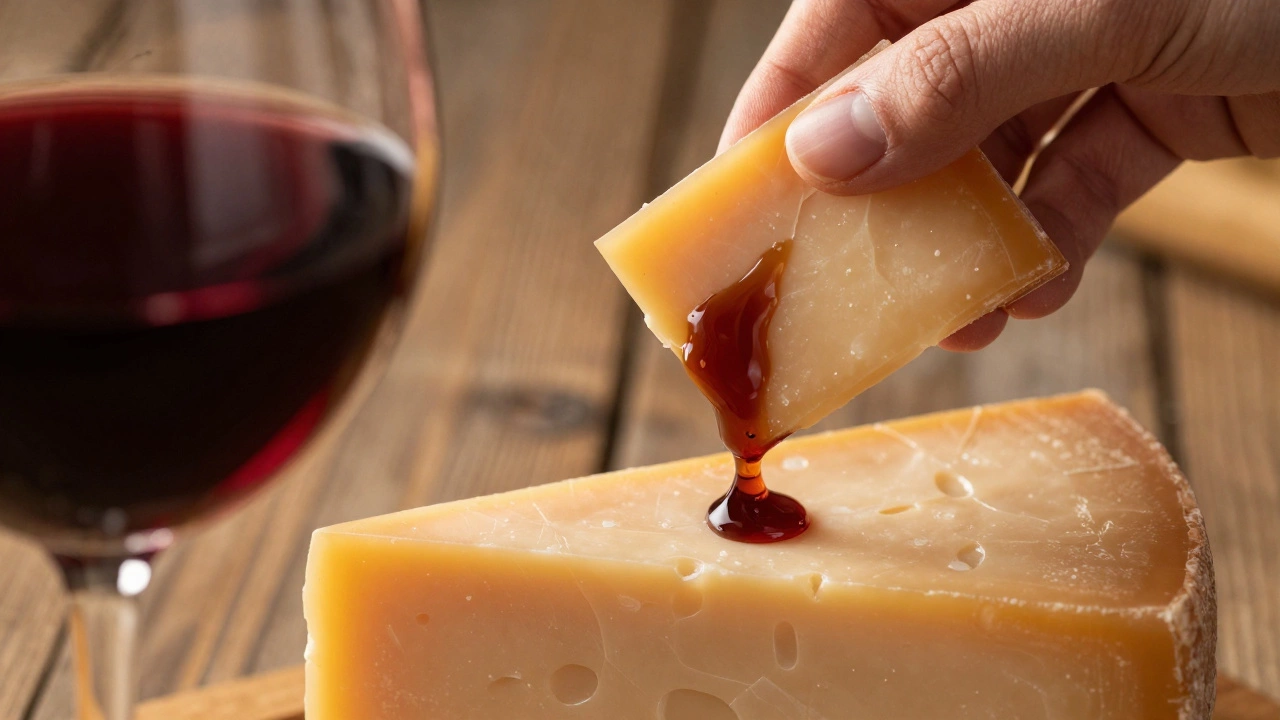
If you're wondering why some red wines feel "grippy" or dry in your mouth, that's the tannins-polyphenols found in grape skins. Tannins love fat. When you eat a rich, aged cheese, the proteins and fats bind with these tannins, effectively "scrubbing" the palate and making the wine feel smoother and silkier.
This is why bold reds are the best friends of aged cheeses. As cheese ages, it loses water and becomes more concentrated in fat and flavor. This is the perfect counterweight for a structured red. For the best results, stick to cheeses aged at least a year. Cheddar, Manchego, and Parmigiano-Reggiano are all prime candidates here. A classic pairing is a Cabernet Sauvignon with an aged cheddar; the sharp, salty bite of the cheese meets the bright fruit and structure of the wine for a balanced finish.
| Cheese Texture | Ideal Wine Profile | Example Pairing |
|---|---|---|
| Fresh & Airy (Chèvre) | Light, zesty, high acidity | Sauvignon Blanc |
| Creamy & Soft (Brie) | Buttery, medium body | Chardonnay |
| Hard & Crumbly (Aged Gouda) | Full-bodied, high tannins | Cabernet Sauvignon |
| Pungent & Blue (Roquefort) | Sweet, concentrated | Sauternes or Port |
Using Acidity to Refresh the Palate
Acidity in wine acts like a palate cleanser. When you eat a dense, creamy cheese, your tongue gets coated in fat, which can dull your taste buds. A crisp, acidic wine "cuts" through that richness, stripping the fat away and leaving your palate refreshed and ready for the next bite. This is why tart wines should almost always be paired with sharper or creamier cheeses.
If you're reaching for Sauvignon Blanc, look for a fresh goat cheese. The grassy, tart notes of the cheese mirror the nectarine and grapefruit aromas in the wine. Similarly, a buttery Chardonnay is a match made in heaven for Brie or Camembert, where the apple and citrus notes play off the creaminess of the cheese.
Handling the "Funk": Blue and Washed-Rind Cheeses
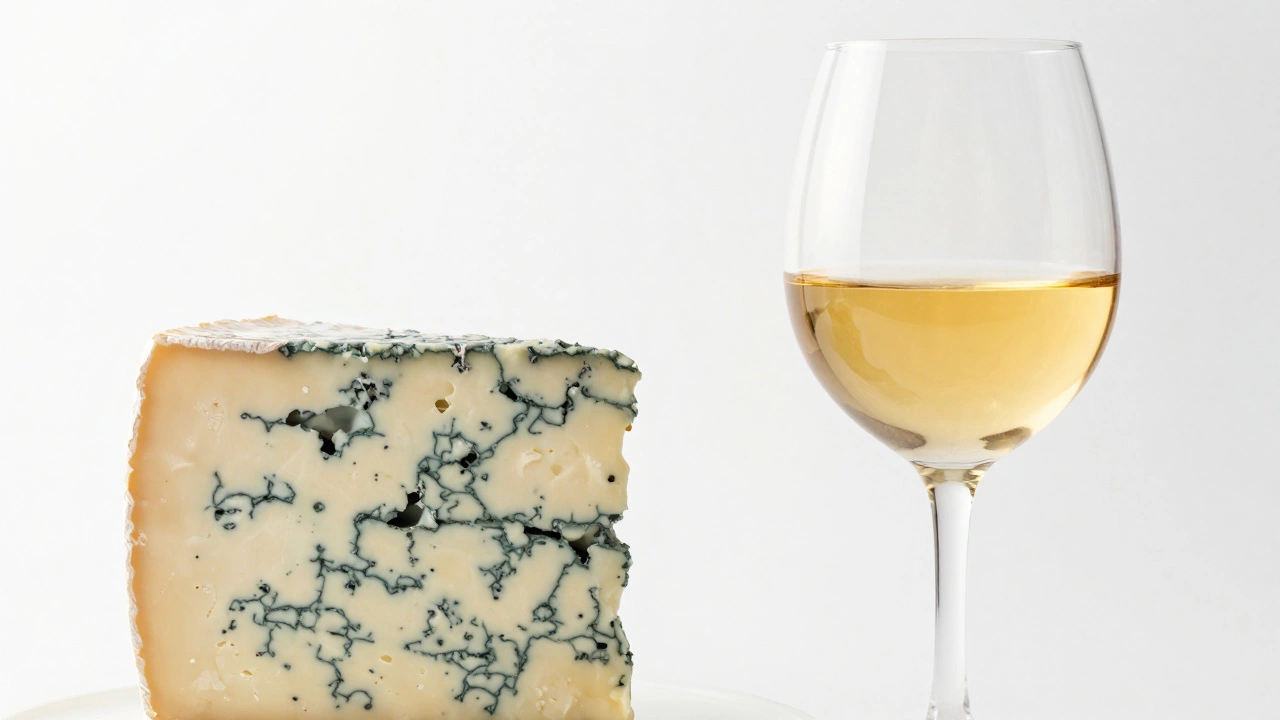
When you get into the territory of "stinky" cheeses, the usual rules of dry wine often go out the window. Blue cheeses, in particular, are tricky. The molds in blue cheese can actually destroy the delicate fruit flavors of a dry wine, making the drink taste sour or bitter. To fix this, you need a wine with enough sweetness and intensity to stand up to the blue's force.
The goal here is a sweet-and-salty contrast. A Port paired with Stilton, or Sauternes with Roquefort, creates a balance where the sweetness of the wine makes the cheese taste creamier, while the saltiness of the cheese keeps the wine from feeling cloying. For washed-rind cheeses like Taleggio, you can go with a sweeter Riesling or even a light beer.
The Regional Rule: Trust the Locals
If you're ever stuck and don't know where to start, use the "regional principle." This is the simplest shortcut in the book: wines and cheeses from the same geographic area usually pair perfectly because they evolved together over centuries. Local farmers and winemakers spent generations figuring out what tastes best with the local terroir.
For a foolproof board, try these regional combos:
- Loire Valley, France: Sauvignon Blanc and fresh Goat Cheese.
- Burgundy, France: Chardonnay and Époisses de Bourgogne.
- Spain: Garnacha and Manchego.
Common Pairing Pitfalls to Avoid
The most dangerous myth in the culinary world is that red wine is the universal partner for cheese. In reality, white wine is often the safer, more elegant choice. Many aged cheeses have a sharp profile that works better with the acidity of a white than the heavy tannins of a red. An overly tannic red can often create an unpleasant, metallic bitterness when paired with the wrong cheese.
Also, be careful with "Grand Cru" or very old, complex wines. While they are masterpieces in their own right, their extreme finesse can be totally drowned out by the aromatic power of a strong cheese. You don't want to spend $200 on a bottle only for the cheese to make it taste like water. For a crowd-pleasing, low-risk option, go for a firm, nutty cheese like Swiss, Comté, or Gouda. These have enough fat for reds but enough delicacy for whites, making them the ultimate "safe bet" for any wine selection.
Can I pair red wine with soft cheeses?
Yes, but be careful with the body of the wine. A heavy Cabernet will overpower a soft Brie. Instead, try a lighter-bodied red like Pinot Noir, which has lower tannins and won't clash with the creamy texture.
Why does blue cheese taste bad with dry white wine?
The molds in blue cheese interact with the acidic, dry components of the wine, often stripping away the fruit flavors and leaving behind a sour or bitter taste. This is why sweet dessert wines are the gold standard for blue cheese.
What is the best "all-purpose" cheese for a wine tasting?
Firm, nutty cheeses like Gruyère, Comté, or Gouda are the best versatile options. They have a balanced fat content that works with tannins in reds but isn't too pungent to overwhelm crisp white wines.
Does the age of the cheese really matter?
Absolutely. As cheese ages, it loses moisture and increases in fat and flavor intensity. This makes aged cheeses (1+ year) much better suited for bold, high-alcohol red wines.
What's the simplest rule for a beginner to remember?
Match intensity: light with light, bold with bold. If the cheese is mild, pick a light wine; if the cheese is pungent or aged, pick a powerful or sweet wine.