Homebrew Storage Advisor
Tell us about your batch
Fill out the form to see recommended storage steps.
You just bottled your latest batch of home-brewed beer. The yeast is doing its final work, creating carbonation from the priming sugar. Now you stare at a fridge full of leftovers and wonder: does this stuff actually need to go in there? If you shove it all in immediately, you might ruin the fizz. If you leave it on the counter for six months, you might end up with something that tastes like cardboard. The truth isn't black and white; it's about timing, temperature, and how long you plan to wait before cracking one open.
The Short Answer: It Depends on the Stage
Here is the core rule: No, home-brewed beer does not strictly need to be refrigerated for safety once fermentation is complete, but it absolutely needs cool, dark storage to taste good. Unlike commercial beers that are pasteurized (heat-treated) to kill off yeast, most homebrews are "live" products. They contain active yeast cells that continue to interact with the liquid. This makes them more sensitive to heat than a mass-produced lager.
If you drink your beer within a few weeks of bottling, a cool cupboard is fine. If you want to store it for six months or longer, the refrigerator becomes your best friend. But-and this is critical-you cannot put bottles in the fridge straight after bottling. Doing so will freeze the yeast's metabolism, stopping carbonation dead in its tracks. You’ll end up with flat, under-carbonated beer that takes forever to fix.
Stage 1: The Warm-Up (Bottle Conditioning)
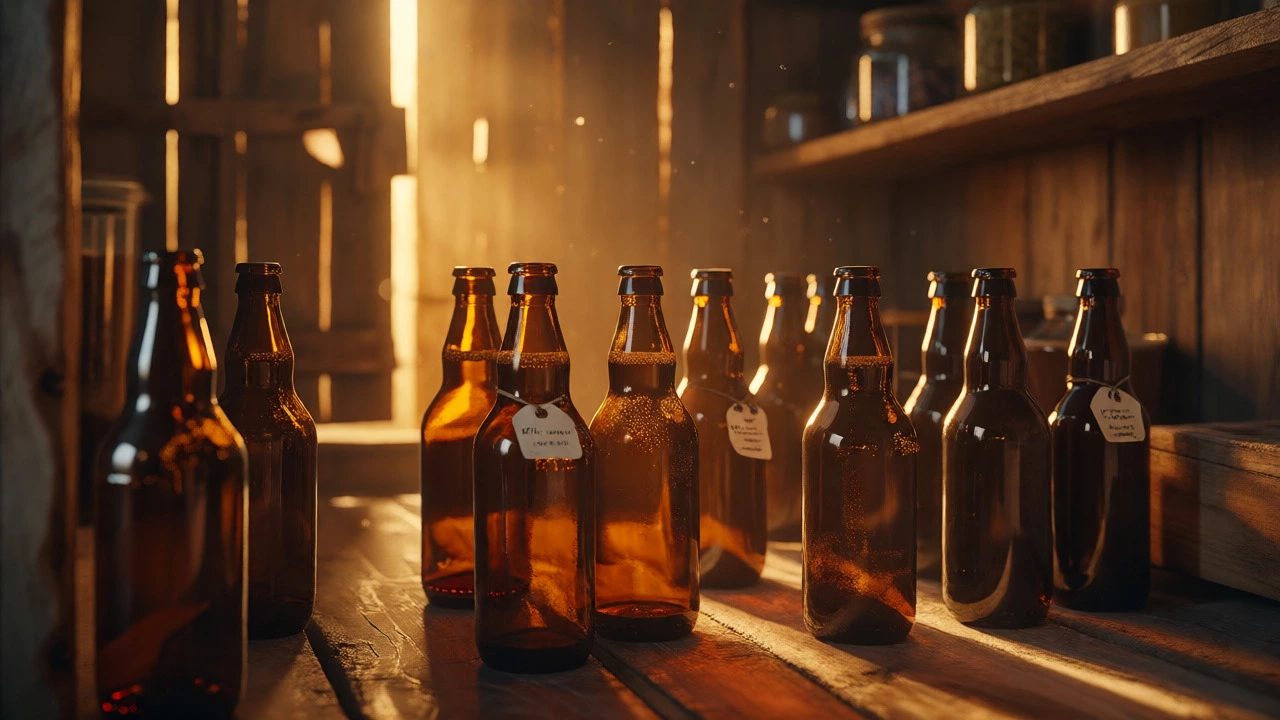
When you add priming sugar to your bottles, you are feeding the remaining yeast. Their job is to eat that sugar and produce CO₂, which dissolves into the beer to create bubbles. This process requires warmth. Most homebrewers aim for a temperature range of 18-25°C (64-77°F).
- Timeframe: Typically 10 to 14 days.
- Location: A closet, pantry, or under the bed where light can’t reach it.
- Why not the fridge? At fridge temperatures (around 4°C), yeast activity slows dramatically. While it won't die, it works too slowly to carbonate effectively in a reasonable timeframe.
I’ve seen beginners panic because their beer looks clear but has no head. That’s usually because they chilled it too early. Patience here pays off. Keep those bottles warm enough for the yeast to finish its job.
Stage 2: The Cool Down (Conditioning and Aging)
Once you’re confident the beer is carbonated-usually tested by chilling one bottle and opening it carefully-you move to the next phase. This is where the debate about refrigeration really heats up. Do you keep it at room temp, or do you chill it?
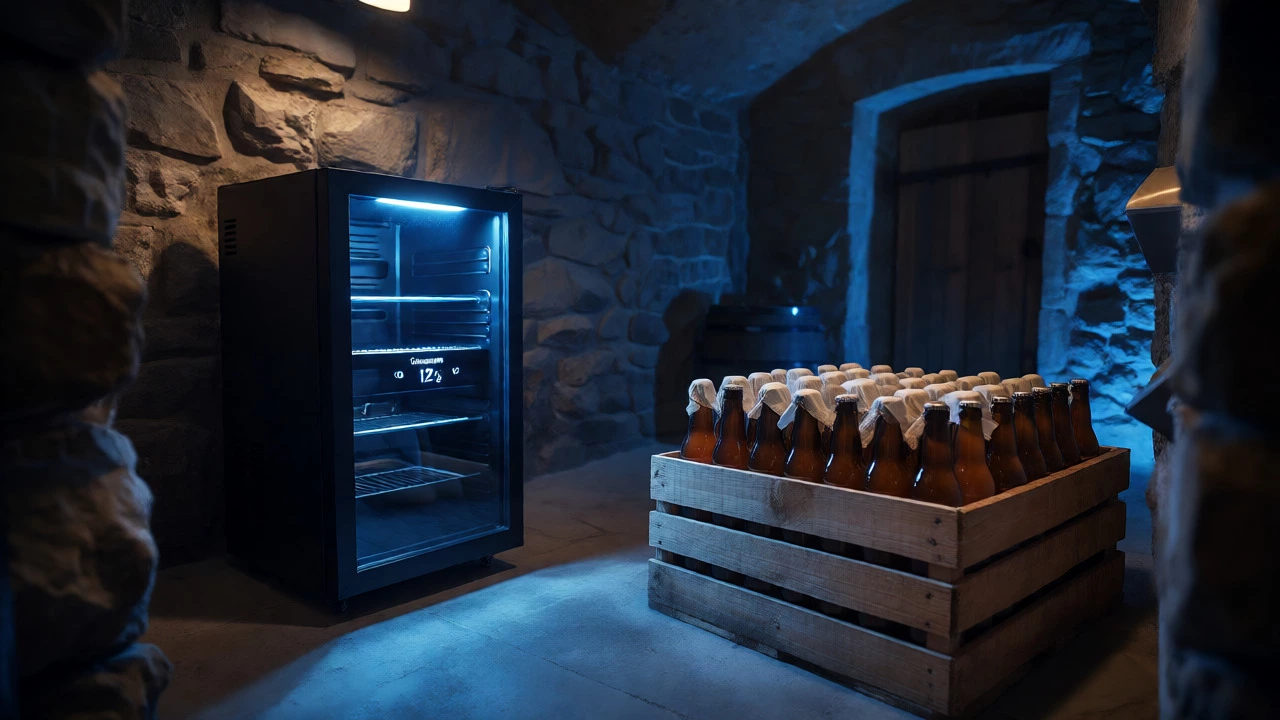
The sweet spot for long-term storage is what brewers call "cellar temperature," roughly 10-13°C (50-55°F). This is cooler than a typical Sydney summer room but warmer than a standard fridge. Why is this ideal? It slows down chemical reactions that cause staling without completely halting the maturation process. Some flavors, particularly in darker ales or barrel-aged styles, actually improve over time at these moderate cool temperatures.
If you don’t have a dedicated cellar or a temperature-controlled kegerator, a spare fridge set to its warmest setting often works better than a kitchen counter. In Australia, where ambient temperatures can swing wildly, relying on "room temperature" is risky. A hot garage in January can push beer well above 30°C, accelerating oxidation and turning fresh hop aromas into stale, papery notes in a matter of weeks.
Stage 3: The Fridge (Preservation and Serving)
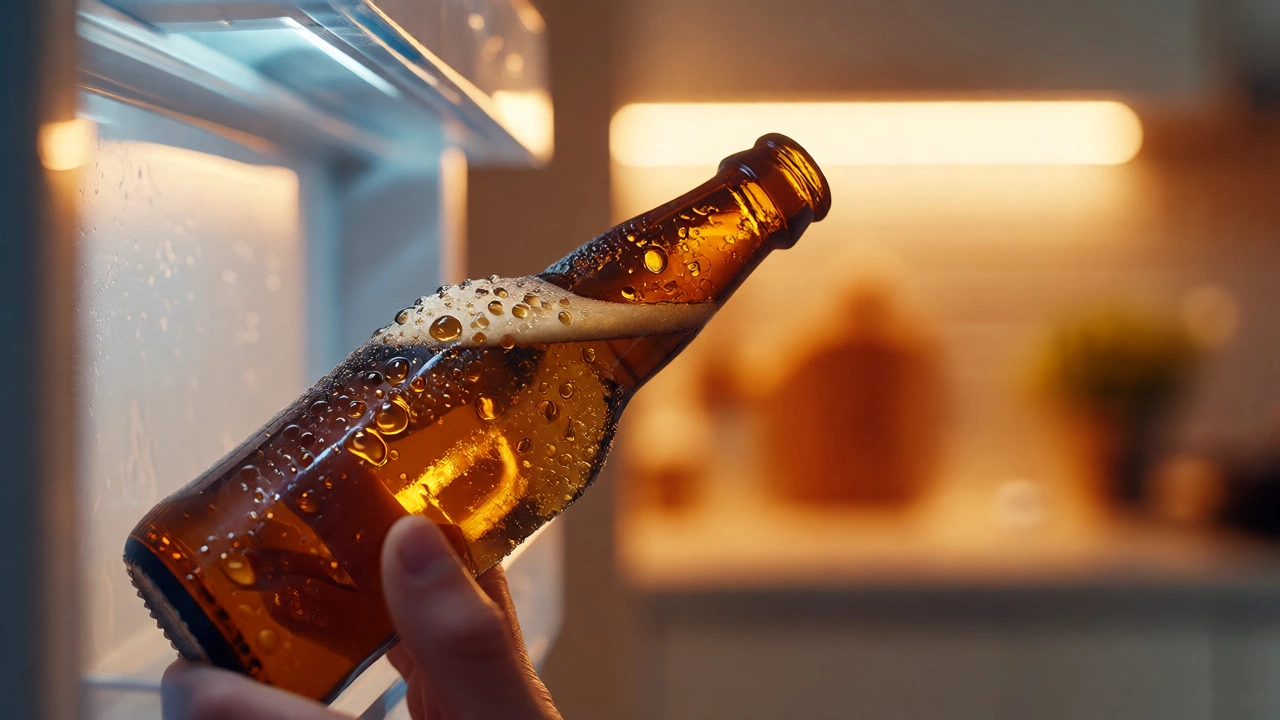
Refrigeration at 1-4°C (34-40°F) is primarily a preservation tool. Cold temperatures drastically slow down enzymatic activity and oxidation. If you plan to store your homebrew for more than four months, the fridge is the safest bet for maintaining peak freshness.
However, there is a nuance for lagers. If you brew a lager, cold storage isn't just optional-it's part of the recipe. True lagering involves storing beer near freezing (0-2°C) for several weeks to allow yeast and proteins to settle out, resulting in a crisp, clean profile. For ales, however, prolonged refrigeration isn't necessary unless you're trying to extend shelf life beyond half a year.
| Storage Location | Temperature Range | Best For | Expected Shelf Life |
|---|---|---|---|
| Kitchen Counter / Cupboard | 20-25°C (68-77°F) | Bottle conditioning (first 2 weeks) | 1-3 months before noticeable staling |
| Cellar / Basement / Spare Fridge | 10-13°C (50-55°F) | Aging ales, balancing energy use | 4-6 months of peak quality |
| Standard Refrigerator | 1-4°C (34-40°F) | Lagering, long-term storage, serving | 9-12+ months |
Why Heat Is the Enemy
It’s not just about keeping the yeast happy. Heat accelerates two main killers of beer flavor: oxidation and autolysis.
Oxidation happens when oxygen interacts with alcohol and other compounds. At higher temperatures, this reaction speeds up. You’ll notice it as a loss of fruity esters and hop aroma, replaced by sherry-like or wet-cardboard flavors. Since homebrew isn't filtered as tightly as commercial beer, it may have slightly more exposure to oxygen during packaging, making it even more vulnerable to heat-induced aging.
Autolysis is rarer in small batches but possible if yeast remains in contact with the beer for too long in warm conditions. The yeast cells break down, releasing rubbery or meaty flavors. Keeping beer cool minimizes this risk. In a hot Australian summer, leaving bottles in a sunlit window can cook the beer, leading to "skunky" flavors caused by UV light reacting with hops. Darkness matters as much as temperature.
Practical Tips for Home Brewers
You don’t need expensive equipment to manage this. Here is a workflow that saves space and ensures quality:
- Carbonate Warm: Keep bottles at room temperature for 2 weeks. Use a thermometer to ensure you aren't below 18°C.
- Test One Bottle: After 14 days, put one bottle in the fridge for 24 hours. Open it. If it fizzes nicely, the rest are ready.
- Split Your Stash: Move only the beer you plan to drink in the next month into the fridge. Keep the rest in the coolest, darkest place available.
- Rotate Stock: Practice FIFO (First In, First Out). Drink older bottles first. Even with good storage, hoppy beers like IPAs degrade faster than stouts.
If you live in an apartment with limited fridge space, consider buying a second-hand mini-fridge with an external thermostat controller. These devices allow you to set precise temperatures, turning a cheap appliance into a perfect cellar environment. It’s a game-changer for serious hobbyists who brew multiple batches a year.
Special Cases: Lagers vs. Ales
Not all beer ages the same way. Hop-forward styles like Pale Ales and IPAs rely on volatile aromatic compounds that evaporate or degrade quickly. For these, refrigeration is highly recommended if you aren't drinking them within 3-4 months. The cold locks in those delicate citrus and pine notes.
Conversely, high-alcohol beers like Barleywines, Imperial Stouts, and Belgian Quadrupels often benefit from some aging. At cellar temperatures (10-13°C), complex flavors meld together, harsh alcohols mellow out, and dark fruit characteristics emerge. Putting these straight into a fridge might halt this beneficial development. Save the fridge for the crisp lagers and pale ales; let the heavy hitters age in the cool dark.
Frequently Asked Questions
Will my homebrew explode if I don't refrigerate it?
No, provided you used the correct amount of priming sugar. Over-carbonation causes gushing or exploding bottles, but this is due to excess sugar, not lack of refrigeration. However, if you bottle-condition in very hot weather (above 30°C), the yeast works faster, potentially producing more CO₂ than expected. Always measure sugar precisely.
Can I refrigerate beer immediately after bottling?
You can, but you shouldn't. Refrigeration suppresses yeast activity. If you chill bottles right away, carbonation will take months instead of weeks, and it may never fully carbonate if the yeast goes dormant. Wait until the 2-week mark to confirm carbonation before chilling.
How long does homebrew last in the fridge?
Most homebrews remain in peak condition for 6 to 12 months in a refrigerator. Hoppy beers start declining after 3-4 months, while malt-heavy beers can last over a year. Always check for signs of oxidation or infection before drinking older stock.
Does light affect beer more than temperature?
Both are critical, but light causes immediate damage (skunking) via UV reaction, while heat causes gradual degradation (staling). Brown bottles block most UV light, but green or clear bottles offer little protection. Regardless of bottle color, always store beer in the dark to prevent both light-struck flavors and heat buildup.
What is the ideal storage temperature for homebrew?
For general long-term storage, 10-13°C (50-55°F) is ideal. This mimics traditional cellars. If you can't achieve this, the coolest part of your house is better than a warm room. Refrigerators (1-4°C) are excellent for preserving freshness but may slow down desirable aging in strong ales.