Home Brewing Cost Calculator
Discover how many batches you need to brew to break even on your equipment. Enter your setup details below.
- Upfront Equipment: $0.00
- Total Ingredients (0 batches): $0.00
- Avg Cost Per Pint: $0.00
Comparison to Store-Bought
Typical Craft Beer Price: $8.00/pint
Verdict: Enter data to see recommendation.
You might think buying grain and hops is where your money goes. It isn't. The real budget killer in home brewing is the hardware. Specifically, it's the kegging systems and advanced all-in-one electric brewing rigs. While a batch of ingredients costs about $30, a proper setup can easily run you over $1,000 before you even crack open a bag of malt.
| Category | Typical Cost Range (USD) | Notes |
|---|---|---|
| Ingredients (per 5-gal batch) | $20 - $40 | Ongoing cost; relatively cheap compared to gear. |
| Basic Extract Kit | $85 - $140 | Entry-level; includes fermenter, siphon, bottles. |
| All-Grain Upgrade | $210 - $515 | Adds mash tun, kettle, wort chiller. |
| Kegging System | $500 - $1,250 | Kegerator, CO2 tank, regulator, kegs. |
| Advanced Electric Rig | $699 - $1,500+ | e.g., Grainfather G30/G40; automated control. |
The Hardware Reality Check
Let’s be honest. If you are looking at this hobby purely as a way to save money on beer, you need to adjust your expectations. Yes, your per-pint cost drops significantly once you own the gear. But getting there requires a upfront investment that dwarfs the price of groceries. Most new brewers underestimate how quickly "just a few extra pieces" add up. You start with a bucket and a spoon. Then you want a better thermometer. Then you realize bottling takes forever, so you look into kegging. Suddenly, you’ve spent more on plastic and stainless steel than you would have on a year’s supply of craft beer.
The data backs this up. Analyses from groups like the American Homebrewers Association and independent calculators consistently show that equipment is the dominant cost driver. For a typical 5-gallon (19-litre) batch, ingredients rarely exceed $40. Even if you buy premium hops or rare yeast strains, you aren’t breaking the bank. But a single high-end component, like a temperature-controlled fermentation chamber or a digital brewing controller, can cost more than twenty batches of raw materials.
Why Kegging Systems Break the Budget
If you ask experienced brewers what their biggest regret or surprise expense was, many will point to kegging. Bottling is tedious. Washing, sanitizing, filling, capping, and storing hundreds of bottles takes hours. Kegging solves this. You brew, you carbonate, you pour. It feels professional. But it comes with a steep price tag.
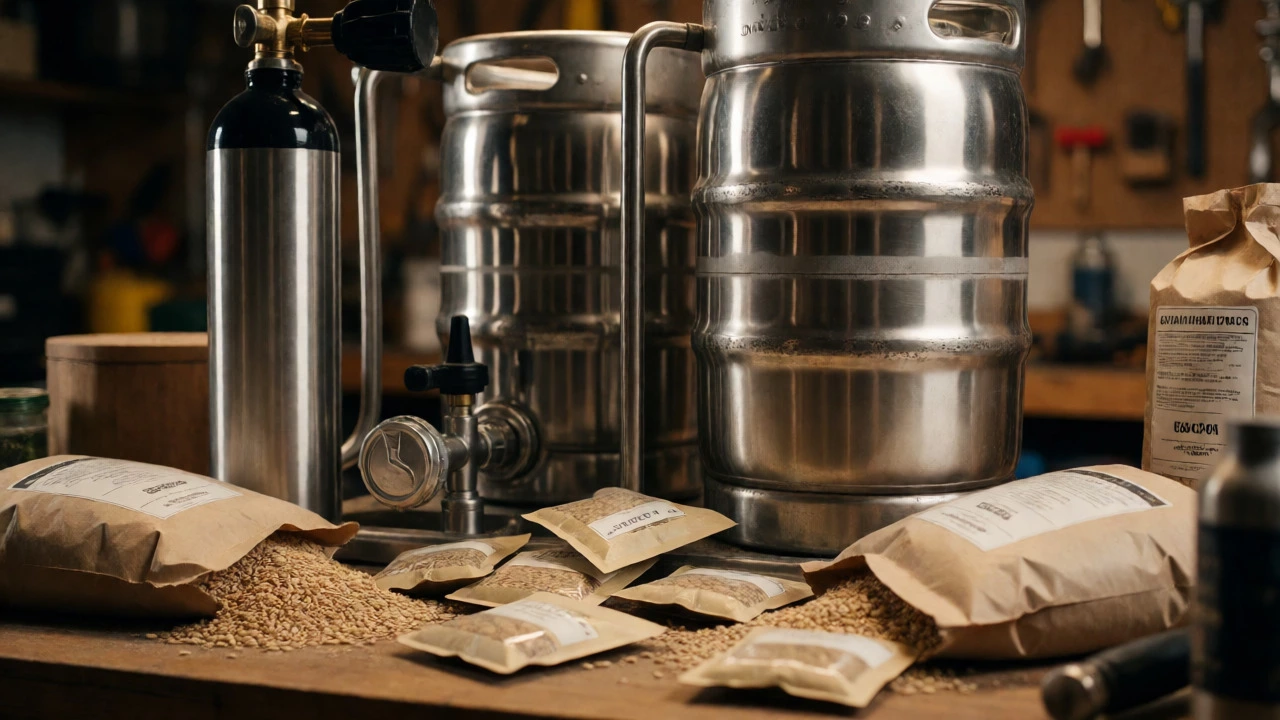
A basic kegging setup isn't just one purchase. It’s a cluster of items. You need a refrigerator or chest freezer modified to hold pressure (a kegerator). You need a CO2 tank, which requires refills or a swap-out fee. You need a regulator to control the gas flow. You need lines, taps, and couplers. And obviously, you need the kegs themselves. Depending on whether you go for plastic Cornelius kegs or stainless steel ones, and whether you build a DIY kegerator or buy a pre-made unit, this subsystem alone can cost between $500 and $1,250.
Consider this: that $1,250 could buy you roughly 30 to 40 batches of ingredients. Unless you plan to brew dozens of times, the financial savings from kegging convenience are negligible. You’re paying for time saved and aesthetic appeal, not necessarily cheaper beer.
The Rise of All-In-One Electric Brew Rigs
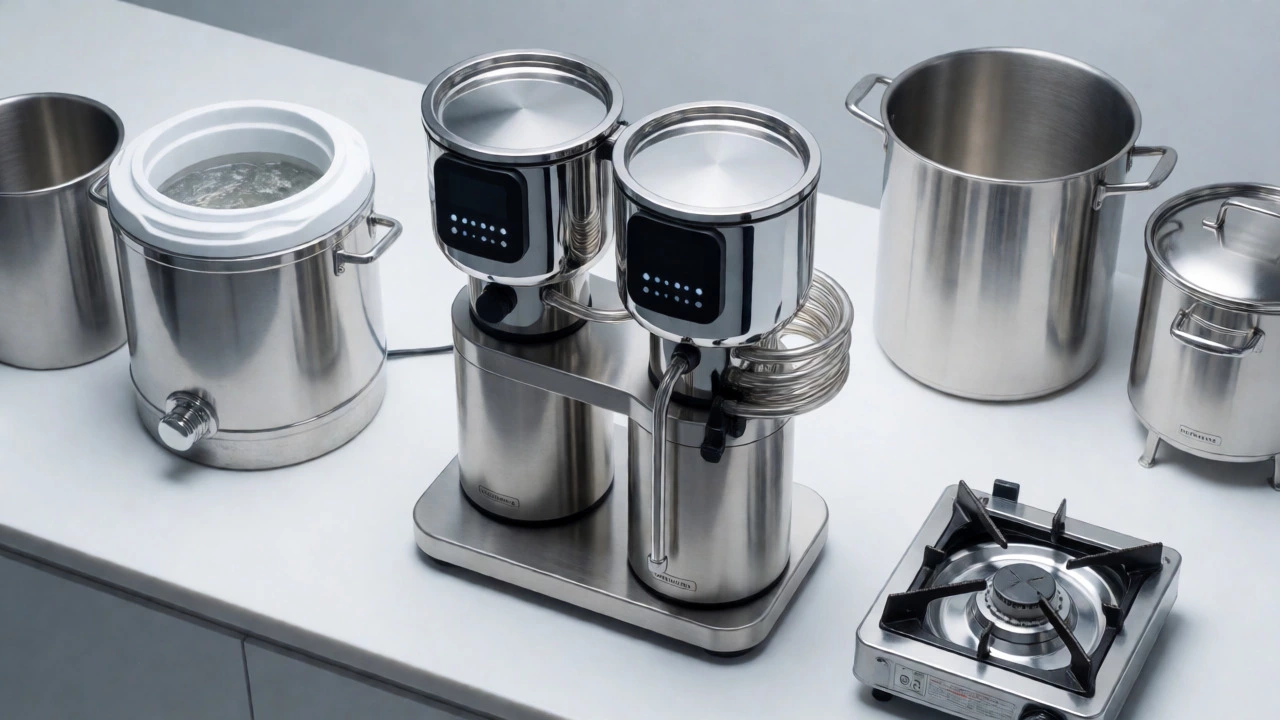
Traditional home brewing involves separate pots, a burner, a cooler for mashing, and manual temperature monitoring. It’s labor-intensive but affordable. Enter the all-in-one electric system. Devices like the Grainfather or BrewZilla combine heating, mashing, boiling, and pumping into a single sleek unit. They automate temperature ramps, recirculate wort, and often include a built-in chiller.
These units are fantastic for consistency. They reduce human error and make brewing less messy. But they are expensive. A Grainfather G30 sits around $700, while larger models push past $1,400. Compare this to building a modular all-grain setup yourself. You can buy a decent kettle, a converted ice chest for a mash tun, and a propane burner for under $300 total. So, when you buy an integrated rig, you are paying a premium of 300% to 500% for convenience and automation.
Is it worth it? If you value repeatability and hate scrubbing burners, yes. If you are on a tight budget, no. Start with modular gear. You can always upgrade later.
Ingredients Are Cheap (Mostly)
It surprises people, but the actual stuff that turns into beer is inexpensive. Malt extract, base grains, standard hops, and yeast packets are commodities. A standard Pale Ale recipe using bulk-bought ingredients might cost $25. A complex Imperial Stout with specialty malts and fresh hops might hit $50. That’s still low compared to hardware.
However, there are exceptions. If you chase niche styles requiring imported hops from New Zealand or rare Belgian yeasts, ingredient costs rise. But these are outliers. For 90% of homebrewers, ingredients are a rounding error in the overall budget. The real money is in the vessels that hold them.
Hidden Costs: Temperature Control and Fermentation
Beyond the brew day, fermentation is where quality lives or dies. Yeast is sensitive to temperature. Fluctuations cause off-flavors. To combat this, many brewers invest in fermentation chambers. This could be a dedicated mini-fridge with an external thermostat ($150-$300) or a full-size chest freezer with a temperature controller ($200-$400).
While cheaper than kegging or electric rigs, these upgrades are significant. They don’t make the beer taste different immediately, but they prevent disasters. A stuck fermentation or an overheated lager can ruin a whole batch. Many beginners skip this step, brew in a closet, and wonder why their beer tastes weird. Adding a temperature controller is often the second most critical investment after the initial kit.
Strategic Buying: How to Avoid Overspending
You don’t need to spend $2,000 on day one. In fact, you shouldn’t. Here is a proven path to keep costs down:
- Start Small: Buy a basic extract kit for under $150. Brew three batches. See if you actually enjoy the process.
- Upgrade Gradually: Move to partial-mash or all-grain only after you master sanitation and timing. Add a kettle and mash tun separately rather than buying a bundle.
- DIY Where Possible: Build your own mash tun from a Coleman cooler. Use a spare fridge for fermentation. These hacks save hundreds.
- Delay Kegging: Bottle for your first six months. Once you’re sure you’ll stick with it, consider kegging. Or, look for used kegs on local marketplaces.
- Buy Used Gear: Home brewing has a high turnover rate. People quit, move, or upgrade. Check Facebook Marketplace or Craigslist for kettles, burners, and even kegerators. You can often find gently used equipment for half the retail price.
Remember, the goal is good beer, not the shiniest garage. A scratched kettle makes great beer if it’s clean. Don’t let marketing convince you that you need the latest gadget to brew a drinkable pint.
Conclusion: Value vs. Experience
So, what is the most expensive part? It’s the equipment, specifically the kegging infrastructure and automated brew systems. But viewing these costs strictly as expenses misses the point. Home brewing is a hobby. You pay for the satisfaction of creating something custom, the science experiment aspect, and the pride of serving friends. If you treat it as a pure cost-saving measure, you’ll likely be disappointed by the upfront outlay. If you treat it as an investment in skill and enjoyment, the price tag becomes easier to justify.
Is home brewing actually cheaper than buying beer?
Not initially. Due to high upfront equipment costs, home brewing is usually more expensive per bottle for the first 20-50 batches. However, once you own the gear, the ongoing cost per bottle drops significantly, often to $0.50-$1.00, making it cheaper than craft beer in the long run.
How much does a basic home brewing kit cost?
A basic extract home brewing kit typically costs between $85 and $140. This usually includes a fermenting bucket, airlock, siphon, sanitizer, and bottles. It allows you to brew 5-gallon batches without needing a stove or specialized kitchen equipment.
Why is kegging considered expensive?
Kegging requires multiple components: a refrigeration unit (kegerator), a CO2 tank, a regulator, hoses, taps, and the kegs themselves. Together, these items can cost between $500 and $1,250, which is significantly higher than the $20-$40 cost of bottles and caps for the same volume of beer.
Are all-in-one brewing systems worth the price?
They are worth it if you value convenience and consistency. Units like the Grainfather automate temperature control and pumping, reducing labor and cleanup. However, they cost 3-5 times more than building a modular all-grain setup manually, so they are best for brewers who brew frequently and prioritize ease of use.
What are the cheapest ways to start home brewing?
Start with an extract kit, reuse bottles from store-bought beer, and use a large stockpot you already own instead of buying a dedicated kettle. Avoid buying a kegerator or electric system until you have brewed at least ten batches and confirmed your interest.