Whiskey Tasting Profile Builder
Sensory Log
Beginner's GuideObservation: Color
Aroma Categories
Tasting Summary
If you've just poured a glass of high-end spirits, your first instinct is probably to take a big gulp. Stop right there. If you dive straight in, you're missing about 80% of the experience. Tasting whiskey tasting is less about the act of drinking and more about a sensory investigation. The goal isn't just to see if it "tastes good," but to figure out why it tastes that way by engaging your eyes and nose before your tongue ever touches the liquid.
Get Your Gear Ready
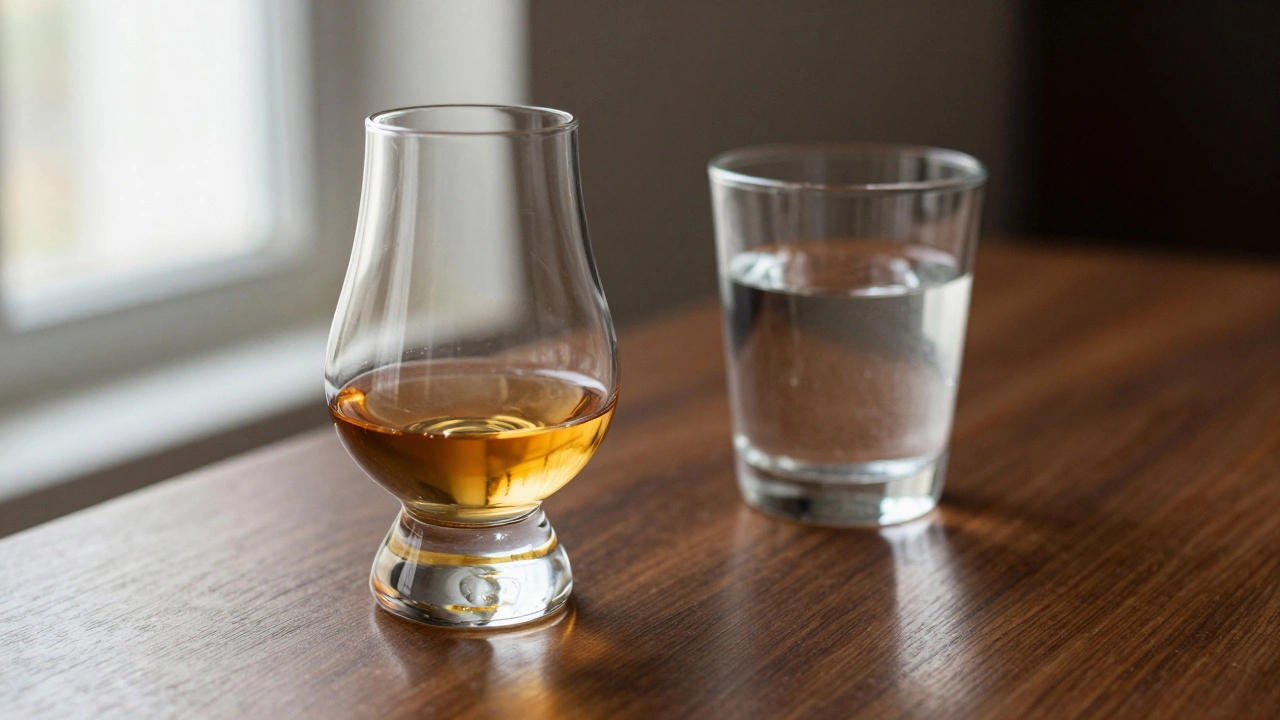
Before you even touch the bottle, you need the right environment. You wouldn't eat a gourmet meal off a paper plate, so don't drink a fine scotch from a plastic cup. The industry standard is the Glencairn glass, which is a tulip-shaped glass designed to concentrate the aromas toward your nose.
Temperature also plays a huge role. Aim for about 68°F (20°C). If the whiskey is too cold, the volatile aromatic compounds stay trapped; too warm, and the alcohol sting becomes overwhelming. Also, keep a glass of room-temperature water nearby. You'll use this to cleanse your palate or to open up the whiskey if it feels too "tight" or aggressive.
The First Look: Reading the Color
The very first active step is a visual check. Pour about 1 to 2 ounces into your glass and hold it up to a natural light source. You aren't just checking if it's gold or brown; you're looking for clues about its history. Since roughly 60% of a whiskey's flavor comes from the cask it aged in, the color is your first map of the flavor profile.
A pale, straw-colored liquid often suggests a shorter maturation or the use of ex-bourbon barrels. A deep, reddish-amber hue usually points to longer aging or a Sherry Cask, which imparts those rich, dried-fruit notes. Pay attention to the "legs"-the droplets that slide down the side of the glass. If they move slowly and look viscous, you're likely dealing with a heavier, oilier spirit.
| Color Observation | Likely Attribute | Potential Flavor Profile |
|---|---|---|
| Pale Straw / Gold | Younger or Bourbon Cask | Vanilla, honey, light citrus |
| Deep Amber / Copper | Moderate Aging | Caramel, toasted nuts, oak |
| Dark Mahogany / Red | Sherry Cask / Long Aging | Raisins, chocolate, heavy spice |
The Art of Nosing
Now we hit the most critical part: the smell. Because your olfactory system is linked directly to your brain's memory center, smelling is where the real "tasting" happens. A common mistake beginners make is swirling the glass like they do with wine. Don't do that. Swirling releases too many alcohol vapors at once, which can burn your nostrils and mask the subtle notes.
Instead, try a gentle approach. Keep your mouth slightly open-this allows you to breathe through both your nose and mouth, which softens the alcohol's sharpness. Imagine the rim of your glass is a clock face. Start your nose just above the 12 o'clock position and slowly move down toward 6 o'clock. Take short, light sniffs. If you shove your nose deep into the glass, you'll experience "nose blindness," where the ethanol overwhelms your senses and you can't smell anything else.
If the scent is elusive, use the French Technique. Hold the glass at stomach level and slowly lift it toward your face while sniffing. The moment you catch a specific aroma, stop and hold it there. This helps you find the exact distance where the whiskey's character is clear but the alcohol doesn't sting.
Decoding the Aromas
Once you've captured the scent, how do you describe it? This is where the Whisky Flavor Wheel comes in. This tool, developed by the Scotch Whisky Research Institute, helps you categorize what you're smelling into five main groups:
- Fruity: Think of crisp apples, pears, or the sweetness of dried apricots.
- Floral: Scents reminiscent of lavender, rose petals, or a fresh spring meadow.
- Smoky: This is common in peated whiskies, smelling like campfire ash, peat smoke, or charred wood.
- Spicy: Notes of cinnamon, black pepper, ginger, or nutmeg.
- Woody: The direct influence of the barrel, giving off vanilla, cedar, or coconut aromas.
Your nose has millions of olfactory cells capable of detecting thousands of compounds. Don't be afraid to trust your own memories. If it smells like your grandfather's old library or a specific type of candy from childhood, that's a valid observation.
The Final Step: The First Sip
Only after you've seen and smelled the whiskey should you actually taste it. Take a small, teaspoon-sized sip. Do not swallow immediately. Let the liquid coat your entire tongue, as different parts of your palate pick up different notes.
The first sip is often a shock to the system; your second and third sips are where the magic happens as your mouth acclimates. To truly unlock the flavor, use a technique called retronasal breathing. After you swallow, keep your lips closed and briefly hold your breath, then exhale slowly through your nose. This pushes the aromas from the back of your mouth up into your nasal passages, giving you a full 3D picture of the spirit's profile.
While tasting, ask yourself about the texture. Is it oily and thick? Does it feel velvety or perhaps dry and astringent? These physical sensations tell you as much about the distillation process and cask type as the flavor does.
Why shouldn't I swirl my whiskey glass?
Unlike wine, whiskey has a high alcohol content. Swirling aerates the liquid too aggressively, causing a surge of ethanol vapors to hit your nose. This often leads to a stinging sensation that masks the subtle fruity or floral notes you're trying to find.
Is adding water to the whiskey cheating?
Not at all. Adding a few drops of room-temperature water can break the surface tension of the liquid and release "trapped" aromatic compounds. It lowers the alcohol percentage slightly, which can make a very high-proof whiskey much easier to analyze.
What is the best glass for a beginner?
The Glencairn glass is the gold standard. Its wide bowl allows the whiskey to breathe, while the tapered top traps the aromas and funnels them directly to your nose, making it much easier to identify specific notes on the flavor wheel.
What does "nose blindness" mean in whiskey tasting?
Nose blindness occurs when your olfactory sensors are overwhelmed by a strong stimulus-in this case, ethanol. If you put your nose too deep into the glass, the alcohol "shuts down" your ability to smell the more delicate notes, leaving you with nothing but a burning sensation.
How do I use the retronasal breathing technique?
After taking a small sip and swallowing, keep your mouth closed and breathe out slowly through your nose. This allows the aromas lingering in your mouth to travel up the back of your throat to your olfactory nerve, which is where the brain perceives most of the flavor.
Next Steps for Your Tasting Journey
Once you've mastered the "Look, Nose, Taste" sequence, try a side-by-side comparison. Pick two whiskies from the same region-for example, two Highland scotches-but from different distilleries. Use the same process for both and note how the color differences translate into flavor changes. If you find a whiskey that feels too "hot" (meaning the alcohol burn is too high), try adding water one drop at a time until the flavors bloom. This is the best way to train your palate to recognize the difference between raw alcohol and complex distillation characters.