Tea Etiquette Myth-Buster
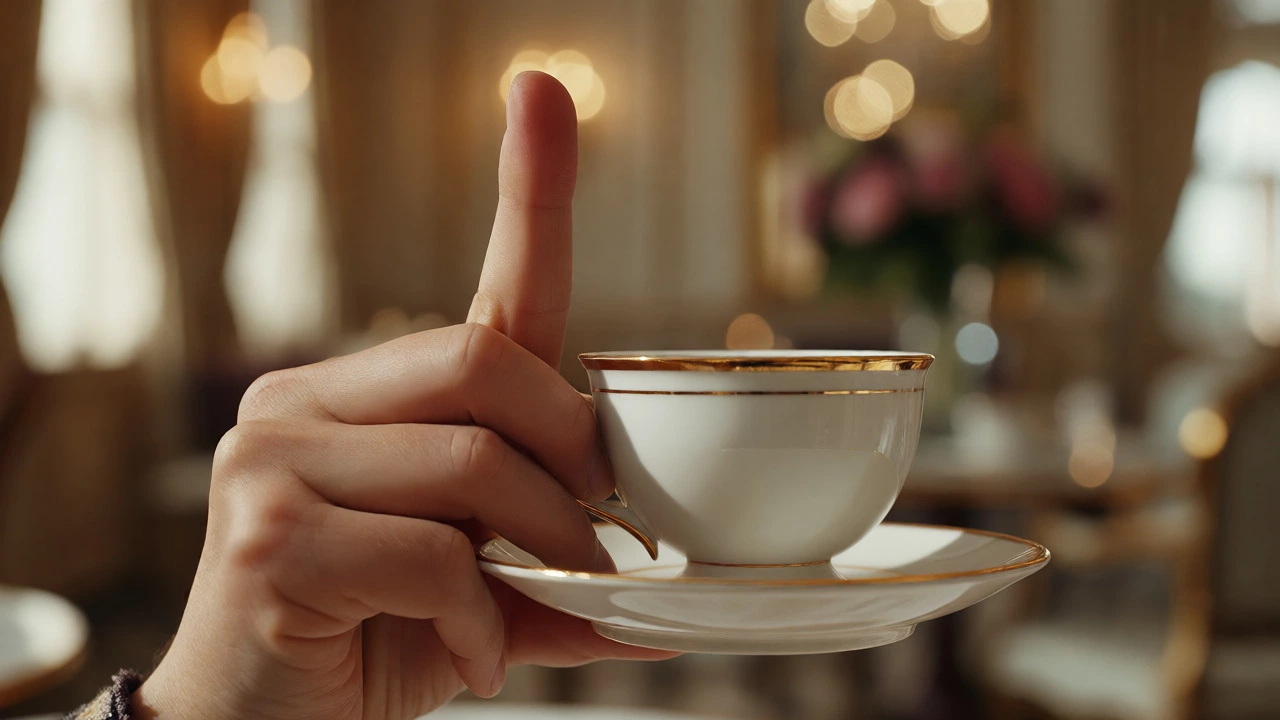
Toggle the switch to see how the pinky should be positioned according to modern etiquette experts.
Question 1 of 3:
What do most modern etiquette experts advise regarding the pinky finger when drinking from a handled teacup?
Quiz Complete!
You scored 0/3.
Remember: Good manners are invisible. If people notice your fingers, they aren't listening to you.
You are sitting in a high-end tearoom or perhaps just having a quiet moment at home. You lift your cup, and instinctively, your little finger shoots up like an antenna. It feels refined, doesn't it? Like you have instantly become a character in a period drama. But here is the awkward truth: most etiquette experts say that gesture is actually a mistake. In fact, raising the pinky when drinking tea is widely considered a faux pas, a theatrical exaggeration rather than a rule of good manners.
If you have ever wondered why this habit persists, you are not alone. It is one of the most enduring myths in modern dining. The short answer is that we do it because movies, cartoons, and advertising told us to. But the long answer involves hot porcelain, class struggles, and a few centuries of misunderstanding. Let’s break down where this gesture came from, why it stuck, and how you should actually hold your cup to look truly polished.
The Modern Consensus: Keep It Down
Before we dig into history, let’s settle the current debate. If you ask any serious etiquette authority today-whether it is the legacy of Emily Post or modern consultants like Judith Martin (Miss Manners)-they will tell you the same thing: keep your pinky down. The goal of table manners is not to show off; it is to make everyone around you comfortable. An extended pinky can look stiff, pretentious, and distracting. It draws attention to your hand rather than the conversation or the tea itself.
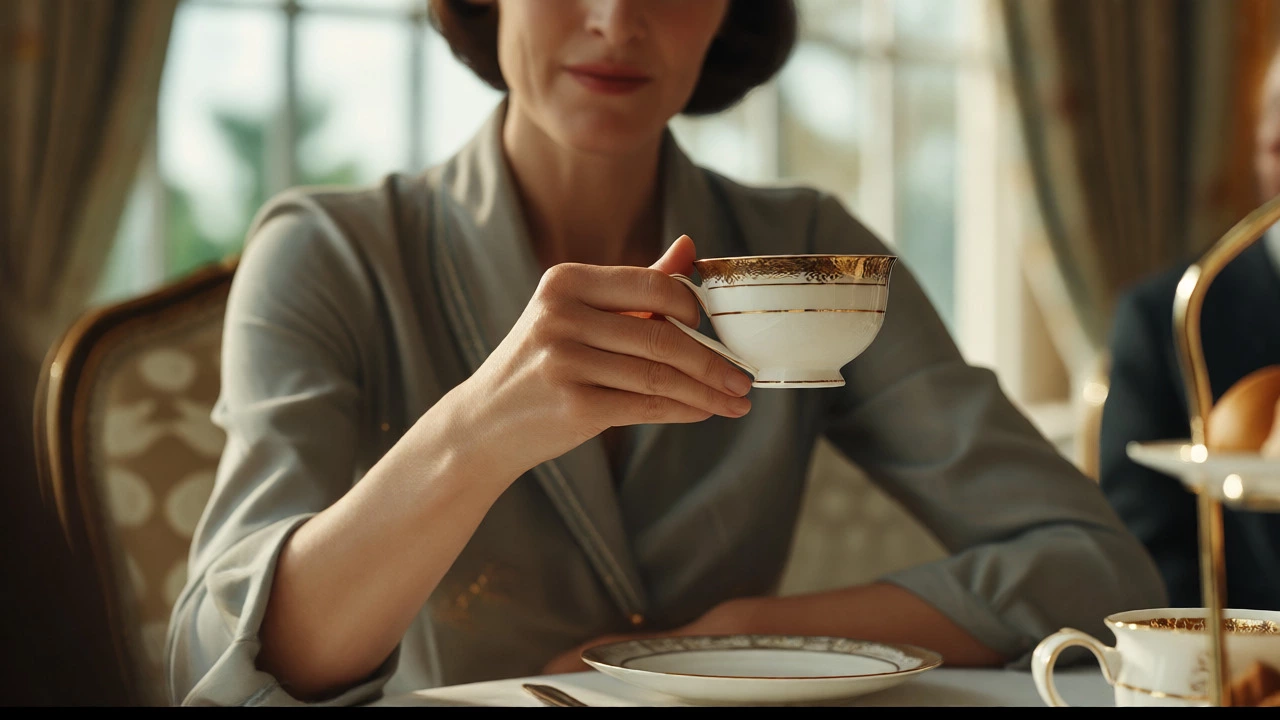
Think about it this way. Good manners are invisible. If people are noticing your fingers, they are not listening to you. The correct technique is simple: pinch the handle of the cup with your thumb and index finger. Your middle finger supports the bottom of the handle if needed. The ring finger and pinky should curl naturally inward, resting gently against each other or the handle. No tension, no extension, no performance.
Emily Post was an American author who wrote extensively on social etiquette in the early 20th century. She famously rejected the raised pinky as improper and rude, arguing that it signaled elitism rather than refinement. Her influence helped cement the idea that natural, relaxed hand positions are superior to affectations.
Where Did This Gesture Come From?
If it is not proper etiquette, why does everyone do it? There are three main theories, ranging from practical necessity to social signaling. None of them support the idea that you should be doing it today, but they explain how the image got burned into our brains.
1. The Heat Problem: Handleless Cups
In the 17th and 18th centuries, tea was a luxury import from China. The cups were often small, delicate porcelain bowls without handles. Imagine trying to drink scalding hot liquid from a thin ceramic bowl. You cannot wrap your whole hand around it-you would burn yourself. So, what did people do? They used their fingertips to grip the rim. Typically, this meant using the thumb, index, and middle finger. The ring finger and pinky had nowhere to go, so they naturally lifted away from the hot surface to avoid contact.
This was a functional adaptation, not a style choice. Over time, as handles became standard on teacups, the habit lingered among those who wanted to mimic the aristocratic look of the past. But by then, the reason for lifting the finger (heat) was gone, leaving only the pose behind.
2. The Balance Theory
Some historians suggest that certain wide, low-profile teacups in the 19th century were difficult to hold steadily. Extending the pinky might have provided a slight counterbalance, helping to prevent spills. While plausible, there is no strong evidence that this was a universal rule. Most etiquette guides from that era emphasized stability through a firm grip, not extra fingers. Today’s teacups are designed with ergonomic handles specifically so you don’t need to use your pinky for balance.
3. Class Signaling and the "Three-Finger" Rule
This is probably the biggest driver of the myth. Historically, European aristocrats distinguished themselves from the commoners by how they ate and drank. Commoners used all five fingers to grab food. The elite used three fingers-thumb, index, and middle-to handle delicate foods like sandwiches or cakes. Using fewer fingers was seen as more refined.
As servants and the emerging middle class tried to imitate their wealthy employers, they copied the three-finger grip for eating. However, they misunderstood the cup-holding technique. They thought that keeping the pinky up while drinking was part of the "refined" look. In reality, the aristocrats kept their hands relaxed. The exaggerated pinky-up pose became a caricature of wealth-a visual shorthand for someone trying too hard to appear upper-class.
Judith Martin, known professionally as Miss Manners, is an American etiquette columnist who has published advice since 1978. She consistently notes that while the heat theory for the pinky lift is plausible, it is not a documented rule, and she explicitly advises against extending the finger in modern contexts.
Hollywood Made It Famous
If history created the confusion, Hollywood sold it. Throughout the 20th century, films and cartoons needed a quick visual cue to signal "aristocrat" or "snob." Writing dialogue takes time; showing a character with a raised pinky takes a split second. It became a lazy trope. Think of every villainous dowager or pompous businessman sipping tea with a stiff little finger.
We grew up watching these images. We saw characters in *Gosford Park*, *The Great Gatsby* adaptations, and countless sitcoms performing the gesture. Our brains wired this action to "politeness" and "class," even though the context was often mocking. The irony is palpable: the gesture we think makes us look polite actually signals, to informed observers, that we are mimicking a stereotype.
A Wild Legend: The Syphilis Signal
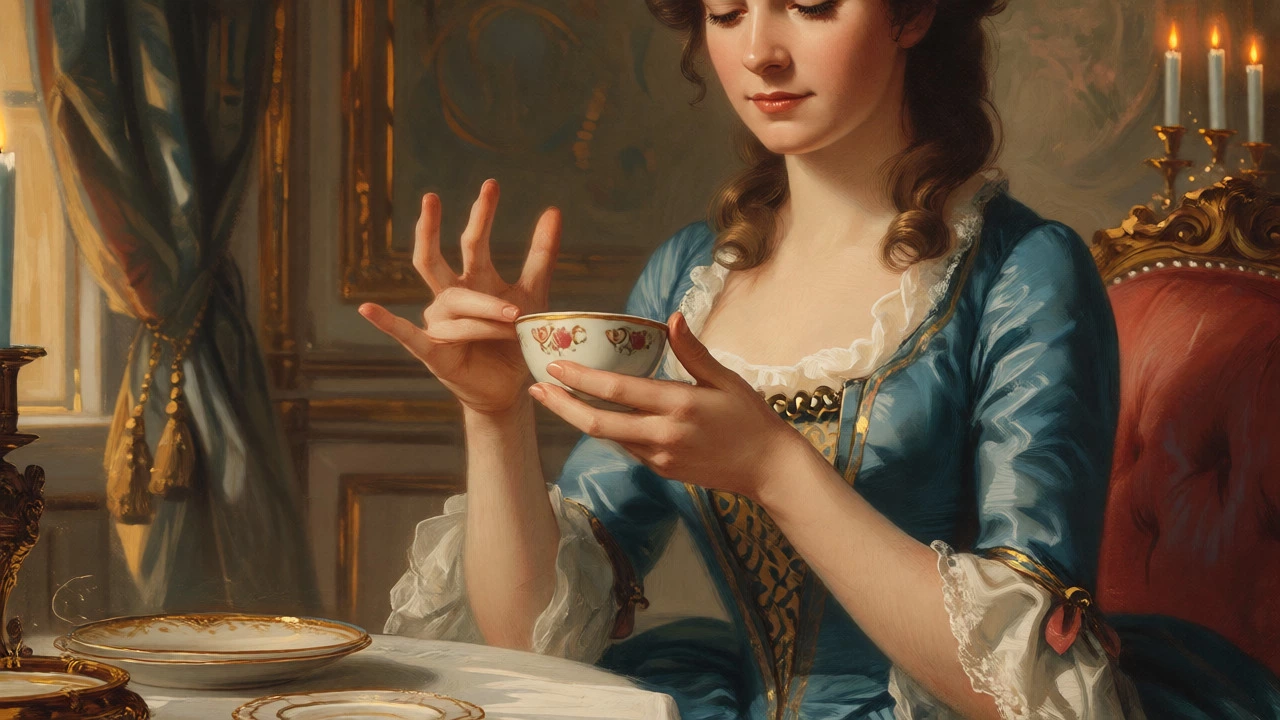
There is a fascinating, albeit unverified, legend circulating on social media that adds another layer to this mystery. Some claim that in the court of Louis XIV at Versailles, courtiers suffering from syphilis would raise their pinky as a discreet signal to others. Since syphilis caused skin lesions on the hands, covering or highlighting certain fingers could indicate infection status. Others argue it was a code for sexual availability or specific health conditions.
While entertaining, most tea historians dismiss this as apocryphal. There is no archival proof linking the widespread adoption of the pinky-up pose directly to venereal disease signaling. It is likely a modern urban legend attached to the gesture to give it a scandalous origin story. Don’t worry-your pinky isn’t sending a medical message.
How to Hold Your Teacup Correctly
So, if you want to ditch the myth and adopt actual good manners, here is what you should do. It is easier than you think, but it requires a bit of mindfulness initially.
- Grip the Handle: Use your thumb and index finger to pinch the top of the handle. Your middle finger can rest underneath the handle for support if the cup is heavy or hot.
- Relax the Other Fingers: Let your ring finger and pinky curl naturally toward your palm. They should feel loose, not stiff.
- Keep Elbows In: A common mistake is lifting the elbow high while raising the pinky. Keep your elbows close to your body. Drinking tea should be a contained, modest movement.
- No Stirring Noise: When adding sugar or milk, stir gently. Place the spoon on the saucer behind the cup, not in the cup.
If you find yourself slipping back into old habits, try this trick: consciously press your pinky against your ring finger. This physical connection reminds your brain to keep the hand closed and relaxed.
Comparison: Myth vs. Reality
To clarify exactly what looks right versus what looks wrong, let’s compare the stereotypical "Pinky Up" approach with the accepted standard.
| Feature | The "Pinky Up" Myth | Proper Etiquette |
|---|---|---|
| Pinky Position | Extended upward, separated from other fingers | Curling naturally inward, relaxed |
| Perceived Impression | Pretentious, affected, trying too hard | Natural, confident, respectful |
| Physical Comfort | Can cause hand tension and cramping | Relaxed hand muscles, less fatigue |
| Historical Basis | Misinterpretation of handleless cup usage | Consistent across centuries of formal guides |
| Modern Expert View | Faux pas (mistake) | Correct practice |
Does It Matter in Casual Settings?
Here is the pragmatic view. If you are at a formal afternoon tea service in London or Sydney, sticking to the rules shows respect for the host and the occasion. It demonstrates cultural literacy. However, if you are at home with friends, nobody is going to judge you harshly for a raised pinky. It is a harmless quirk.
But awareness is power. Knowing that the gesture is a myth allows you to choose whether to perform it. Maybe you do it ironically with friends. Maybe you drop it entirely to feel more grounded. The key is intentionality. When you understand the history, you stop reacting to outdated scripts and start engaging with the present moment.
Troubleshooting Common Mistakes
Even after learning the correct grip, old habits die hard. Here are some pitfalls to watch out for:
- The Elbow Lift: Often, when people raise their pinky, they also lift their elbow. This makes you look like you are conducting an orchestra. Keep your forearm parallel to the table.
- The Death Grip: Don’t squeeze the handle too tightly. White knuckles suggest anxiety or aggression. A light pinch is elegant.
- Stirring with the Pinky: Never use your pinky to scoop sugar or test temperature. It is unsanitary and looks odd. Always use the spoon.
Practice makes perfect. Next time you brew a cup, take ten seconds before you drink. Check your hand position. Is your pinky relaxed? If yes, you are doing it right.
Is raising the pinky always rude?
It is generally considered poor form or a faux pas in formal settings. Etiquette experts like Emily Post and Miss Manners advise against it because it appears affected and pretentious. However, in very casual settings, it is rarely taken seriously enough to cause offense, though it may mark you as unaware of current etiquette norms.
Why do people think the pinky up is polite?
This belief stems largely from 20th-century media, including films, cartoons, and advertisements, which used the gesture as a visual shorthand for aristocracy and refinement. Additionally, historical confusion between the practical need to avoid burning fingers on handleless cups and the desire to mimic upper-class eating habits contributed to the misconception.
How should I hold a teacup without a handle?
If you are drinking from a traditional Asian-style tea bowl without a handle, you typically hold the bowl with both hands. One hand cups the side of the bowl, and the other supports the bottom. The fingers should be spread comfortably to distribute heat, not necessarily extended individually. This differs from Western teacup etiquette.
Does the type of tea matter for how I hold the cup?
Not really. Whether you are drinking Earl Grey, Green Tea, or Oolong, the mechanical etiquette of holding a Western-style handled cup remains the same. The focus is on the vessel design and social context, not the beverage itself. However, in formal Japanese or Chinese tea ceremonies, specific rituals dictate hand placement, which are distinct from Western afternoon tea rules.
What if my hand is too large for the cup?
If your hand is large, you might struggle to pinch the handle without your pinky touching the cup or other fingers. In this case, prioritize comfort and stability over rigid rules. Rest your pinky gently on the handle or the side of the cup if necessary. The goal is to drink safely and politely, not to force an unnatural position that causes shaking.