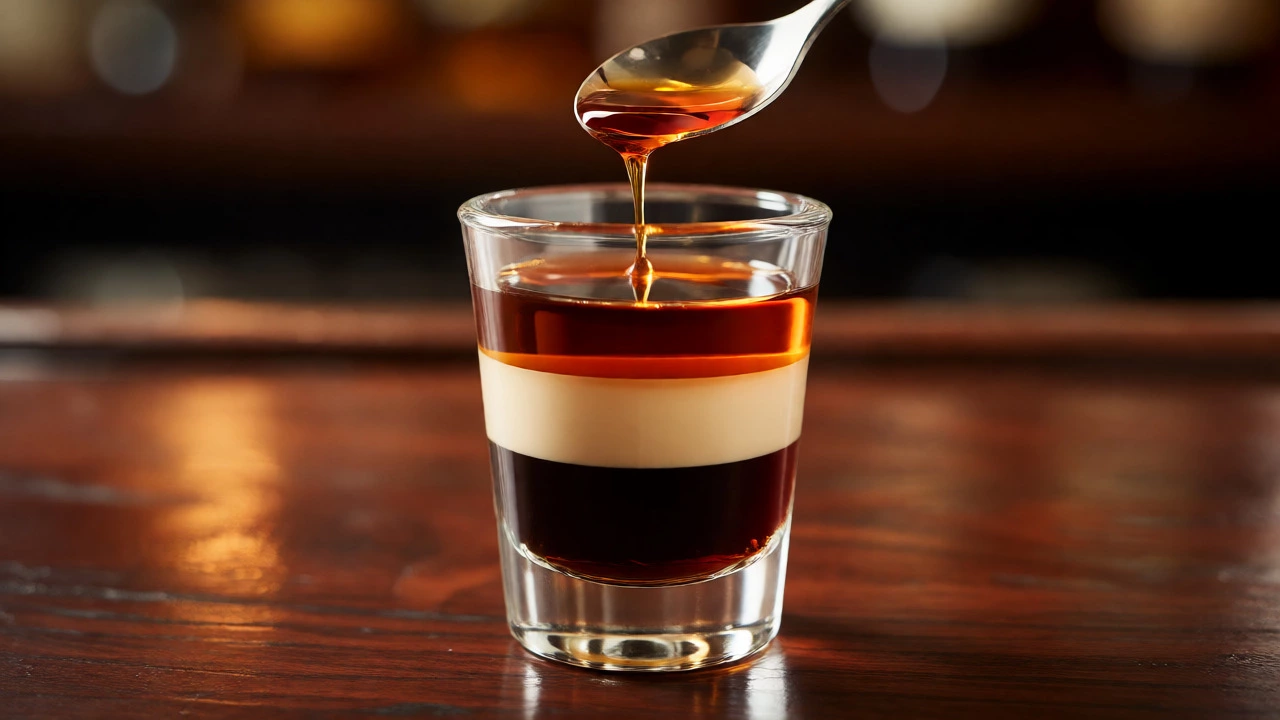
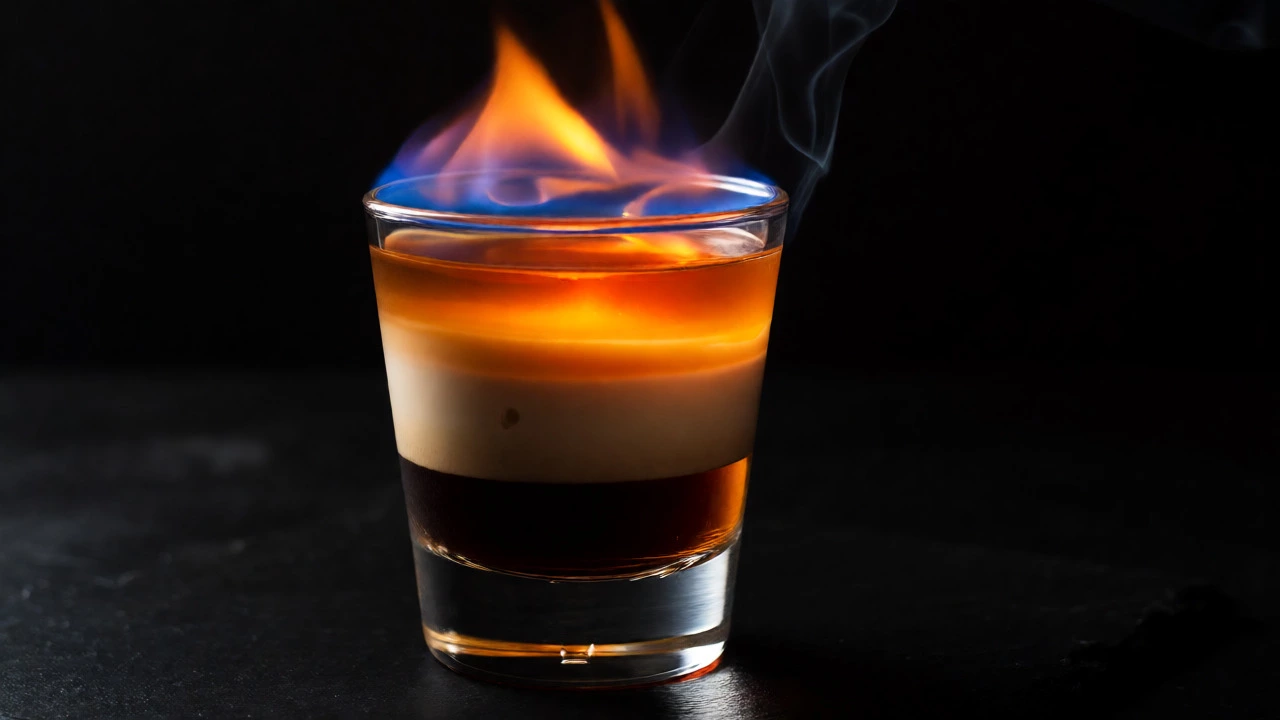
You’ve seen them at bars-those tiny, vibrant shots with three distinct layers of brown, tan, and orange. They look like magic, but they’re actually just physics. The B-52 is a classic layered shot cocktail made from coffee liqueur, Irish cream, and orange liqueur, famous for its visual appeal and smooth, dessert-like taste. If you’ve ever tried to make one at home and ended up with a muddy brown sludge instead of crisp stripes, don’t worry. You didn’t fail; you just skipped the most important step: density control.
Making a B-52 isn’t about shaking or stirring. It’s about pouring slowly enough that liquids of different weights stack on top of each other without mixing. This guide will walk you through the exact ingredients, the right tools, and the specific pouring technique needed to nail those layers every time. Whether you’re hosting a party or just want a quick after-dinner treat, getting this right is easier than you think.
Key Takeaways
- The Golden Rule: Always pour from the heaviest liquid (bottom) to the lightest (top). Density is everything.
- The Secret Tool: Use the back of a teaspoon or a dedicated bar spoon to slow down the flow of the liquid.
- Ingredient Quality Matters: Fresh, unexpired creams layer better than old, separated ones.
- No Ice Needed: Serve it straight up in a shot glass. Ice melts and ruins the layers.
- Variations Exist: Swap the top layer for tequila (B-53) or vodka (B-51) if you prefer less sweetness.
The Science Behind the Layers
Why does the B-52 stay separated? It comes down to sugar content and alcohol by volume (ABV). Liquids with higher sugar content are denser (heavier), while liquids with higher alcohol content are less dense (lighter). To create a stable layered drink, you must build from the bottom up, starting with the heaviest ingredient.
In a standard B-52, the order is non-negotiable:
- Kahlúa (Coffee Liqueur): High sugar, low ABV. This sinks to the bottom.
- Baileys Irish Cream: Medium density. It floats on the coffee liqueur but sinks below the orange liqueur.
- Grand Marnier (Orange Liqueur): Lower sugar, higher ABV. This sits on top.
If you try to pour the Baileys first, then add Kahlúa, the heavy coffee liqueur will plunge through the cream, causing turbulence and mixing. That’s why the sequence matters as much as the pour speed.
Essential Ingredients and Tools
You don’t need a professional bar setup, but having the right components makes all the difference. Here is what you need for one shot.
| Ingredient | Type | Density Role | Amount per Shot |
|---|---|---|---|
| Kahlúa | Coffee Liqueur | Heaviest (Bottom) | 0.5 oz (15 ml) |
| Baileys Original Irish Cream | Cream Liqueur | Medium (Middle) | 0.5 oz (15 ml) |
| Grand Marnier | Orange Cognac Liqueur | Lightest (Top) | 0.5 oz (15 ml) |
Tools You Need:
- Shot Glass: A clear glass is essential so you can see the layers form.
- Bar Spoon or Teaspoon: This is your best friend. The convex side of the bowl breaks the surface tension and slows the liquid flow.
- Pour Spouts: Optional, but helpful for controlling the stream of the heavier liquids.
Step-by-Step Instructions
Ready to mix? Follow these steps precisely. Rushing is the enemy of the B-52.
Step 1: Pour the Base
Start with the Kahlúa. Measure out half an ounce and pour it directly into the center of the shot glass. Since this is the heaviest liquid, it doesn’t matter if it splashes a little bit. Just make sure the bottom is covered evenly. This layer should occupy roughly one-third of the glass.
Step 2: Layer the Cream
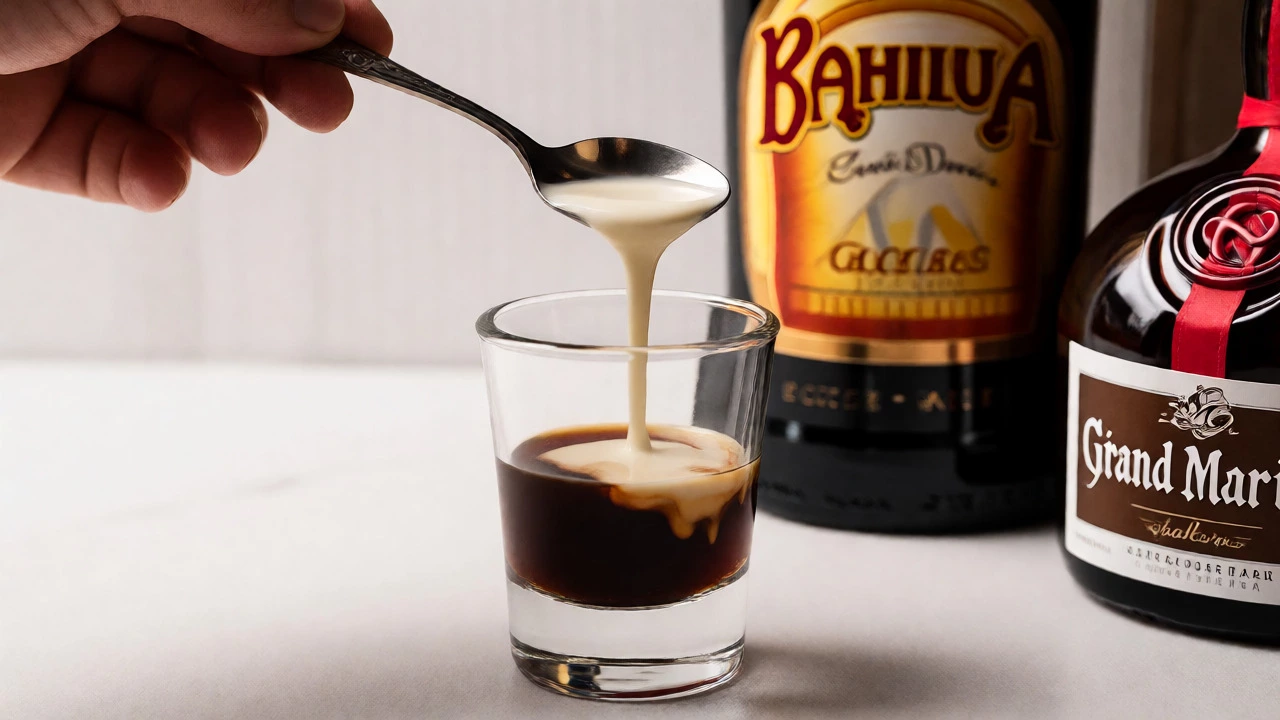
This is where most people mess up. Take your spoon and turn it upside down (bowl facing up). Hold the tip of the spoon against the inside wall of the shot glass, just above the Kahlúa layer. Slowly pour the Baileys onto the back of the spoon. The liquid should glide gently off the spoon and settle on top of the coffee liqueur.
If you pour too fast, the Baileys will punch through the Kahlúa. If you pour too slow, it might not spread evenly. Aim for a steady, thin trickle. You want the cream to float. Stop when the second layer reaches the two-thirds mark.
Step 3: Top with Orange
Rinse your spoon quickly if there’s any Baileys residue left, or use a clean part of the spoon. Repeat the process with the Grand Marnier. Hold the spoon just above the Baileys layer and pour slowly. The orange liqueur is lighter than the cream, so it will sit on top. Fill the remaining third of the glass.
Your B-52 should now have three distinct bands: dark brown at the bottom, creamy white/tan in the middle, and amber/orange at the top.
Troubleshooting Common Mistakes
Did your layers blend? Here’s why it likely happened and how to fix it next time.
The "Muddy" Look: This usually means you poured too aggressively. The kinetic energy of the falling liquid overcame the density difference, forcing the liquids to mix. Solution: Pour slower. Keep the spoon closer to the surface of the previous layer.
The Colors Are Blurred: Sometimes, temperature plays a role. Cold liquids are slightly more viscous, which can help hold layers together, but if the Baileys has separated (curdled), it won’t layer cleanly. Check the expiration date on your cream liqueur. Also, ensure your glasses are dry. Water droplets on the inside of the glass can disrupt the surface tension and cause early mixing.
The Top Layer Disappears: If the Grand Marnier seems to vanish, you might have used too much. Stick to equal parts (1:1:1). Overfilling the glass increases pressure and can force the top layer down into the cream.
Variations and Twists
The B-52 is a template. Once you master the basic layering, you can experiment with swaps that change the flavor profile while keeping the visual structure intact.
The B-53: Replace the top layer of Grand Marnier with tequila. This cuts the sweetness significantly and adds a spicy kick. Because tequila is lighter than Grand Marnier, it still floats, but the flavor contrast is sharper.
The B-51: Swap the top layer for vodka. This creates a cleaner, crisper finish. It’s less dessert-like and more refreshing, making it a good option for those who find traditional B-52s too cloying.
The Vegan B-52: Traditional Baileys contains dairy. For a vegan version, substitute the middle layer with a high-quality coconut-based cream liqueur. Brands like Native Drinks offer options that mimic the texture of Irish cream well enough for layering purposes.
Serving and Presentation
A B-52 is meant to be drunk immediately. Unlike stirred cocktails, the layers are fragile. As soon as you set the glass down, diffusion begins. Within minutes, the sharp lines will start to blur. So, serve it straight away.
Should you add ice? No. Ice dilutes the drink and melts, creating water that mixes with the layers and destroys the visual effect. Serve it neat, at room temperature or slightly chilled.
Want to elevate the presentation? Light the top layer. Grand Marnier has enough alcohol content (40% ABV) to catch fire. Using a long match or lighter, ignite the top layer carefully. This creates a small flame that burns off some of the alcohol, warming the drink slightly and adding a dramatic flair. Be careful-do not let the flame burn for more than a few seconds, or the heat will melt the Baileys layer below.
Can I make a B-52 without a bar spoon?
Yes, you can use the back of any regular teaspoon. The key is to hold the spoon upside down so the liquid hits the convex curve and flows gently down the side of the glass. Alternatively, you can tilt the shot glass at a 45-degree angle and pour very slowly down the inside wall, though the spoon method is more reliable for beginners.
Why did my Baileys sink to the bottom?
If the Baileys sank, it was likely denser than the Kahlúa due to temperature differences or brand variations. Some cheaper cream liqueurs have higher sugar content than premium brands. Try chilling the Kahlúa slightly to increase its viscosity, or ensure you are using a standard brand like Baileys Original, which has a consistent density profile designed for layering.
Is a B-52 strong?
It tastes sweet and mild, but it packs a punch. Each layer is typically 15-20% ABV. Combined, a single shot contains about 0.5 to 0.7 ounces of pure alcohol, depending on the brands used. It’s comparable to a double shot of whiskey in terms of alcohol content, but the sugar masks the burn, making it easy to drink too many.
Can I prepare B-52s ahead of time?
Not really. The layers begin to diffuse almost immediately upon contact. If you prepare them more than 5-10 minutes before serving, the distinct lines will fade into a gradient. For parties, it’s best to assemble them to order or just before guests arrive.
What is the correct ratio for a B-52?
The standard ratio is 1:1:1. Equal parts Kahlúa, Baileys, and Grand Marnier. However, some bartenders adjust this slightly, using a bit more Baileys in the middle to ensure a thicker cream layer that visually separates the darker bottom from the lighter top.