Spirit Tasting Profiler
Follow this structured approach to analyze your spirit like a pro. Move through each step, observe carefully, and select the descriptors that best match your experience.
Appearance & Clarity
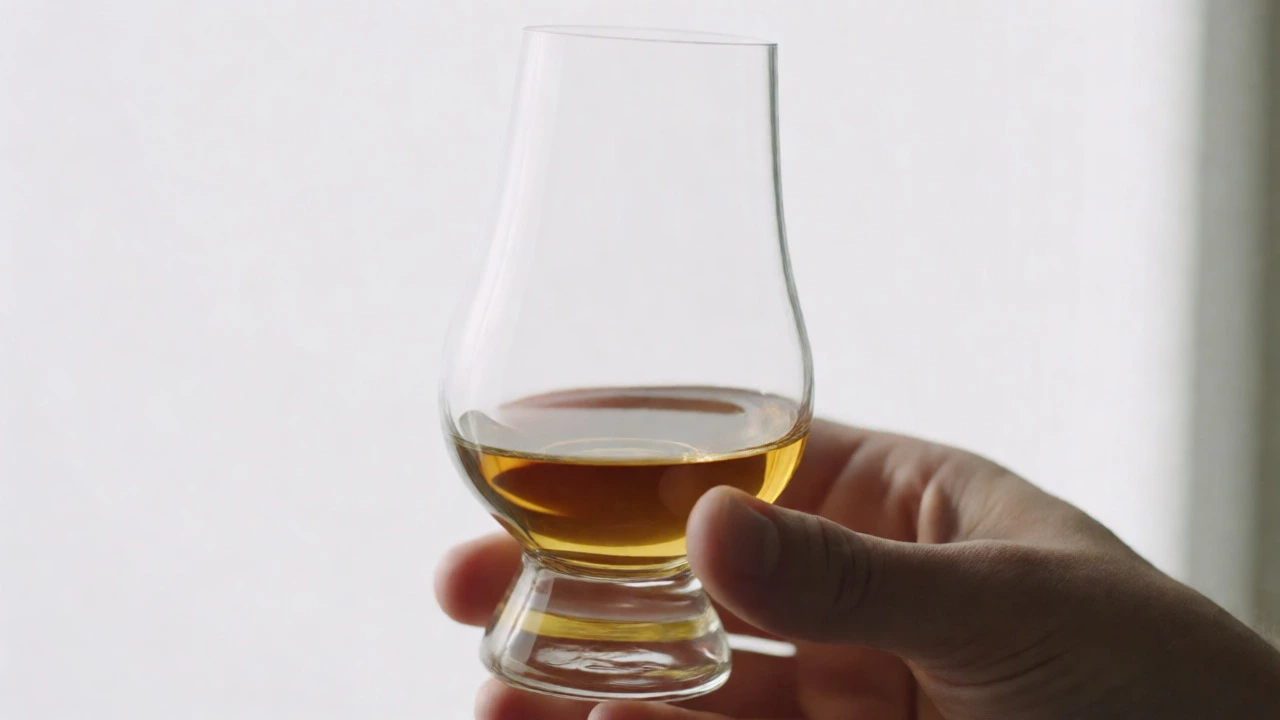
Hold the glass against a white background in natural light. Observe clarity, colour intensity, and viscosity (legs).
Nosing (Aroma)
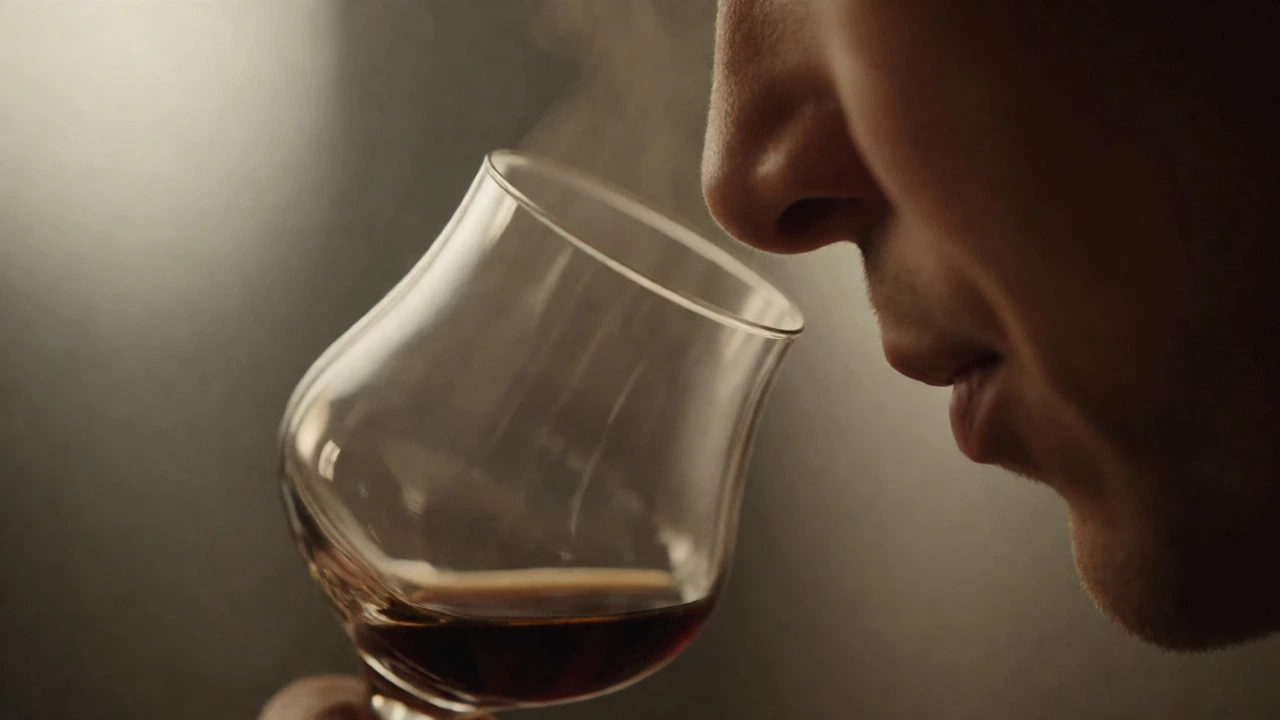
Hold glass 7-10cm away. Take short, gentle sniffs. Do not inhale deeply initially. Identify dominant families.
Palate (Taste & Texture)
Take a small sip. Coat your mouth. Note texture and flavour progression.
The Finish
After swallowing, count the seconds the flavours persist. Does it evolve or fade?
Your Sensory Profile
Summary
Key Descriptors
You’ve probably done it a hundred times: you pour a measure of whisky, take a sip, and say, "That tastes like wood." But what if you could tell that specific oak note comes from a sherry cask, or identify the faint hint of pear skin in a gin before it even hits your tongue? That’s not magic; it’s spirit tasting. It is the structured sensory evaluation of distilled alcoholic beverages, moving beyond casual drinking to assess appearance, aroma, taste, texture, and finish with precision.
Most people think spirit tasting is about being snobbish or having a superhuman nose. It’s actually about paying attention. Whether you’re judging a competition entry or just trying to understand why one rum costs $50 and another costs $15, the process is surprisingly logical. It turns out, you don’t need a PhD in chemistry to get started. You just need a glass, a quiet room, and a willingness to slow down.
The Science Behind the Sip
Why bother with all this structure? Because alcohol lies to you. High-proof spirits (40-60% ABV) can numb your palate and overwhelm your sense of smell with ethanol burn. Without a method, you miss the subtle compounds-esters, aldehydes, phenols-that give a spirit its character. Professional frameworks, like the Wine & Spirit Education Trust (WSET) Systematic Approach to Tasting Spirits, exist to break this down. They force you to look, smell, and taste in stages, preventing the alcohol heat from masking the finer details.
This isn't new. Distillers have been doing this for centuries to check consistency. But today, it’s democratized. You can use these same professional tools at home. The goal isn’t to memorize every chemical formula but to build a vocabulary that helps you communicate what you’re experiencing. When you can describe a spirit as "warming" rather than just "hot," or "oily" rather than just "thick," you’re engaging in true sensory evaluation.
Setting the Stage: Environment and Glassware
You can’t taste properly in a noisy bar with someone smoking next to you. Your environment matters more than you think. Background odours interfere with your olfactory senses, which are responsible for up to 80% of what we perceive as "flavour." Find a neutral space. Natural daylight is best for assessing colour, as artificial lighting can distort hues, making a pale vodka look golden or a deep amber rum look brown.
Glassware is the second critical tool. Forget the heavy crystal tumbler. For serious tasting, you want a tulip-shaped glass, like a Glencairn or a copita. These glasses narrow at the rim, concentrating aromas toward your nose while allowing alcohol vapours to dissipate slightly. A standard white wine glass works in a pinch because it has a similar shape. The key is to avoid wide-mouthed tumblers, which let aromas escape too quickly.
- Temperature: Serve spirits at room temperature (around 18-22°C). Chilling suppresses aromas; warming them excessively exaggerates alcohol burn.
- Pour Size: Keep it small. 25-35 ml is plenty. This allows you to add water later without diluting the sample into oblivion.
- Lighting: Use a white background to judge clarity and colour intensity accurately.
The Visual Inspection: More Than Just Colour
Before you smell anything, look at the liquid. Hold the glass against a white surface. Note the clarity-is it clear or hazy? Haze can indicate chill filtration issues or added flavourings, though some unfiltered spirits naturally appear cloudy when cold. Then, look at the colour. A clear spirit might be young or charcoal-filtered. A deep gold or brown suggests time spent in oak barrels. The shade can hint at the type of cask used: reddish tones often point to sherry or port casks, while pale straw might indicate ex-bourbon barrels.
Swirl the glass gently. Watch the "legs" or tears running down the side. Slow-moving legs suggest high viscosity, often correlated with higher alcohol content or rich sugars and oils from aging. Fast-disappearing legs usually mean a lighter, younger spirit. This step primes your brain for what to expect on the nose and palate.
Nosing: The Art of Sniffing
This is where most beginners go wrong. Do not stick your nose directly into the glass and inhale deeply. The ethanol will burn your nasal passages, temporarily dulling your sense of smell. Instead, hold the glass about 7-10 cm away from your nose. Take short, gentle sniffs. If you need more information, gradually lower the glass closer.
Try this technique: imagine the top of the glass is a clock face. Start sniffing at the 12 o’clock position, then slowly move your nose down toward 6 o’clock. This exposes different parts of your nose to varying concentrations of aroma compounds. Keep your mouth slightly open to allow air to flow through, reducing the sensation of burn.
| Aroma Family | Typical Sources | Examples |
|---|---|---|
| Fruity | Fermentation esters, fruit additions | Citrus, apple, pear, tropical fruits |
| Floral | Botanicals (gin), yeast strains | Rose, lavender, elderflower |
| Spicy | Grains, botanicals, oak | Pepper, cinnamon, vanilla, clove |
| Woody | Oak maturation | Sawdust, cedar, coconut, char |
| Smoky | Peat smoke, fire-kilned malt | Bonfire, iodine, seaweed, ash |
The Palate: Sipping and Swishing
Now, take a tiny sip. Not a gulp. Let it sit on your tongue for a few seconds. Your first sip is often an "acclimatisation" sip-it wakes up your palate to the alcohol level. Don’t swallow immediately. Move the liquid around your mouth, coating the front, sides, and back of your tongue. Different areas detect sweet, sour, salty, bitter, and umami differently.
Pay attention to texture. Is it watery? Oily? Silky? Rough? This mouthfeel gives clues about the spirit’s body and age. Older spirits often feel smoother and more viscous due to interaction with wood. Young spirits can feel sharp or thin.
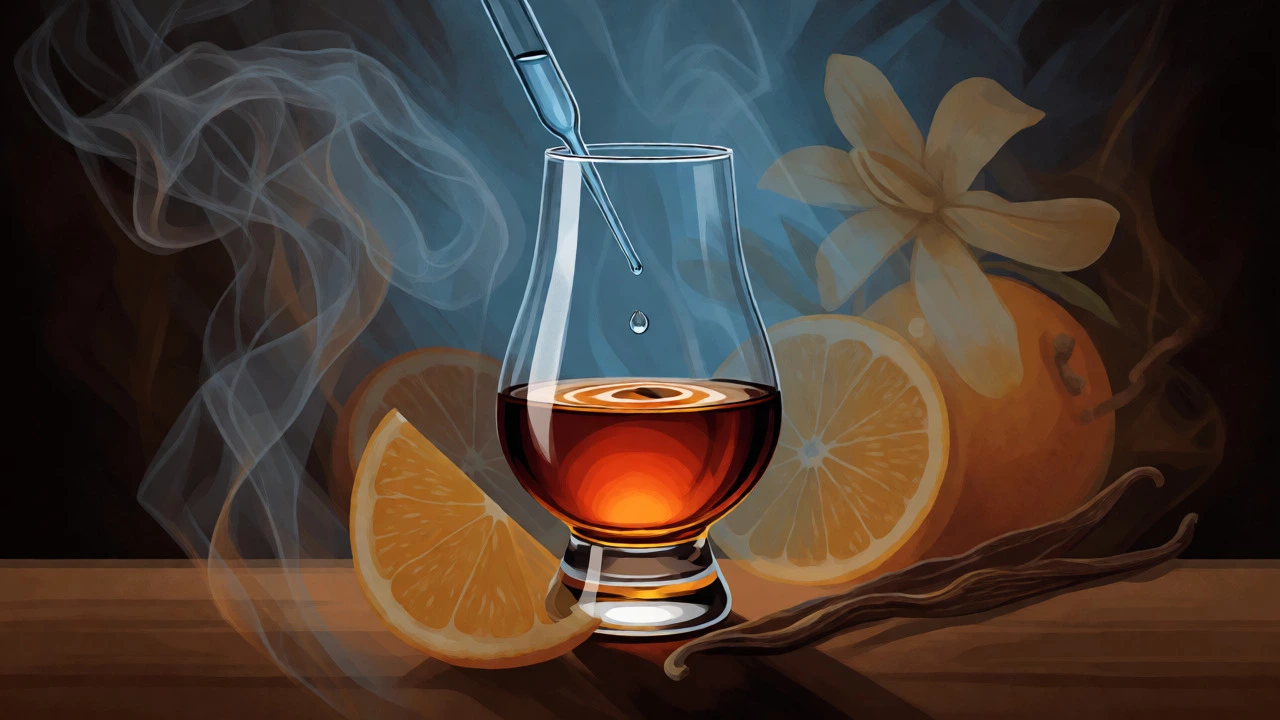
If the alcohol feels harsh, add a few drops of water. This isn’t cheating; it’s science. Water breaks the surface tension of the spirit, releasing trapped aromatic compounds and softening the ethanol burn. Add water drop by drop using a pipette or straw, re-nosing and re-tasting after each addition until the flavours "open up." There is no rule that says you must drink neat.
The Finish: Where Quality Reveals Itself
After you swallow, wait. Count the seconds. How long do the flavours last? A short finish (under 10 seconds) might indicate a younger or simpler spirit. A medium finish lasts 10-30 seconds. A long finish persists for over 30 seconds, often evolving as it fades. Does the finish leave a pleasant aftertaste, or does it turn bitter or medicinal?
Professional judges weigh the finish heavily. A spirit might start strong but fall flat on the finish, indicating poor balance. Conversely, a spirit that builds complexity on the finish shows depth and care in production. Ask yourself: Did the experience resolve harmoniously, or did it leave you wanting something else?
Building Your Vocabulary
You don’t need to identify "lychee" or "petrichor" right away. Start broad. Is it fruity? Spicy? Smoky? Then narrow it down. Is the fruit citrus or stone fruit? Is the spice baking spice (vanilla/cinnamon) or peppery? Writing notes helps. Even if you just write "smoky" or "sweet," the act of recording forces you to pay attention.
Compare spirits side-by-side. An A-B test is powerful. Pour two different whiskies. Taste one, then the other. The contrast highlights differences you might miss when tasting alone. Over time, your brain will build a reference library of flavours, making future tastings easier and more enjoyable.
Key Takeaways
- Control the environment: Neutral smells, natural light, and quiet help you focus.
- Use the right glass: Tulip shapes concentrate aromas better than tumblers.
- Don’t inhale hard: Gentle, distant sniffs prevent alcohol burn.
- Add water: A few drops unlock aromas and soften harshness.
- Focus on the finish: Length and quality of aftertaste signal overall quality.
Do I need special glasses for spirit tasting?
While not strictly mandatory, specialized glasses like the Glencairn or copita significantly enhance the experience. Their tulip shape concentrates volatile aromatic compounds near your nose, allowing you to detect subtler notes compared to a wide-rimmed tumbler. A standard white wine glass is a good budget alternative.
Is adding water to spirits considered bad practice?
No, it is a standard professional technique. Adding a small amount of water reduces the ethanol concentration, which can mask aromas. It also releases hydrophobic flavour compounds trapped in the alcohol matrix, making the spirit's profile more accessible to your nose and palate. Many experts recommend starting with neat and adding water drop-by-drop.
How many spirits should I taste in one session?
To avoid palate fatigue, limit yourself to 4-6 spirits per session. Professional competitions often cap tastings at 30 samples per day, broken into smaller blocks. As a beginner, fewer samples allow you to spend more time analyzing each one without your senses becoming overwhelmed or desensitized by alcohol exposure.
What is the difference between nosing and smelling?
In spirit tasting, "nosing" refers to the deliberate, analytical process of evaluating aromas. It involves specific techniques, such as holding the glass at a distance, taking short sniffs, and identifying aroma families. Casual smelling is passive and often less focused. Nosing requires active engagement to distinguish individual components like fruit, spice, or wood.
Can I taste vodka effectively?
Yes, though it requires patience. Vodka is defined by its neutrality, so subtle differences in grain source, distillation method, and filtration become apparent upon close inspection. Look for hints of sweetness, creaminess, or mineral notes. Diluting vodka slightly with water can also reveal hidden textures and mouthfeel characteristics that are masked by high alcohol strength.