Whiskey Tasting Kit Checklist
Build your personalized guest kit and see how prepared you are for a serious tasting session.
Your Tasting Readiness Report
Imagine walking into a room filled with the scent of oak and vanilla, ready to explore five different whiskies. You feel excited, but then you realize you forgot your notebook, or worse, you wore that strong cologne from last night. Suddenly, the delicate aroma of peat is gone, replaced by notes of lavender and sandalwood. This is why knowing what to bring to a whiskey tasting is just as important as knowing how to taste it.
A whiskey tasting isn't just about drinking; it's a structured exercise in sensory analysis. Whether you are hosting a group of friends in Sydney or attending a formal event at a distillery, being prepared changes the experience from casual sipping to genuine discovery. You don't need to be an expert to participate effectively, but you do need the right tools to let your senses work properly. Let’s break down exactly what goes into your bag, starting with the most critical piece of equipment.
The Glassware Dilemma: Tulip vs. Rocks
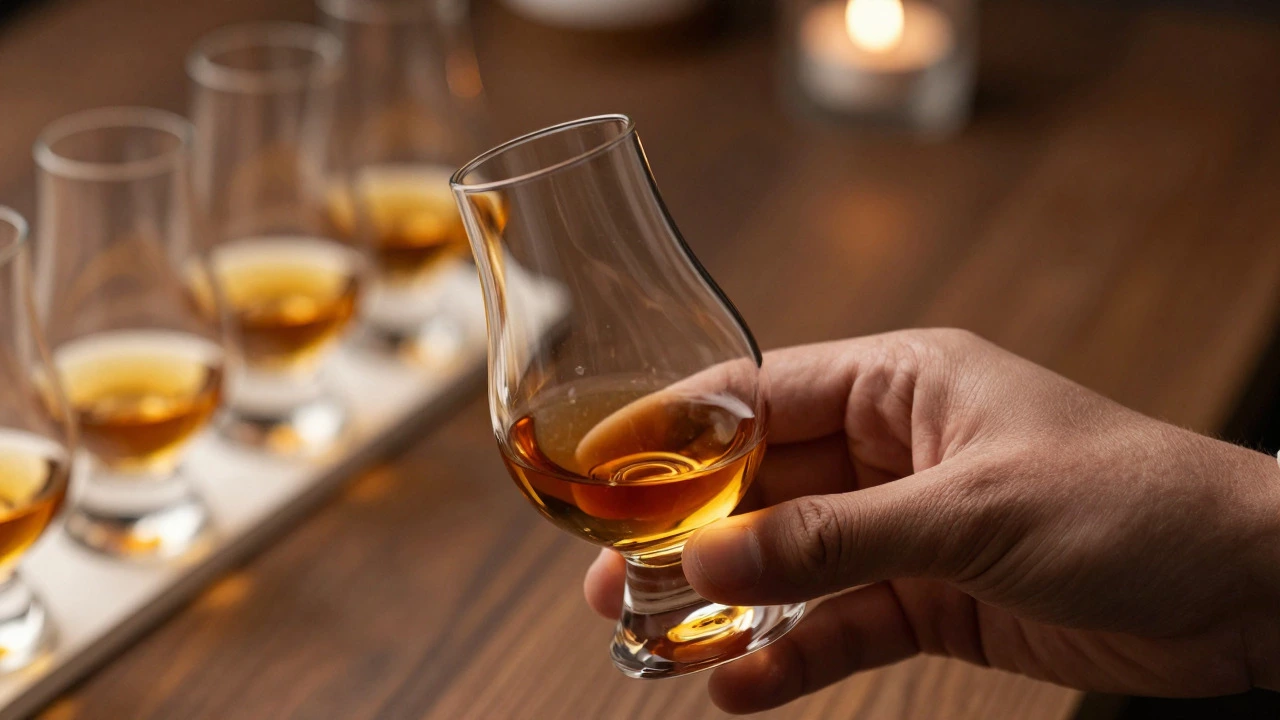
Most people assume the host provides all the glasses, but for serious tastings, guests are often expected to contribute. The gold standard for tasting is the tulip-shaped glass, also known as a nosing glass. Why? The shape narrows at the top, concentrating the aromas so you can catch subtle notes like dried fruit, leather, or smoke without swirling too hard. If you’re attending a professional event, check if they provide these. If not, bringing one high-quality tulip glass per person is a thoughtful gesture.
However, if the setting is more relaxed, like a home gathering, rocks glasses are perfectly acceptable. They are versatile and easier to handle. Just avoid shot glasses unless you are strictly measuring pours, as they offer no space for aroma capture. A good rule of thumb: bring one dedicated tasting glass for each whisky you plan to sample, or at least one high-quality glass that you can rinse between drams. If you are hosting, plan for three glasses per person-one for the current dram, one for water, and one backup.
Water: The Unsung Hero of Tasting
If you only remember one thing from this guide, make it this: bring plenty of neutral water. Water serves two purposes. First, it keeps your mouth hydrated, preventing the burn of alcohol from dulling your taste buds. Second, it allows you to dilute the whisky slightly, which can open up hidden flavors that are masked by the high alcohol content. Never use tap water if you can help it. Chlorine and minerals in tap water can clash with the complex profile of aged spirits, masking delicate notes of honey or spice.
Opt for still, spring water with minimal mineral content. Avoid sparkling water entirely, as the carbonation disrupts the liquid’s texture and can irritate the nose. For a typical session, aim for at least one 500ml bottle per person, though hosts often recommend two or three bottles per guest to account for rinsing glasses and diluting multiple drams. A small dropper bottle is a pro move here. It lets you add water in precise, milliliter increments rather than guessing, giving you control over how much you dilute each pour.
Palate Cleansers: What to Eat (and What to Avoid)
Your palate needs a reset button between heavy, oaky whiskeys. That’s where food comes in. But not just any food. Heavily seasoned snacks will ruin your ability to detect subtle differences between samples. Think of your palate as a clean canvas; you want to wipe it gently, not paint it with bold colors.
Here are the best items to bring:
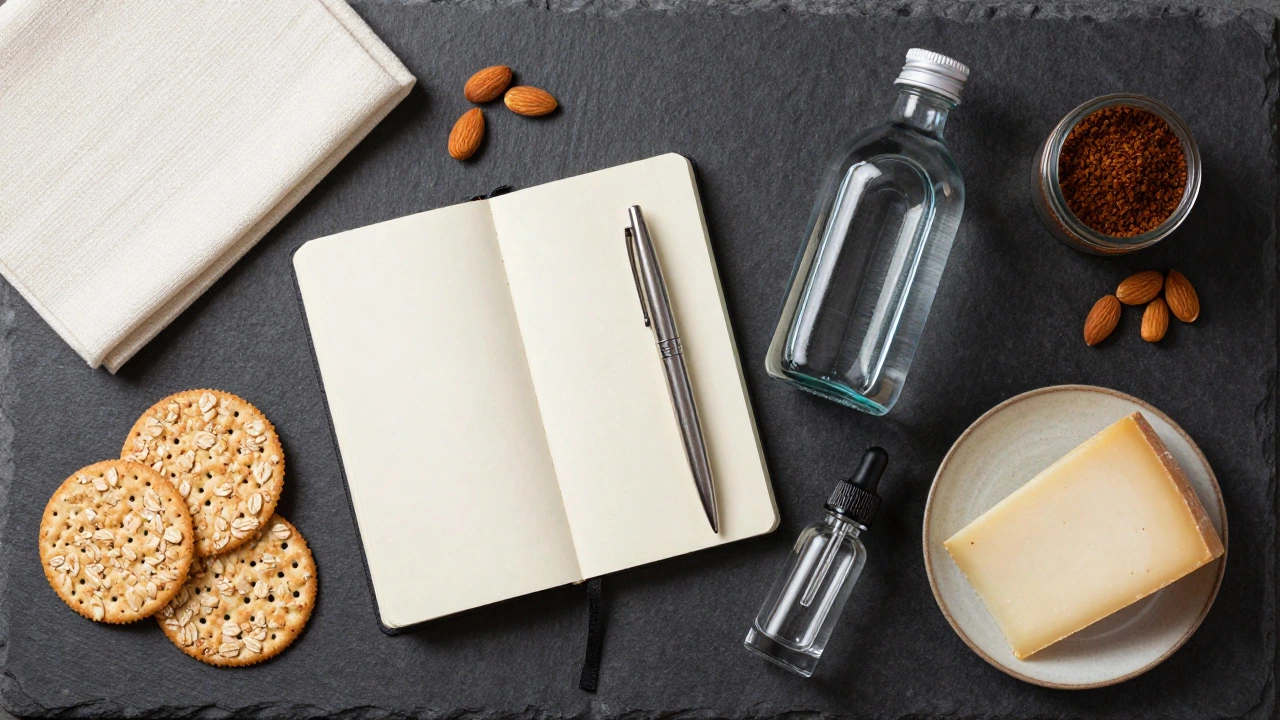
- Unsalted crackers or oatcakes: These are dry and neutral, perfect for absorbing alcohol residue without adding flavor.
- Plain nuts: Unsalted almonds or cashews provide a slight crunch and fat content that helps coat the tongue, reducing the sting of higher-proof spirits.
- Mild cheese: A block of mild cheddar or gouda works well. Avoid blue cheeses or anything strongly flavored, as their tanginess lingers.
- Fresh fruit: Sliced apples or grapes offer natural sweetness and acidity that refreshes the mouth without overwhelming it.
Conversely, avoid spicy foods, strong garlic, and heavily pickled items. A single bite of a hot wing can take twenty minutes to fade from your palate, making the next whisky taste flat or distorted. Keep it simple, boring, and neutral.
Note-Taking Tools: Don’t Trust Your Memory
It sounds tedious, but writing down your impressions is essential. Human memory is selective and easily influenced by what we expect to taste. By jotting down notes immediately after each sip, you create an objective record that helps you compare whiskies later. You don’t need a fancy leather-bound journal. A small pocket notebook and a reliable pen are sufficient. Many enthusiasts prefer pre-printed tasting sheets that prompt them to describe appearance, aroma, palate, and finish. If you’re new to this, try using a simple grid: columns for each whisky and rows for color, nose, taste, and finish. Even three words per category can reveal patterns you might otherwise miss.
Small Accessories That Make a Big Difference
Beyond the basics, a few small items can elevate your comfort and hygiene. First, consider a lint-free microfiber cloth. If you’re sharing glasses or rinsing them, a clean cloth ensures no fibers end up in your drink. Second, bring unscented lip balm. Alcohol dries out lips quickly, and chapped lips make it harder to feel the texture of the spirit. Third, if you have a sensitive nose, a small sealed jar of coffee grounds can serve as an olfactory reset. Sniffing fresh coffee grounds clears the nasal passages between intense aromas, similar to how wine tasters use white paper.
Finally, think about your personal care products. Perfume and cologne are enemies of a whiskey taster. Fragrances linger in the air and on your skin, mixing with the whisky’s bouquet and confusing your assessment. Skip the fragrance entirely on tasting days. Wear closed-toe shoes if you’re visiting a distillery, as floors can be uneven or wet. Choose quiet fabrics that don’t rustle, so you can focus on the sound of the pour and the silence of the room.
What Should You Bring as a Contribution?
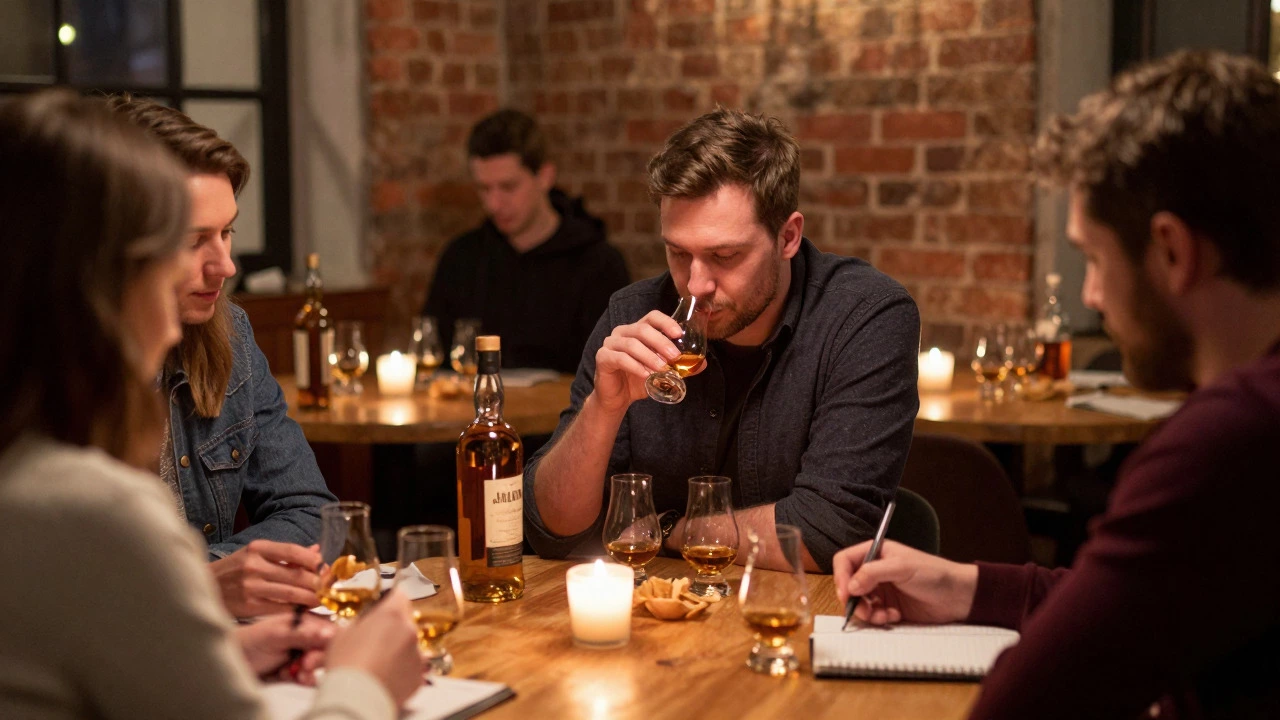
If you’re a guest at a communal tasting, you’ll likely be asked to bring a bottle of whisky. The key here is distinctiveness, not price. You don’t need to bring the most expensive bottle in the store. Instead, look for something unique that fills a gap in the lineup. A store-specific single-barrel release or a small-batch selection from a local distillery is ideal. These bottles are hard to find elsewhere, adding variety to the group’s experience. Aim for a price point that feels comfortable for sharing-often in the mid-range-but prioritize uniqueness over prestige. If the theme is bourbon, bring a rye. If it’s Scotch, bring a Islay malt. Check with the host beforehand to see what’s already planned, so you don’t duplicate efforts.
| Item | Purpose | Recommendation |
|---|---|---|
| Tasting Glass | Capture aromas | Tulip-shaped (nosing) glass preferred |
| Water | Dilution & Hydration | Still, neutral spring water (no minerals) |
| Snacks | Palate cleansing | Unsalted crackers, plain nuts, mild cheese |
| Notebook | Record impressions | Small pocket notebook with pen |
| Lip Balm | Comfort | Unscented formula |
Common Mistakes to Avoid
Even experienced tasters make errors that compromise their results. One common mistake is arriving with a full stomach of spicy food. Give yourself at least two hours after eating before starting a tasting. Another error is rushing through the pours. Take your time. Swirl, sniff, sip, and wait. The finish of a good whisky can last for minutes, and skipping this step means missing half the experience. Finally, don’t be afraid to ask questions. Tastings are social events, and discussing your observations with others often reveals nuances you hadn’t noticed alone.
By preparing your kit with intention, you transform a simple drink into a rich, educational experience. You’ll leave the table not just satisfied, but sharper, more aware, and better equipped to appreciate the craft behind every bottle.
Do I need to bring my own glass to a whiskey tasting?
It depends on the venue. Professional distilleries usually provide tulip-shaped nosing glasses. However, for home tastings or private groups, guests are often expected to bring at least one high-quality glass. If unsure, check with the host, but having your own tulip glass is always a safe and appreciated choice.
What kind of water should I use for whiskey tasting?
Use still, neutral spring water with low mineral content. Avoid tap water because chlorine can mask subtle flavors, and avoid sparkling water because carbonation disrupts the texture and aroma of the spirit.
Is it okay to eat during a whiskey tasting?
Yes, but only neutral foods. Unsalted crackers, plain nuts, and mild cheese are ideal palate cleansers. Avoid spicy, acidic, or heavily seasoned foods, as they can linger on the tongue and distort the flavor profile of subsequent whiskies.
Should I wear perfume to a whiskey tasting?
No. Strong fragrances interfere with the delicate aromas of whiskey. It is best to skip cologne or perfume entirely on tasting days to ensure your nose can accurately detect the spirit's bouquet.
What bottle of whiskey should I bring as a guest?
Bring a distinctive bottle that adds variety to the lineup, such as a store-specific release or a unique regional expression. Price is less important than uniqueness. Coordinate with the host to avoid duplicating styles already planned for the event.