Wine Service Etiquette & Technique Guide
Explore the professional standards of fine dining wine service, including posture, safety protocols, and cultural variations.
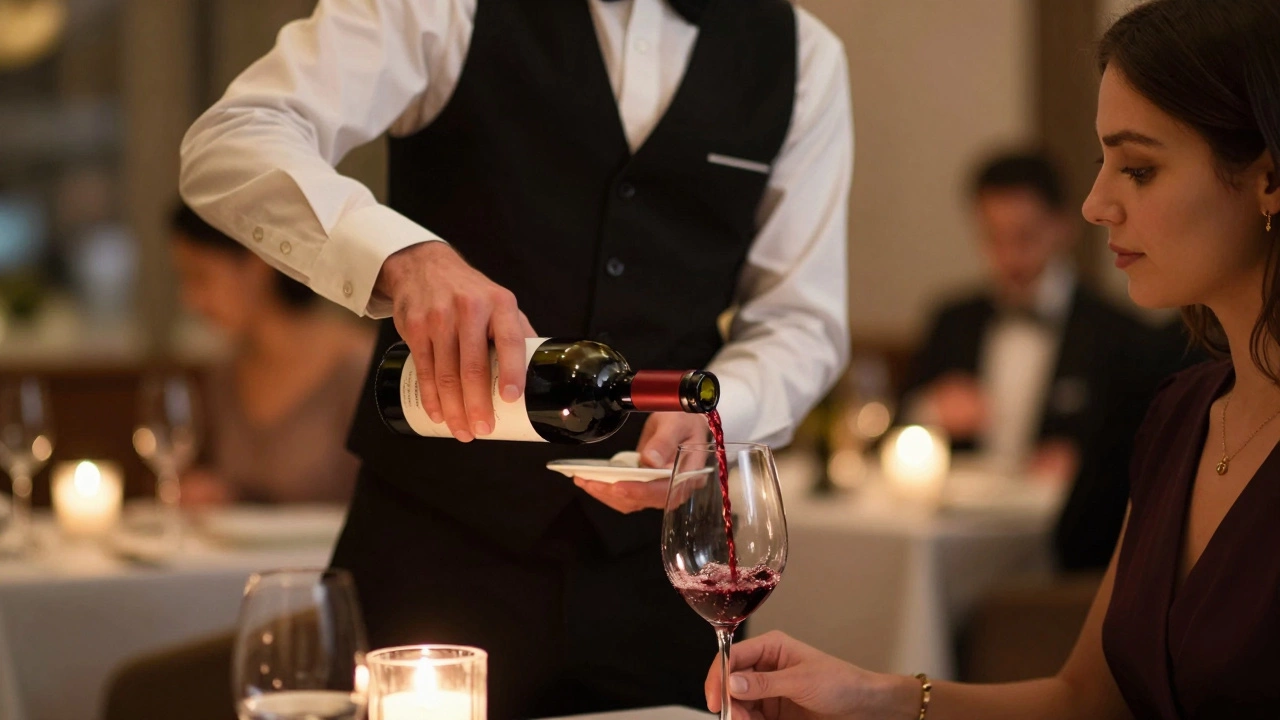
Have you ever sat at a fancy dinner table, watched the server approach with a bottle of red, and noticed their left hand disappear? They aren't hiding it. They are deliberately placing one arm behind their back while pouring your wine. It looks stiff. It looks theatrical. And if you have never worked in hospitality, it probably looks completely unnecessary.
You might wonder if this is an old-fashioned rule from Victorian times or just a way for servers to look busy. The truth is much more practical. This gesture is a calculated move designed to keep your glass safe, respect your personal space, and make the entire experience feel smoother. It is not about showing off; it is about precision.
The Core Reason: Safety and Space
The primary reason waiters put one arm behind their back is simple physics and spatial awareness. In a crowded restaurant, tables are close together. Guests are eating, talking, and moving. A server needs to navigate this chaos without knocking over a half-eaten appetizer, spilling water on a laptop, or brushing against a guest’s shoulder.
By tucking the non-pouring arm behind the back, the server effectively removes that limb from the equation. They are creating a "no-fly zone" around their own body. If they kept both arms free, the unused hand might drift forward instinctively. That drifting hand could bump a candle, knock a bread plate askew, or accidentally touch a guest’s arm. Placing the hand behind the back immobilizes it. It forces the server to rely entirely on the pouring hand for balance and control.
This technique is part of a broader concept known as Open-Hand Service, which is a standard fine-dining protocol where servers use their right hand to serve guests on the right and their left hand for guests on the left, ensuring they never reach across a person's body. While Open-Hand Service dictates which hand does the work, the "arm behind the back" posture ensures the other hand stays out of the way. It is a fail-safe mechanism. You cannot spill wine or hit someone with a hand that is pinned against your lower back.
Respecting Personal Boundaries
Beyond physical safety, there is a psychological component. Fine dining relies heavily on the guest feeling comfortable and respected. When a server leans over a table, their body language can feel intrusive. Having two arms active in front of a guest can signal aggression or clutter. It fills up the visual field.
When a server tucks one arm away, they present a narrower profile. They appear smaller and less imposing. This signals deference. It tells the guest, "I am here to serve you, not to crowd you." It keeps the focus on the bottle and the glass, not on the server’s body. For many diners, especially those who value privacy or have anxiety about being touched, this subtle cue makes a significant difference in how welcoming the service feels.
Think about it like walking down a narrow hallway. If someone walks toward you with their arms wide open, you tense up. If they keep their arms close to their sides or tucked in, you feel safer. The same logic applies to wine service. The tucked arm is a non-verbal promise that the server will not encroach on your space unnecessarily.
The Performance Aspect of Wine Service
Let’s be honest: wine service is partly a performance. When you order a bottle of wine, you are paying for more than just the liquid. You are paying for the ritual. The presentation of the label, the quiet pop of the cork, the swirl in the glass-these are all choreographed steps.
The arm-behind-the-back pose adds to this elegance. It creates a sense of stillness and control. It makes the pour look deliberate rather than rushed. In high-end establishments, every movement is meant to convey professionalism. A flailing second hand breaks the illusion of calm competence. A tucked hand reinforces it.
Sommeliers and senior servers often describe this as "choreography." The goal is to make difficult tasks look easy. Pouring wine without dripping requires wrist action and timing. Adding the complexity of managing two arms near delicate crystal glasses increases the risk of error. By simplifying the body mechanics-using only one arm-the server reduces cognitive load. They can focus entirely on the angle of the bottle and the level of the wine.
How the Technique Works in Practice
If you want to understand why this works, watch a skilled server execute the full sequence. It usually follows these steps:
- Approach: The server approaches from the side, standing slightly behind the guest’s shoulder. They do not block the view of other diners.
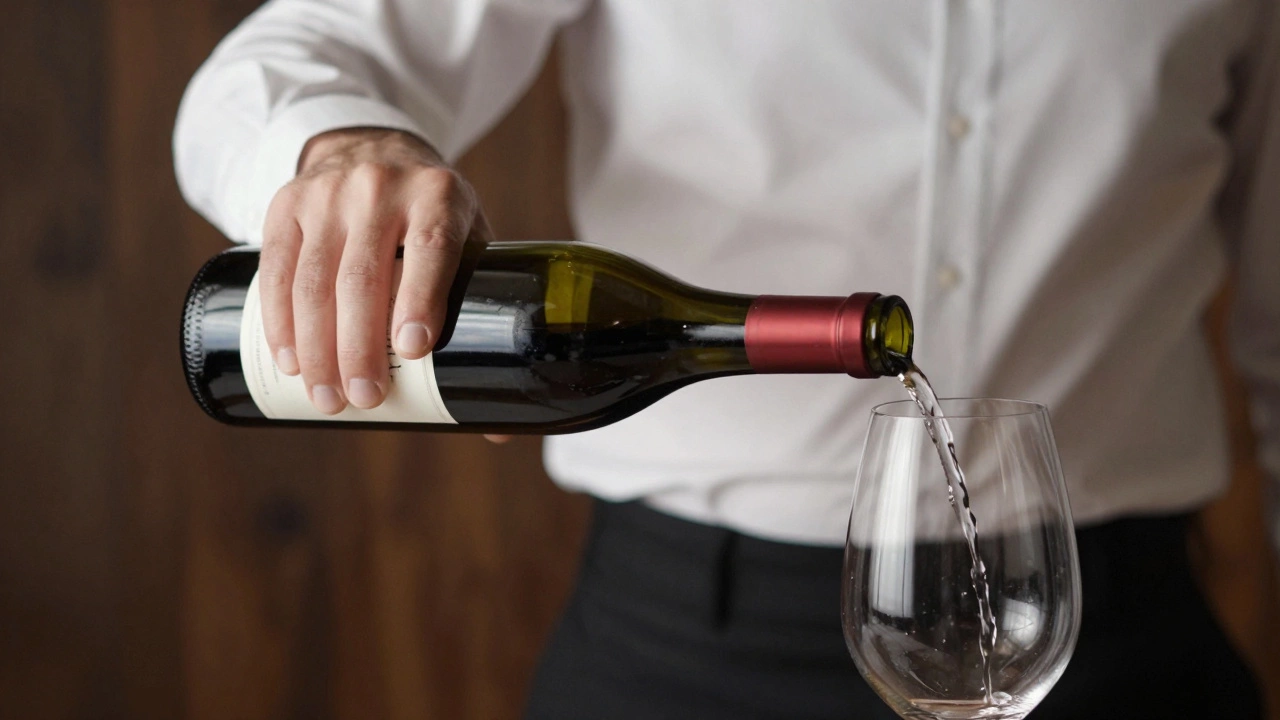
- Presentation: With the pouring hand (usually the right), they hold the bottle so the label faces the host. The non-pouring hand is already tucked behind the back or held firmly at the side, holding a napkin.
- The Pour: They tilt the bottle smoothly. The wine flows into the glass. Because the other arm is anchored, the server’s torso remains stable. There is no swaying.
- The Twist: As they stop pouring, they twist the bottle upward slightly to catch any last drop. This prevents drips from running down the label or onto the table.
- The Wipe: Using the napkin held in the now-free hand (or transferred from the tucked position), they wipe the lip of the bottle clean before setting it down.
In many training videos, instructors emphasize that the non-pouring hand should not rest on the table, the chair, or the guest’s lap. It has one job: stay out of the way. Tucking it behind the back is the most reliable way to ensure compliance, especially for new staff who might otherwise fidget or lean.
Is This Rule Universal?
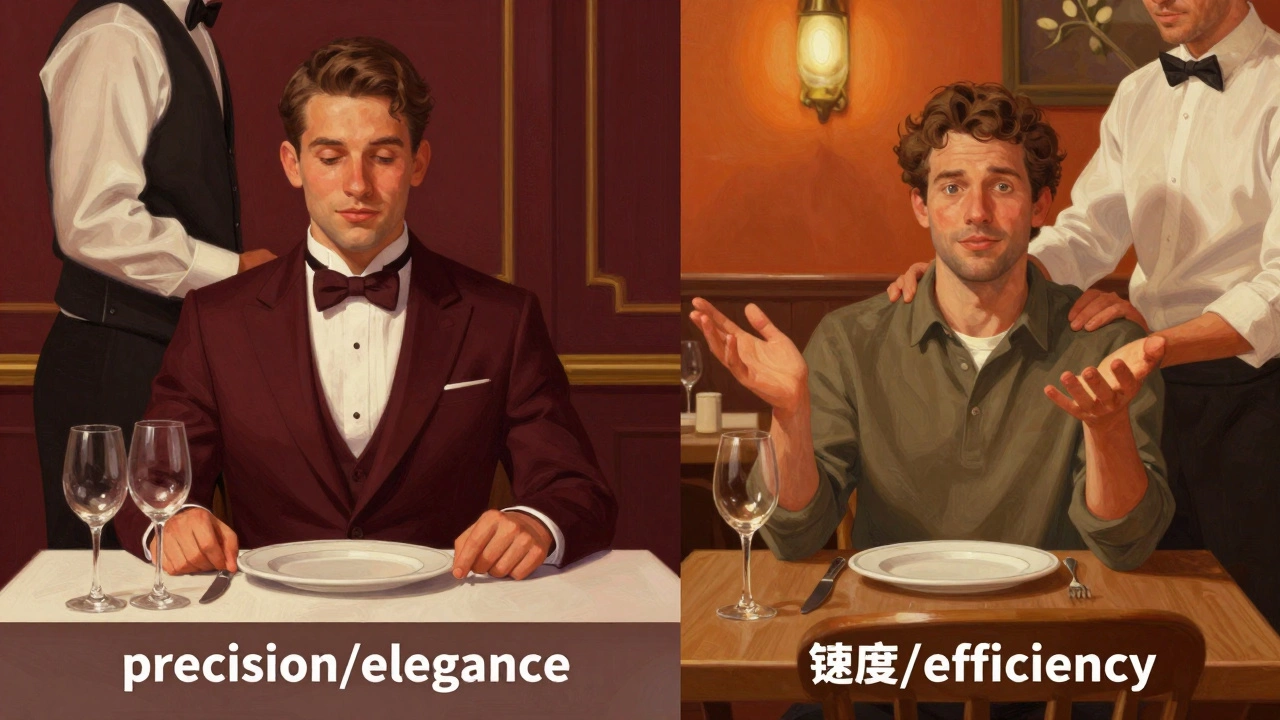
No. This gesture is specific to Western fine dining traditions, particularly those influenced by French service styles. You will rarely see it in casual bistros, pubs, or fast-casual restaurants. In those settings, speed and efficiency matter more than posture. Servers often carry trays with one hand and point with the other, or they pour with both hands visible.
Cultural differences also play a role. In some Asian dining traditions, such as Japanese omakase or Korean barbecue, serving with two hands is a sign of respect. Putting one arm behind the back might be interpreted as disengaged or rude. In contrast, in European luxury hotels and Michelin-starred venues, the single-arm-forward, single-arm-back stance is the gold standard. It reflects a different cultural definition of politeness-one that values distance, formality, and visual minimalism.
| Setting | Arm Position | Primary Goal | Guest Perception |
|---|---|---|---|
| Fine Dining (Western) | One arm behind back | Precision & Elegance | Professional, Respectful |
| Casual Restaurant | Both arms free/side | Speed & Efficiency | Relaxed, Approachable |
| Traditional Asian Service | Two hands on bottle | Honor & Humility | Deferential, Careful |
Modern Trends: Relaxing the Rules
In recent years, the hospitality industry has shifted toward a more relaxed aesthetic. Many modern restaurants aim to feel "approachable" rather than "stiff." As a result, some managers no longer enforce the strict arm-behind-the-back rule. Instead, they train staff to keep the non-pouring hand close to the body but visible, perhaps holding a napkin loosely at the waist.
This "soft" version preserves the functional benefits-keeping the hand away from the glass and guest-without looking overly rigid. Younger sommeliers often prefer this approach. It feels more natural and less performative. However, the core principle remains the same: minimize intrusion. Whether the hand is behind the back or at the hip, the goal is to ensure that only the necessary parts of the server’s body interact with the guest’s space.
So, the next time you see a waiter with one arm hidden, don’t think they are being weird. Think of them as a surgeon operating in a tight space. They are removing distractions, protecting your meal, and respecting your boundaries. It is a small detail, but it speaks volumes about the care put into your dining experience.
Is putting an arm behind the back a mandatory rule for all waiters?
No, it is not a universal law. It is a convention primarily used in fine dining and formal service environments. Casual restaurants, bars, and fast-casual spots typically do not enforce this posture. It depends on the restaurant's style and management preferences.
Why do servers use their right hand to pour wine?
Most people are right-handed, making it easier to control the pour. Additionally, in Open-Hand Service, servers stand to the right of the guest and use their right hand to avoid reaching across the guest’s body. This minimizes contact and respects personal space.
Does the arm-behind-the-back pose help prevent spills?
Yes. By immobilizing the non-pouring arm, the server reduces the chance of accidental bumps. It keeps the spare hand away from glassware, plates, and guests, allowing the server to focus entirely on the stability of the pouring hand.
Is this gesture considered rude in other cultures?
In some cultures, yes. For example, in traditional Japanese or Korean service, using two hands to offer a drink is a sign of respect. Hiding one hand might be seen as disengaged or impolite. Context and location matter significantly.
What happens if a server drops the wine while pouring?
A professional server will apologize immediately, clean the area thoroughly, and replace the glass and any affected items. They will then continue the service calmly. The arm-behind-the-back technique is designed to minimize this risk, but accidents can still happen.
Do sommeliers follow the same rules as regular waiters?
Yes, sommeliers are trained in the same fine-dining service protocols. They often adhere strictly to these postures because their role involves higher levels of interaction and presentation. Their movements are meant to enhance the guest's appreciation of the wine.
Why do servers twist the bottle after pouring?
The twist-and-lift motion helps catch the last drop of wine inside the neck of the bottle. This prevents drips from running down the label or onto the tablecloth, maintaining cleanliness and aesthetics during the service.
Can I ask a server to pour differently?
Generally, no. The pouring technique is part of the restaurant's standard operating procedure. However, if you have a specific preference for how much wine is poured, you can politely request it. The posture itself is unlikely to change based on guest requests.